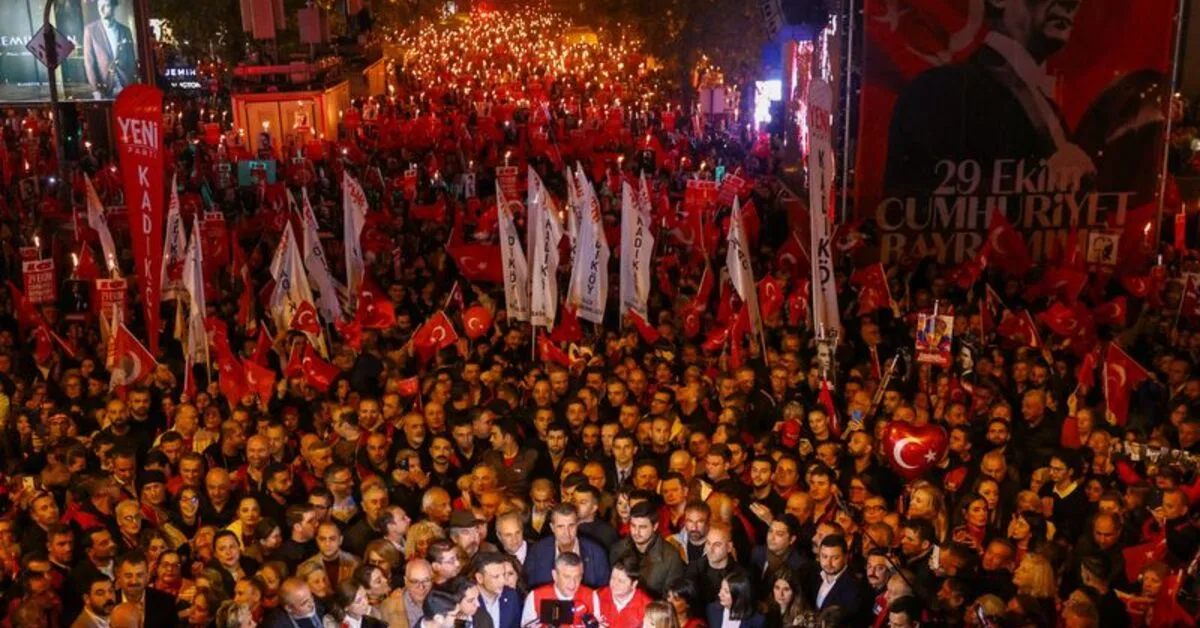
Turkey faces serious challenges in its political arena, especially among the opposition, which recently achieved significant successes in the local elections of March 2024. These successes have given the opposition hope that it can win against the presidency of Recep Tayyip Erdoğan, who has been in power for 23 years. However, after more than two years, the main rivals of the opposition find themselves in difficult positions.
Legal Restrictions and Challenges for the Opposition
One of the fundamental challenges for the opposition is the imprisonment of Recep Tayyip Erdoğan, their main rival, and the division of the main opposition party due to a court ruling. Additionally, some opposition figures who were elected as mayors have joined Erdoğan's Justice and Development Party (AK Party). This situation is particularly evident in Izmir, which is recognized as one of the main centers of secular and social-democratic opposition in Turkey. In this city, Mayor Cemil Tugay, who was elected on the opposition platform in 2024, has joined the ruling party.
Read more: The U.S. Dismisses Senior Army General in Recent Changes
Trust in Voters and Political Future
Despite these challenges, the opposition remains committed to supporting voters and believing in democratic elections. They believe that the people will respond to the government's political pressures in the upcoming national elections, which will be held in 2028, and will turn this process into an opportunity to revive democracy. Seren Selvin Korkmaz, one of the founders and directors of the IstanPol Institute in Istanbul, stated that there is anger among the people that needs to be transformed into political energy to achieve a favorable outcome.
Meanwhile, some residents of Izmir have criticized Tugay's decision, stating that they will never vote for the Justice and Development Party. Others have pointed out that Tugay may have deviated from his path due to the city's interests. In this context, Cagatay Guc, the head of the new party in Izmir, expressed confidence that voters will respond to these changes in the upcoming elections and will particularly reject political pressures.
The next presidential and parliamentary elections in Turkey are scheduled for May 2028, but the president's advisor recently announced that these elections may be held earlier than planned so that Erdoğan can bypass legal restrictions and run for the presidency again.
Read more: Yuri Ushakov: The Timing of Ukraine Negotiations Depends on the Middle East Situation · Israel Elections; Hope and Concern Among the Parties