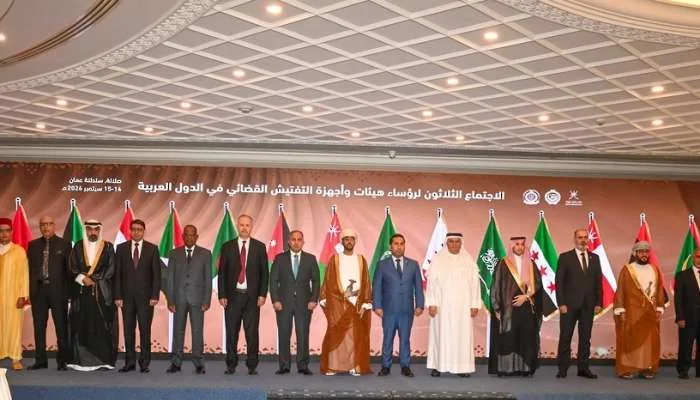
The 30th meeting of the heads of judicial inspection authorities and officials from Arab countries was held on Tuesday in Dhofar Governorate, Oman, with representatives from 14 countries in attendance. This meeting will continue for two days and provides an opportunity for dialogue and cooperation among Arab countries in improving the judicial system.
Transformation in Judicial Inspection with Artificial Intelligence
The Supreme Judicial Council of the Sultanate of Oman presented a working paper titled "Artificial Intelligence and Judicial Inspection: Towards an Arab Index for the Quality of Judicial Rulings" during this meeting. This paper examines the application of modern technologies in analyzing judicial rulings and extracting quantitative and qualitative indicators that measure legal reasoning standards, consistency of judicial jurisprudence, and the speed of case processing.
Read more: Oman: The regional meeting in Salalah has been postponed
The paper emphasizes that artificial intelligence is a supportive tool for judges and inspectors and cannot replace human judgment. This innovative approach reflects a move towards greater improvement and efficiency in Arab judicial systems.
Challenges and Opportunities in Judicial Inspection
Participating Arab countries, including Iraq, Lebanon, Syria, Algeria, and Kuwait, presented working papers on transitioning from traditional inspection to preventive inspection, evaluating court performance, and the prospects of utilizing smart technologies in legal investigations and data processing. The meeting also discussed challenges related to algorithmic bias and maintaining the confidentiality of judicial cases.
Additionally, proposals were made for developing a unified Arab model for assessing the quality of judicial rulings and drafting a guideline that considers the characteristics of Arab judicial systems. The meeting concluded with the approval of criteria and regulations for awarding the Arab Prize for judicial inspection works.
Among the key recommendations of this meeting were the adoption of a draft Arab Prize for judicial inspection works, standardizing procedural inspection standards among Arab countries, and developing judicial inspection methods by transitioning from traditional inspection to performance-based inspection and quality indicators.
The meeting also emphasized the need to strengthen the independence of judicial inspection authorities and develop supervisory and evaluation tools and mechanisms to enhance transparency, increase performance efficiency, and institutionalize the principles of integrity and justice. Other recommendations included adopting a balanced system for evaluating judges' performance, developing objective and measurable criteria, and linking evaluation results to continuous training and empowerment programs.
At the end, participants approved several scientific topics for the 30th meeting in 2027, including total quality management in judicial facilities, balancing judicial independence and judicial performance evaluation, smart justice, and developing a unified Arab framework for quality indicators of judicial rulings and inspection.
Read more: Kuwait's Minister of Defense bids farewell to the Ambassador of Oman · Oman postponed the regional meeting on the Strait of Hormuz