The Sudanese pound has lost nearly half of its value in army-controlled areas since the beginning of summer, and this decline has led to more hardships for citizens who are struggling to rebuild their lives. This economic situation has also challenged officials' efforts to demonstrate stability in the areas they control.
Consequences of War and Economic Crisis
The decline in the pound's value is one of the most dramatic economic developments in Sudan that has occurred since the outbreak of war between the Sudanese Armed Forces and the Rapid Support Forces (RSF) nearly three and a half years ago. This war has spread hunger and disease in Africa's third-largest country, dividing it into hostile regions and destroying its economy. Officials are trying to change this situation by inviting millions of displaced people to return.
Read more: 12.2% Growth in Credit Granted in Oman's Banking Sector
Currently, the Sudanese pound is traded on the black market at a rate of about 7,500 pounds to the dollar, which, despite its relative strengthening from recent rates of 8,000, is still significantly higher than the rate of 4,100 in May. Before the war began, the pound was traded at about 600 to the dollar. The Central Bank no longer updates the official exchange rate, and Bank of Khartoum, the largest bank in the country, offers a rate of 4,200 pounds.
Economic and Social Challenges
Part of the problem stems from the country's "economic division," which has deprived army officials of key exports. Although the army has recaptured areas after its initial failures in the war, large sectors of gold production, livestock, oilseeds, and gum arabic continue to be produced in RSF-controlled areas, where the pound's exchange rate has remained relatively stable in recent months.
Sudan produced 70 tons of gold last year, but only 14.7 tons of that was reported as exports by the Central Bank. Much of what is still produced in army-controlled areas does not enter the government budget and is instead directed towards purchasing weapons or in support networks.
Gabriel Ibrahim, the Minister of Finance, emphasized the need for foreign currency to finance the war and reconstruction, pointing to the loss of export revenues. He stated, "We cannot deny that citizens are truly suffering."
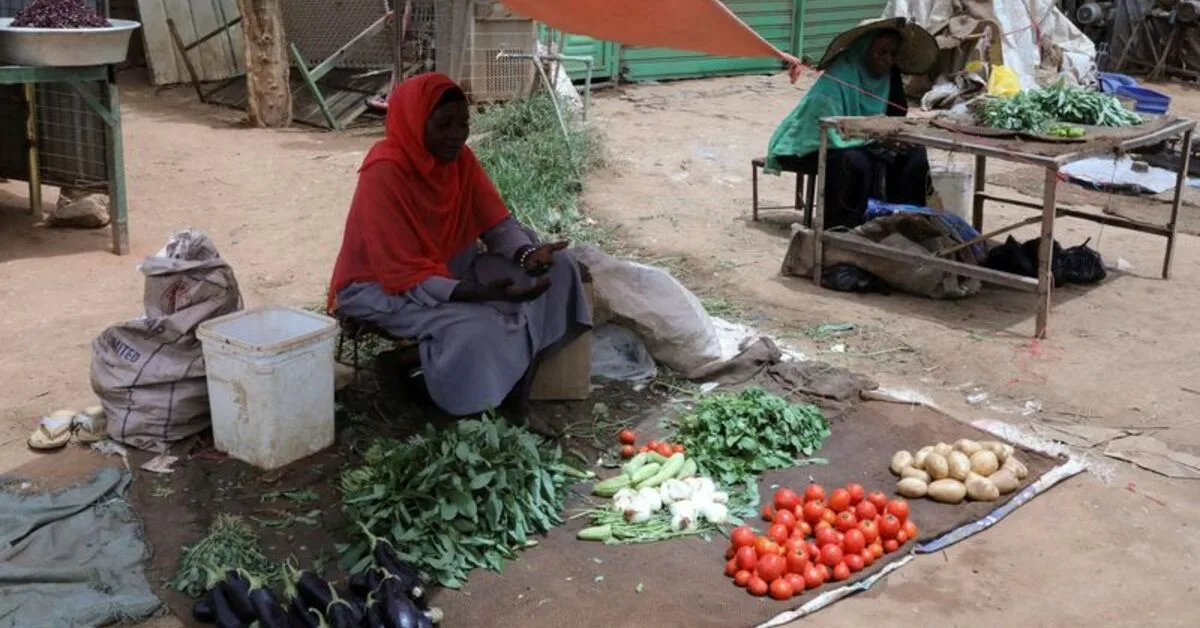
The lack of official revenues means that importers are using dollars purchased on the black market to secure many essential goods like fuel and wheat. The return of refugees has increased demand and prices. According to the International Organization for Migration, about 5 million of the 14 million displaced by the war have returned to their homes.
Younis, a former teacher, reported that the price of a liter of cooking oil has increased from 17,000 pounds to 23,000 pounds within a week. Local shopkeepers reported that their sales have decreased by 70% compared to normal rates, and some store shelves are empty.
Al-Mutasim Abdulrahim, the director of a private school in Omdurman, noted that his salary is about 500,000 pounds per month, which before the war was equivalent to 800 dollars, but has now dropped to about 70 dollars, saying, "We are hesitant about things we once considered normal."
Read more: Approval of a New List of Economic Zones in Oman · America and Iran: War Decisions and Economic Impacts