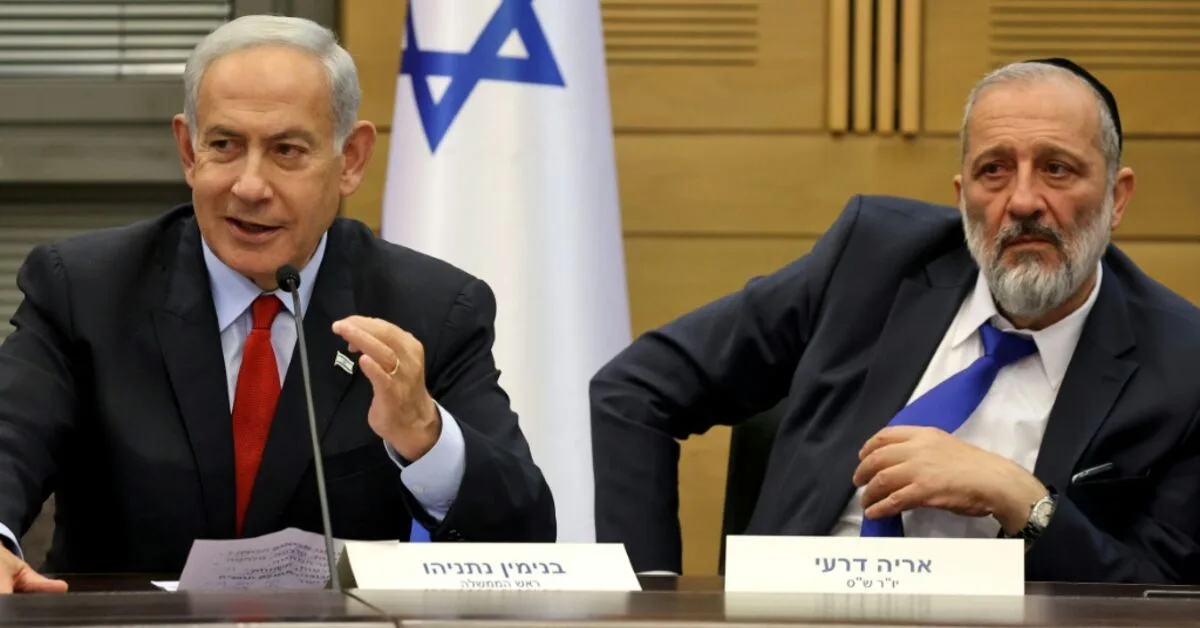
The ultra-Orthodox Shas Party faced a significant reduction in the number of its seats in the recent Israeli elections, held on October 27, 2023, dropping from 11 seats to 6. This party, which has played a key role in most Israeli governments for years, both right and left, is now facing public disillusionment regarding its coalition with Benjamin Netanyahu, the Prime Minister of Israel.
Background of the Shas Party and Its Purpose
The Shas Party was founded in 1984 to represent the interests of Sephardic Jews who immigrated to Israel from Middle Eastern and North African countries. This historical group feels a sense of weakness due to perceived economic and cultural inequalities with Ashkenazi Jews, who primarily come from Europe. Netanyahu, as Israel's long-serving Prime Minister who has been in power for nearly 20 years, has heavily relied on the votes of the Shas Party, even though he himself is Ashkenazi and secular.
Read more: Netanyahu's Rivals Exploit the Democrats' Victory in the U.S. Congress
Decline in Support and Its Reasons
However, in the recent elections, the Shas Party faced a significant decline in support from voters. Gilad Malach, a researcher at the Israel Democracy Institute, stated that support for the Shas Party has particularly decreased in Sephardic labor areas far from urban centers. His analyses show that support for Shas in these areas has dropped by 37% and by 22% in ultra-Orthodox areas. This decline in support may be due to the disruptions that wars have imposed on the daily lives of the Sephardic labor community.
The Shas Party has faced serious criticism for failing to pass a law that would guarantee military exemption for ultra-Orthodox Jews. Netanyahu has recognized this exemption in an effort to maintain his allies but has refrained from pushing for its passage as law, while other Israelis are dissatisfied with this issue, especially given that reserve soldiers are frequently called up. Those who were previously supporters of Shas now feel that the party is more focused on serving its own interests and has neglected the problems of the labor community.
The Future of the Shas Party and Challenges Ahead
Shas exited the coalition in mid-2025 due to the failure to pass a law regarding military exemption but has now rejoined Netanyahu's coalition. Given the current situation and the efforts of Netanyahu and the opposition to form coalitions, Shas may risk losing its seats again. While Gadi Eisenkot, the opposition leader and son of Moroccan immigrants, is seeking allies, he has explicitly called for a reduction in exemptions for military service.
Yossi Taib, a former Shas representative and a former soldier himself, has stated that the party's clergy are now prepared to send more ultra-Orthodox Jews to the armed forces, provided that the exemption for Yeshiva students engaged in Talmud studies is maintained. Eisenkot has also shown a willingness to create an option for civilian service for Israelis who do not serve in the armed forces. Meanwhile, Malach states that the likelihood of forming a coalition between Shas and Eisenkot is very low, and for now, the party remains in Netanyahu's coalition.
Read more: U.S. Midterm Elections and Challenges Facing Trump · Victory of Abdulrahman Mohammed Al-Sayed in the U.S. Senate Elections