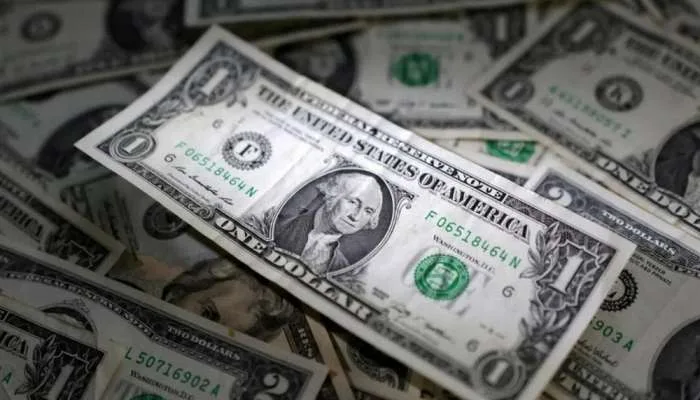
On Thursday, the dollar reached its highest level in the past seven weeks, following the Federal Reserve's decision to raise interest rates and announce the possibility of further increases. While investors await the decisions of the Bank of England (BoE) on Thursday and the Bank of Japan on Friday, the dollar has gained more strength in global markets.
Dollar Index Status
The dollar index, which measures the value of the U.S. dollar against a basket of currencies, last stood at 100.33, the strongest level since July 31. This increase in the dollar's value has led to a decrease in the euro's value to $1.1456, approaching its closest level in seven weeks. Additionally, the British pound remains unchanged at $1.3377, while investors await the results of the Bank of England's meeting.
Impact on Other Currencies
The Japanese yen has also been affected, fluctuating around 156.20 yen against the dollar, close to its lowest level in two weeks. Meanwhile, markets are paying special attention to the Bank of Japan's decision on Friday. The Australian dollar is at $0.7096, and the New Zealand dollar has stabilized at $0.5713.
These developments reflect the wide-ranging impacts that the Federal Reserve's monetary policies have on global financial markets. An interest rate hike typically leads to a strengthening of the national currency, and this situation can have significant consequences for other economies. Investors and analysts are closely monitoring subsequent developments in this area and are waiting to see whether other central banks will join this trend and adopt similar policies.
Overall, the Federal Reserve's interest rate hike and the markets' reaction to it signify deeper changes in global economic and financial policies that could also impact the economic decisions of other countries.
Read more: Oman leads in launching the world's first liquid hydrogen project · Will the housing market crash in 2026? Probably not!