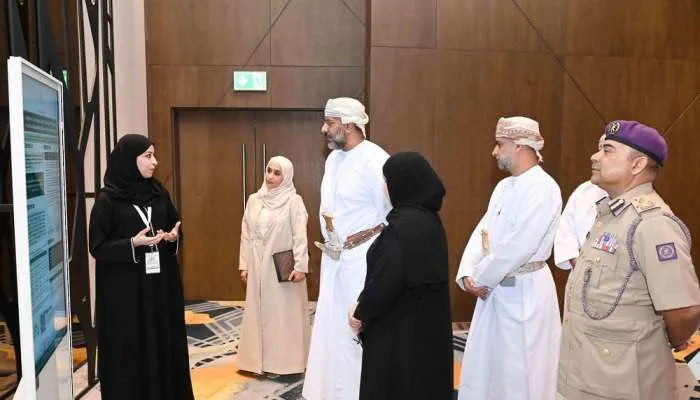
The Emergency Medicine Conference at the City Medical University of Oman, themed "Reconstructing Emergency Care: Where the Community Joins Critical Interventions," explored the importance of early identification of blood clots, strokes, and poisonings, as well as responses to cardiac arrest cases and contacting ambulance services. This event took place during a two-day conference that began today, organized by the Emergency Medicine Department of Sultan Qaboos Hospital at the City Medical University, featuring a group of speakers and specialists from inside and outside Oman.
Scientific Program of the Conference
The scientific program of the conference includes 56 lectures and scientific presentations, as well as three debates presented by 63 speakers. Approximately 200 emergency physicians, nurses, paramedics, medical students, and health professionals, along with 160 participants in educational programs, are attending this conference.
Read more: Ilham Zandasa's appearance on the television program 'Shelter' on the Persian Gulf Network
Dr. Aisha Hamad Al-Khamisi, Head of the Emergency Medicine Department at Sultan Qaboos Hospital and Chair of the Conference Organizing Committee, emphasized that the goal of holding this conference is to enhance the quality of emergency care and develop medical practices through the exchange of experiences, discussion of scientific evidence, and review of the latest developments in this field. These efforts aim to provide safer, higher-quality, and more compassionate care to patients.
The Role of the Community and Modern Technologies
She explained that emergency care is not limited to the speed of medical intervention but also involves the accuracy of clinical decisions, integration of health team efforts, and good communication, stressing that the community plays a role as a partner in the emergency care system through awareness, early response, and participation in supporting critical interventions.
Dr. Al-Khamisi noted that the conference provides a space for learning, discussion, reviewing medical practices, and exchanging experiences amid rapid developments in emergency medicine, particularly in the areas of resuscitation, critical care, diagnostic technologies, and applications of artificial intelligence, emphasizing the importance of utilizing evidence-based innovations to enhance clinical judgment while maintaining ethical responsibilities and patient safety.
The scientific sessions will address specific topics including updates on resuscitation, post-cardiac arrest care, sepsis, cardiac, respiratory, and neurological emergencies, poisonings, trauma, and pediatric and neonatal emergencies. The conference will also explore the applications of artificial intelligence in supporting clinical decisions, early identification of sepsis, and optimizing the use of antibiotics, while discussing issues related to governance, bias, medical liability, and patient safety.
Additionally, the conference has dedicated a section to emergency medical nursing, covering topics such as triage, initial assessment, and management of agitation and violence. Specific scientific tracks for emergency medicine residents and paramedics have also been planned to facilitate the exchange of experiences and enhance synergy among various health teams.
In conclusion, this conference will review 28 research abstracts, which will be distributed in the form of three oral presentations and 25 scientific posters, with the best research submissions being recognized at the end of its proceedings. Prior to the conference, five workshops were held over two days addressing the principles of point-of-care ultrasound (POCUS), pre-hospital critical interventions, extracorporeal cardiopulmonary resuscitation (ECPR), post-intubation care, and management of common fractures, aimed at enhancing participants' practical skills in dealing with emergency cases.
The holding of this conference aligns with the efforts of the City Medical University to develop national competencies, enhance the quality of health services, and increase the exchange of knowledge and specialized expertise, thereby contributing to the support of building an integrated health system that keeps pace with scientific developments and best practices in emergency medicine.
Read more: Water and waste crisis in Taiz, Yemen, concerns about disease outbreaks · Advancements in ENT specialization in Kuwait and its impact on quality of life