Benjamin Netanyahu, the Prime Minister of Israel, faces serious challenges as the new parliament of the country begins its work on Tuesday. The new composition of this parliament, which seems less inclined towards Netanyahu than before, could severely complicate his political life.
Political Threats for Netanyahu
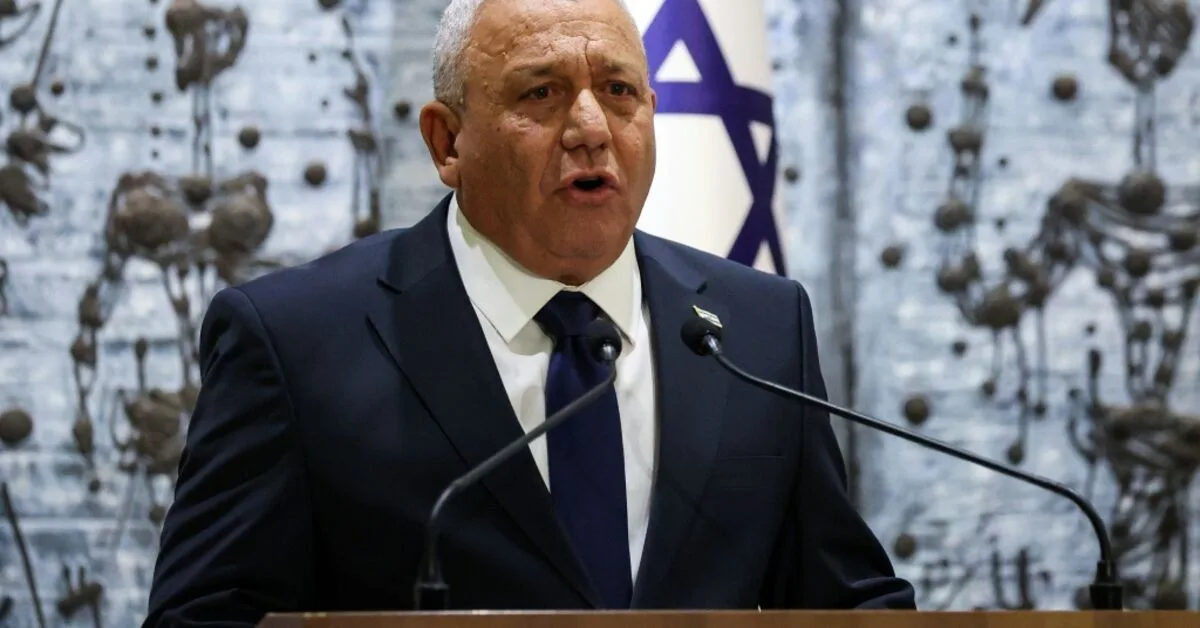
Gadi Eisenkot, the former Chief of Staff of the Israel Defense Forces, was tasked on Sunday by Isaac Herzog, the President of Israel, to form a new government. This mission will not be easy due to the lack of a decisive majority for either side, namely Eisenkot and Netanyahu. Until the new government is formed, Netanyahu will remain in his position as interim Prime Minister, but the new parliament, consisting of 120 representatives, can still take action against him.
Read more: The leaders of Cyprus agreed to open new border crossings
Asaf Shapira, a political expert at the Israel Democracy Institute, has stated that the failure to form a new government will not affect the powers of the Knesset (the Israeli parliament). Eisenkot has also warned military leaders that Netanyahu does not have authorization to restart a war against Iran, although this statement is more related to political issues than legal ones, as Netanyahu is still responsible for national security.
Legal and Social Challenges
Netanyahu's bloc in the new parliament has decreased to 53 seats, while Eisenkot, with 48 seats from the opposition bloc, has not managed to gain a majority. Meanwhile, 19 representatives from Arab parties, who are strongly opposed to Netanyahu and his right-wing government, have entered the parliament, although it is still unclear whether Eisenkot will cooperate with the Arab representatives.
One of the main promises of the opposition campaign is to establish an inquiry commission to investigate the security failures that led to the Hamas attack on October 7, 2023. This attack was the deadliest day for Israel. While Netanyahu denies any wrongdoing, his government has consistently opposed the establishment of an independent national commission, instead proposing a review by political appointees.
Even before the formation of the new government, the new parliament can create a special committee to investigate this attack and present its findings to a potential inquiry commission. Eisenkot has stated after the elections that establishing an inquiry commission will be one of his immediate priorities.
Additionally, the new parliament can quickly move to repeal some of the controversial laws of Netanyahu's government, including judicial reforms that are seen as his enemy. These reforms led to one of the largest protests in Israel's history. While the Hamas attack and subsequent wars have drawn public attention, concerns about the future of democracy remain in Israeli society.
Eisenkot and the opposition bloc can also work to repeal laws that limit the power of the Supreme Court and facilitate the removal of the Attorney General. Furthermore, lawmakers can revoke military exemptions for ultra-Orthodox Jews, which have caused dissatisfaction among many Israelis during a time of military personnel shortages in Israel.
Shapira has stated that repealing Netanyahu-era laws can simply be achieved through voting and reverting to previous policies. However, the process of passing new laws may take weeks as the opposition must coordinate its priorities.
The first political conflict will be over the election of a new president for the parliament. The current president, Amir Ohana, is a loyal supporter of Netanyahu in the Likud party. According to parliamentary rules, voting for the president can take place as soon as the inaugural session is held and must be done before the new government is sworn in.
On Thursday, three parties from the Eisenkot bloc sent a letter to the current president requesting that his successor be elected at the inaugural session. Ohana responded that the election of the president is usually conducted on the day the new government is sworn in.
Naftali Bennett, a key figure in the opposition, has promised to address the priorities of his bloc "immediately." He added, "We will quickly take control of the Knesset."
Read more: France accuses Iran of unprecedented cyber attack on supermarket refrigeration networks · Gadi Eisenkot and the challenges of forming a government in Israel