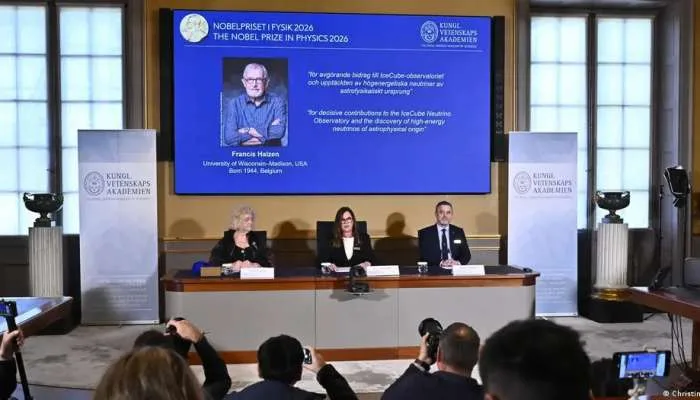
Francis Halzen, a Belgian physicist and professor at the University of Wisconsin-Madison, received the Nobel Prize in Physics for his groundbreaking contributions to the IceCube Neutrino Observatory and the discovery of neutrinos with an astronomical origin. This award was presented to him on October 3, 2023, by the Royal Swedish Academy of Sciences in Stockholm.
Scientific Achievements and Discoveries
The Royal Swedish Academy of Sciences stated in a press release that Halzen received this award for "his groundbreaking contributions to the IceCube Neutrino Observatory and the discovery of high-energy neutrinos from an astronomical origin." Neutrinos have been described as "ghostly messages from space," and understanding them could help us uncover the great mysteries of the universe.
Halzen expressed surprise during a phone call from the Academy congratulating him and thanked all those who participated in the project, adding that these discoveries required a lot of "luck."
IceCube Neutrino Observatory
The IceCube Neutrino Observatory is located in Antarctica and is considered a dedicated facility for capturing and studying neutrinos. Neutrinos are tiny, very low-mass particles that exist throughout the universe and originate from stars like the sun. Halzen's theory for capturing neutrinos dates back to the 1980s and ultimately led to the establishment of the IceCube Observatory.
The IceCube research team, consisting of about 450 physicists from 58 institutions in 14 countries, investigates major questions in physics, such as the nature of dark matter and the properties of neutrinos. The neutrinos we identify are like fingerprints that help us better understand the objects and phenomena in which neutrinos are produced.
The Nobel Prize in Physics will be awarded to the winners at a special ceremony on December 10. The prize amount this year is 12 million Swedish kronor (approximately 1.2 million dollars), which can be awarded to an individual, a small group, or an organization.
This award is the second Nobel Prize announced this week, following the Nobel Prize in Medicine awarded to three scientists for their work in optogenetics. Other prizes in chemistry, literature, and peace will be announced in the coming days.
Read more: The exit of American bombers from the British base following the suspicious detention of individuals related to Iran · The Greek Parliament revoked the immunity of the former commissioner following the 'Qatargate' investigations