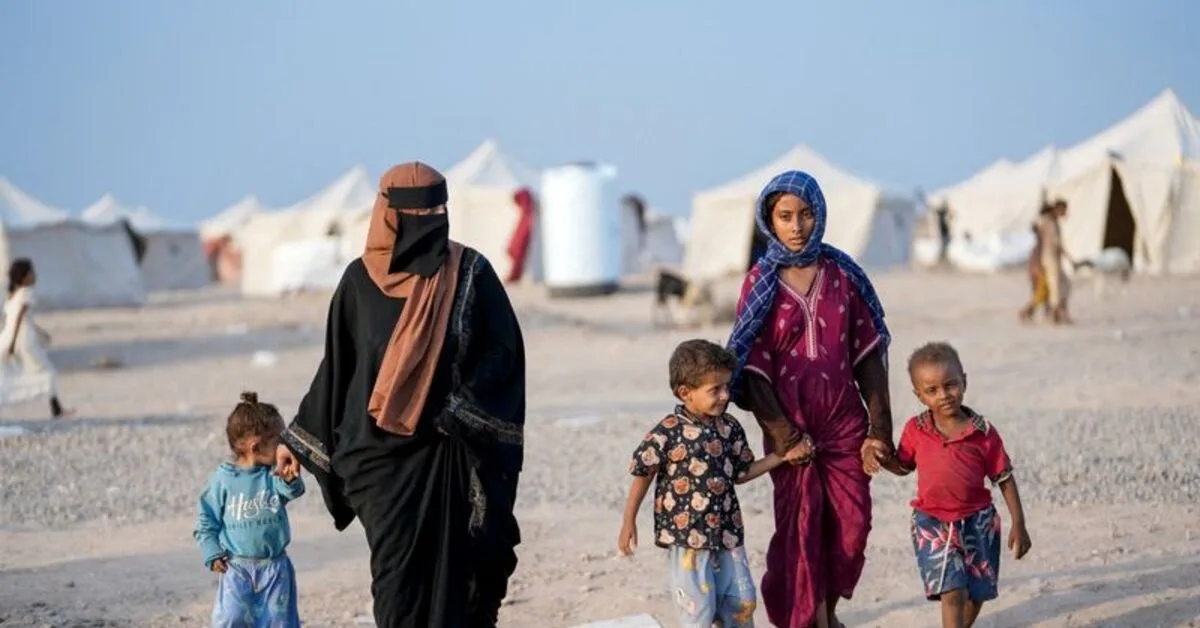
In Yemen, three-quarters of families in some areas are facing hunger due to the "completely devastating" effects of escalating conflicts, which have led to the displacement of tens of thousands and disrupted food supply for millions. The World Food Programme (WFP) has expressed deep concern over the current situation, stating that this crisis could have dire consequences for the country's food security.
Escalation of Conflicts and Humanitarian Crisis
Yemen is currently facing the most severe escalation of conflicts between Saudi Arabia and the Iran-aligned Houthi group. These conflicts have intensified significantly, especially after a relative halt in border attacks in 2022, and could affect control over various regions of Yemen. This situation has also impacted maritime routes in the Red Sea and poses a threat to global food security.
Read more: Egypt expels Ethiopian diplomat from Cairo
According to reports, within just a few weeks, the share of households suffering from food shortages has reached 74% in government-controlled areas. These areas include about 10 million people of the country's population. Hallingworth, the WFP's Executive Director of Operations, emphasized in a press conference in Geneva that the effects of this insecurity on food security could be devastating.
Economic and Human Consequences
The Houthis, who currently control a large part of northern Yemen, including the capital Sana'a, seized all Red Sea coasts from Saudi-backed forces in the internationally recognized government, which is based in the southern port city of Aden, last month. Displaced families are arriving around Aden and the mountainous city of Taiz, continuing their lives without water and food. Many of them have been forced to leave everything behind.
Prices of essential food items like flour and vegetable oil are rising in a country that imports about 90% of its food. Hallingworth stated, "We are facing a growing hunger crisis" and added that frontline areas like Taiz are becoming increasingly difficult to access due to the conflicts.
The World Food Programme has announced an increase in its response efforts but warned that if approximately $125,000 is not secured soon, their food stocks and financial resources to assist 152,000 newly displaced people and 1.4 million currently supported will run out.
Hallingworth also pointed to the potential effects of disruptions at two key points in the Middle East: the Bab el-Mandeb Strait near Yemen and the Strait of Hormuz on the other side of the Arabian Peninsula. This, along with disruptions in the Black Sea due to the Ukraine-Russia war, could lead to rising food and fuel prices and exacerbate food insecurity globally.
A new analysis released on Friday by UN Women shows that 11.7 million women and girls in 28 countries, including Yemen, Sudan, and Lebanon, may face food insecurity by the end of the year, stemming from the escalating situation in the Middle East and disruptions in the Strait of Hormuz.
Read more: Indian pilot discusses colleague's attack during Fly Dubai flight with Modi · Rapid advances of Houthi militants on Yemen's coasts and their impact on global shipping