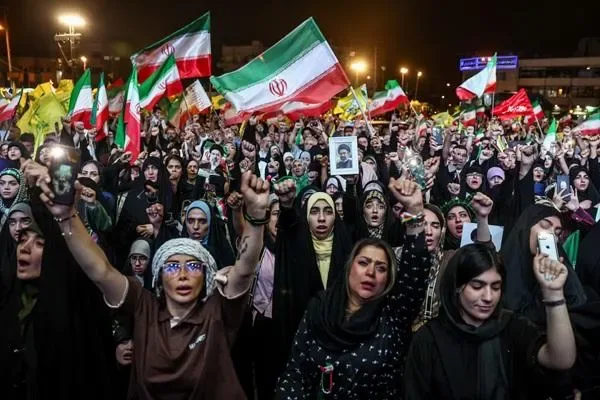
Abbas Papizadeh, a member of the Board of Directors of the Islamic Consultative Assembly, introduced the nighttime gatherings of the people as a response from society to the enemy's psychological warfare and economic pressures. He emphasized the new nature of wars that include political, economic, social, and cultural dimensions, and referred to the role of psychological warfare in advancing military objectives.
Psychological Warfare and Reducing Military Costs
Papizadeh explained the dimensions of psychological warfare, stating: "The enemy may spread a rumor that is fundamentally untrue, but by widely disseminating it, they attempt to influence public opinion." He added that psychological warfare has reduced the costs of military conflicts in many cases, citing examples from the U.S. war against Iraq and the developments in Libya as instances of this.
Read more: U.S. Prevents Mohammad Islami from Attending the Atomic Energy Agency Meeting
Media Propaganda and Economic Warfare
This member of parliament also referred to economic warfare as another dimension of hybrid warfare, stating: "The enemy uses media propaganda to place economic pressures and sanctions on the officials and the government, attempting to create a rift between the people and the government." He emphasized that Trump engages in media warfare against Iran through his tweets, thereby influencing public opinion.
Papizadeh further noted the vigilance of the Iranian people against the enemy's psychological warfare, stating: "The Iranian nation has become well aware of these types of psychological wars and media propaganda and has stood firm against them." He emphasized that the people's presence in the streets is a response to the enemy's psychological warfare, and the predictions of the U.S. and the Zionist regime have been completely disrupted.
Security in the Strait of Hormuz and the Indigenous Security Doctrine
In another part of his remarks, Papizadeh referred to ensuring security in the Strait of Hormuz, stating: "Security must be established by the Gulf countries and Iran." He criticized the U.S. military presence in the region, saying that this presence is one of the main factors of insecurity in the area, and that regional countries must strive to distance themselves from reliance on the U.S.
Papizadeh considered Iran's indigenous security doctrine to be the best solution for ensuring regional security and emphasized that neighboring countries can create local and indigenous security through cooperation and understanding. He concluded by noting that historical experience has shown that sustainable security is only achievable through cooperation among regional countries.
Read more: The Cost of the Iran War Reached 38 Billion Dollars · Abdel Fattah el-Sisi and Mohammed bin Salman Emphasized the Importance of Maritime Security in the Red Sea