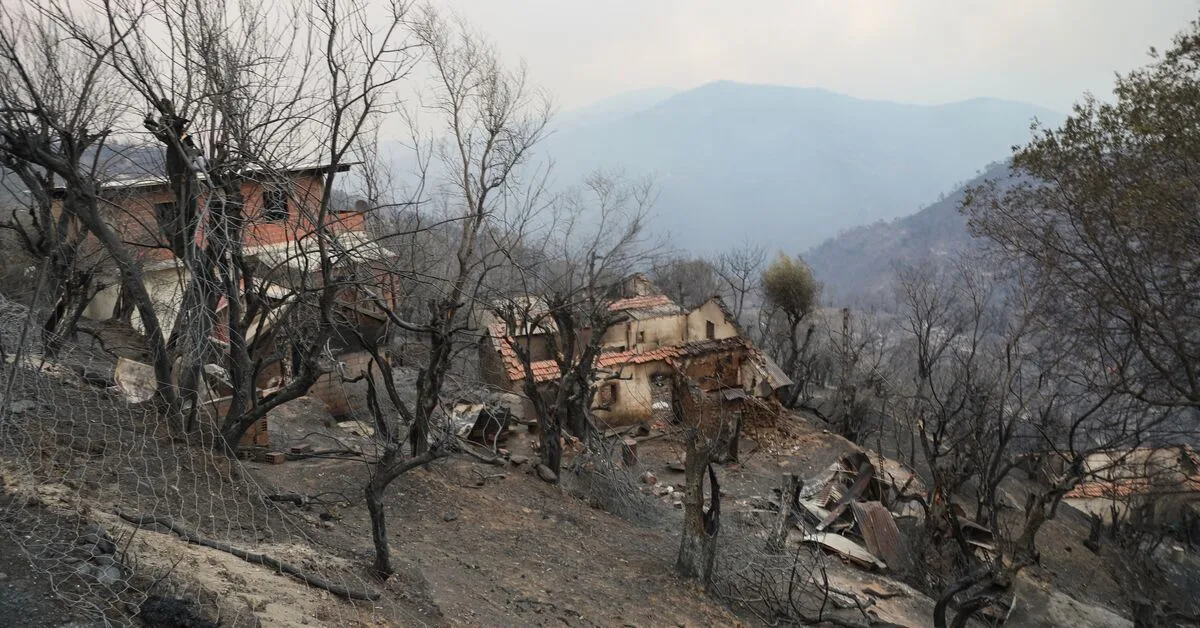
Algeria has approved a bill this week to reinstate the death penalty in order to combat arson crimes, which have increasingly caused serious damage to the country, especially during the summer season. This action effectively ends a 30-year suspension of the death penalty and has faced criticism from human rights organizations.
Details of the New Law Approval
The National Assembly of Algeria approved changes to the penal code on Thursday, reinstating the death penalty for individuals who deliberately commit arson, as well as for child kidnappers. Lotfi Boujemaa, the Minister of Justice of Algeria, described the execution of the death penalty as "an appropriate legal response to this type of crime." These changes now require approval from the National Council to become official law. This upper house has not yet announced a date to review these changes.
Read more: Sami Abushahda Withdraws from Israeli Parliamentary Elections
Political Support for the New Law
These changes were approved with the support of the National Liberation Front, which has ruled the country since Algeria's independence from France in 1962. Additionally, some Islamic representatives in the Assembly have also supported this bill. This action comes in response to the increase in deadly fires in the country, particularly in recent months.
Algerian President Abdelmadjid Tebboune called for the reinstatement of the death penalty for arson cases last September. Fires that occurred in late August and early September have officially resulted in the deaths of 12 people, while some news sources report that the number of victims may exceed 200. The affected areas mainly include Jijel and Béjaïa on Algeria's Mediterranean coast.
Human Rights Challenges and Criticism
Human rights organizations have strongly opposed this decision. In particular, Amnesty International has described this change as "hasty" and emphasized that it was approved without consultation with lawyers and human rights organizations. The organization also pointed to the vague and broad language of the new law and expressed concerns about its potential for abuse.
Freedom House has described Algeria as a "not free" country and referred to the dominance of the National Liberation Front over the country. The organization has also highlighted issues of electoral fraud and the suppression of protests and media in the country.
Algeria has not carried out any official executions since 1993. The International Federation for Human Rights stated last month that Algeria's penal code generally provides for the death penalty in cases where arson leads to death, but death sentences issued since then have not been carried out. This federation has also expressed concern that the reinstatement of the death penalty would be a step backward for human rights in Algeria.
Read more: Israeli Officials Will Interrogate the Co-Pilot of the Fly Dubai Flight · Tunisia: Summer 2026 is the Hottest Recorded Summer in the Country's History