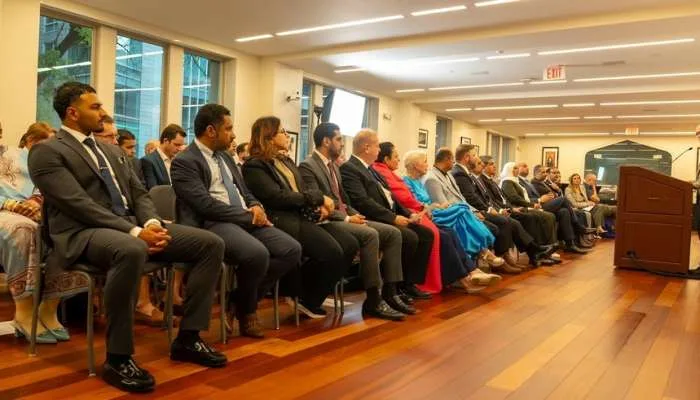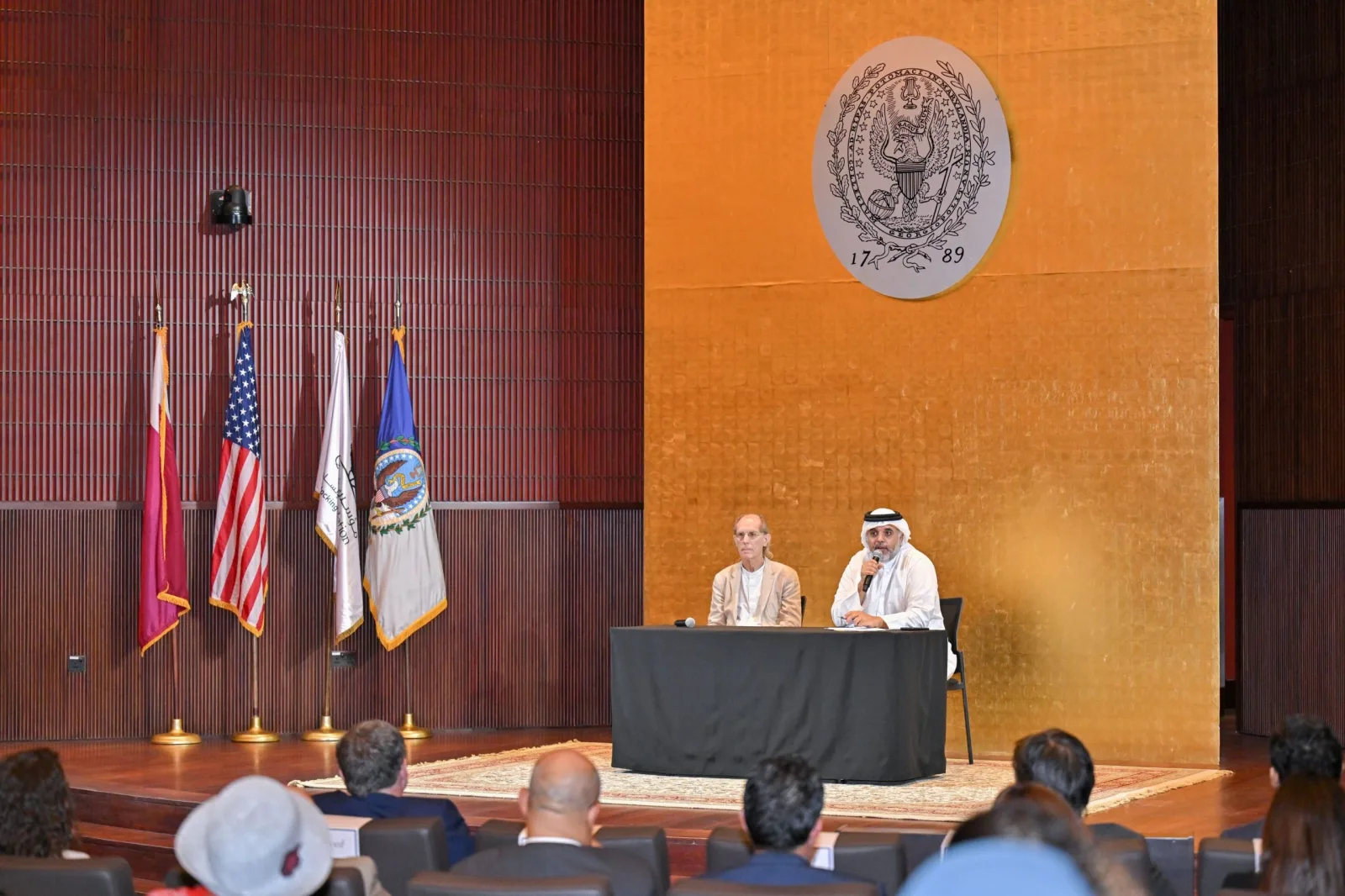
Ambassador Fahad Al-Attiyah spoke at Georgetown University Qatar (GU-Q) about how Islamic principles and heritage influence sustainable practices in a lecture titled "From Perspective to Action: Salama Bodies, Sustainability, and Heritage." This lecture examined how knowledge and rooted practices in Islamic civilization can impact contemporary approaches in agriculture, architecture, handicrafts, and natural resource management.
Social Responsibility and the Environment
In his speech, Al-Attiyah stated that sustainability begins with understanding communities' responsibilities towards the natural world. He said, "The world is not a random collection of resources waiting to be exploited by humans. Rather, it is a created system that has meaning, purpose, and proportion."
Read more: Arab artists honored at the International Dhofar Theater Festival in Oman
He referenced the Islamic concepts of "Tawhid" (the oneness of God) and "Khilafah" (the role of humans as stewards of the earth), adding that environmental responsibility goes beyond technology and policy, relating to how land is cultivated, buildings are constructed, goods are produced, and economies are organized. He critiqued developmental approaches that consider efficiency, speed, and growth as measures of progress.
Heritage and Contemporary Life
Al-Attiyah also addressed the role of heritage in contemporary life, noting that traditional buildings, handicrafts, and agricultural practices were not originally created as heritage but were part of daily life, reflecting local materials, environmental conditions, and the accumulated knowledge of generations. He added, "The challenge is not just to preserve heritage but to create conditions where heritage transforms into contemporary practices."
At Salama Bodies, a 50-acre farm, Al-Attiyah is exploring how to apply this knowledge in organic agriculture, traditional architecture, and creative and intellectual work. He emphasized that long-term resilience requires developing capabilities that align with these conditions, given Qatar's limited water and soil resources.
The ambassador said, "Sustainability cannot mean merely improving an unsustainable way of life; it must mean restoring an understanding of limits, sufficiency, responsibility, and purpose."
The event began with remarks from Clyde Wilcox, the interim president of the university, and was moderated by Patrick Loud, a theology professor at GU-Q.
Read more: Ceremony honoring the winners of the Literary Creativity Award held in Oman · Soybean prices drop on Wednesday morning: What factors are behind these changes?