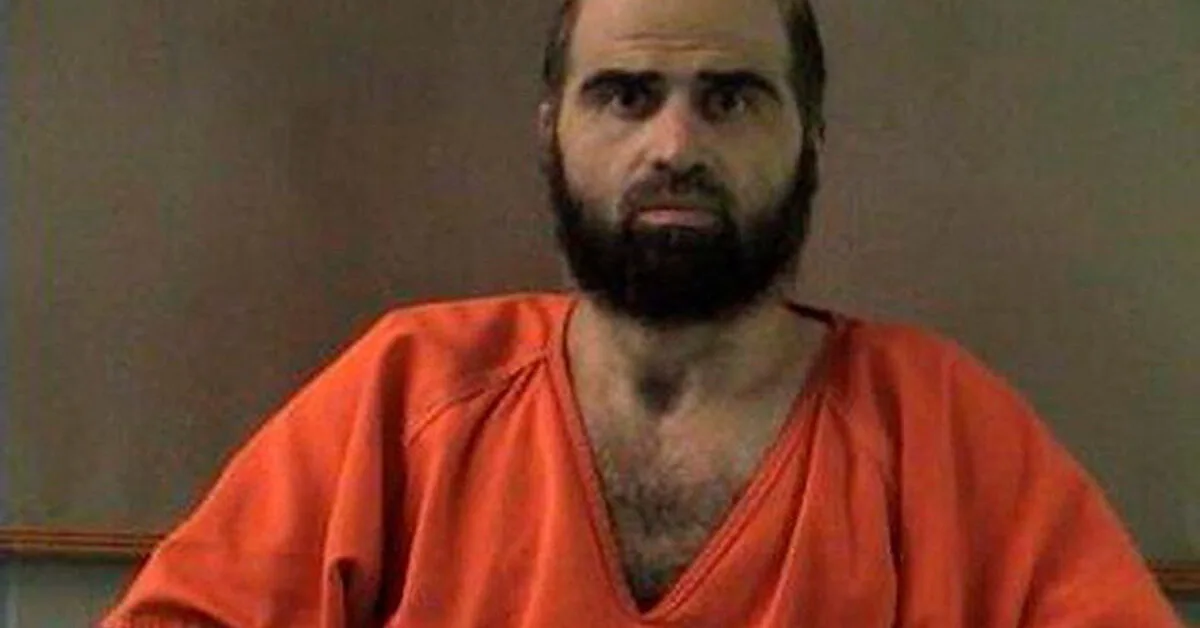
U.S. military forces have planned to live stream the execution of Nidal Hasan, a former army psychiatrist who was convicted of killing 13 people in the Fort Hood shooting in 2009, on December 3. If fully carried out, this could be considered the first live or public broadcast of a legal execution in history.
Background of Legal Executions and Public Broadcasting
Executions are typically carried out behind prison walls, and for years, governments and online platforms have attempted to limit the dissemination of violent execution images. According to death penalty experts, no legal execution has ever been broadcast live. Execution images are sometimes released after the incident occurs. For example, the execution of Saddam Hussein, the former leader of Iraq in 2006, was widely viewed around the world after official and unofficial videos were released, although the execution was not shown live.
Read more: Safety measures for diplomats and international schools in Saudi Arabia after explosions were heard
The Difference of Nidal Hasan's Execution from Global Modern Methods
Public executions are rarely conducted globally, and most countries that retain the death penalty carry out these executions away from public view. According to Amnesty International, public executions in recent years have primarily been concentrated in Iran and Afghanistan under Taliban rule. Hasan's execution is also significant for the United States, as public executions in this country generally disappeared in the twentieth century, with the last legal public execution occurring in 1936. Hasan's execution will be the first execution by firing squad by U.S. military forces since the execution of Eddie Slovik in 1945.
These developments reflect profound changes in how society interacts with the death penalty and the impact of new technologies on the dissemination of information and content in the digital age. The internet has become a platform where execution images can quickly reach global audiences, increasing challenges for governments and technology companies.
Reactions to the Live Streaming of the Execution
Governments and technology companies typically strive to reduce access to violent execution images. Major social media platforms have spent years removing execution videos linked to extremist organizations and violent groups. One of the first public reactions to this issue came from New Zealand, where the country's chief censor stated that officials would not be able to prevent residents from accessing the live stream while it was occurring. Live streams pose specific challenges for platforms as images may be viewed, copied, and distributed before monitoring systems can intervene.
Even countries that still conduct public executions have typically restricted filming and broadcasting rights. Saudi Arabia historically carried out public executions in front of spectators, but recording them was prohibited, and these executions were largely halted until 2019.
Read more: Suspension of Lufthansa and Air India flights to Riyadh after Houthi attacks · Australia's immigration policy and its lessons for the European Union and the United States