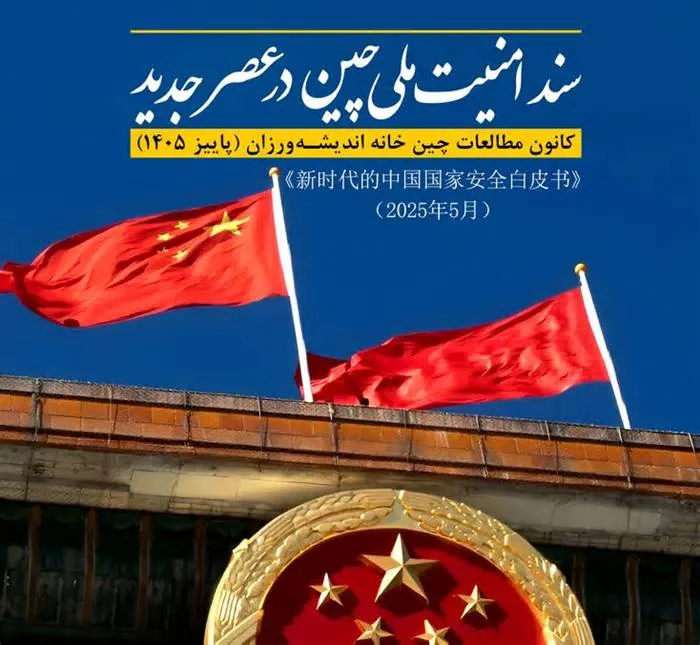
The white paper of China, recognized as the first comprehensive document in this country on national security, was published by Xi Jinping and outlines the Chinese perspective on national security and economic development. This book is particularly important for the Islamic Republic of Iran in the current circumstances.
History and Ideological Changes in China
Mao's Red Book, known as the ideological guide of Chinese society, was a collection of teachings by Mao Zedong that aimed to provide guidance for the Chinese nation. This book was structured around five main axes including the supremacy of will and ideology, people's war, class struggle, democratic dictatorship of the people, and the fight against imperialism. However, with the emergence of deadlocks in Mao's solutions, changes began under the leadership of Zhou Enlai. Zhou Enlai, by revising China's policies, also changed the country's view of its enemies.
Read more: The presence of the Saudi ambassador in Qom and its diplomatic dimensions
This theoretical division played a significant role in China's diplomatic chess and gradually, with the publication of the new white paper, China has adopted a long-term and development-oriented approach to national security.
China's White Paper and Its Consequences for Iran
Hamed Vafaee, a faculty member at the University of Tehran, has analyzed China's white paper and introduced this document as a strategic manifesto of Beijing in security policymaking. He believes that this document transcends traditional frameworks of Chinese security and views national security as a systematic and comprehensive approach. This perspective includes political security, people's security, and economic development.
In this regard, Vafaee emphasizes that Iran should learn from China's institutional and technological doctrine to advance its relations with this country towards development-oriented and proactive planning. He also points to the importance of this document in countering Western security discourse and introduces it as an alternative narrative in the international order.
China's white paper, emphasizing "common security" and opposing unilateralism, can particularly provide countries like Iran with an opportunity to reconsider their security and economic policies.
Read more: Instability in the Persian Gulf region and the challenges of old alliances · Iran takes responsibility for new attacks on ships in the Strait of Hormuz