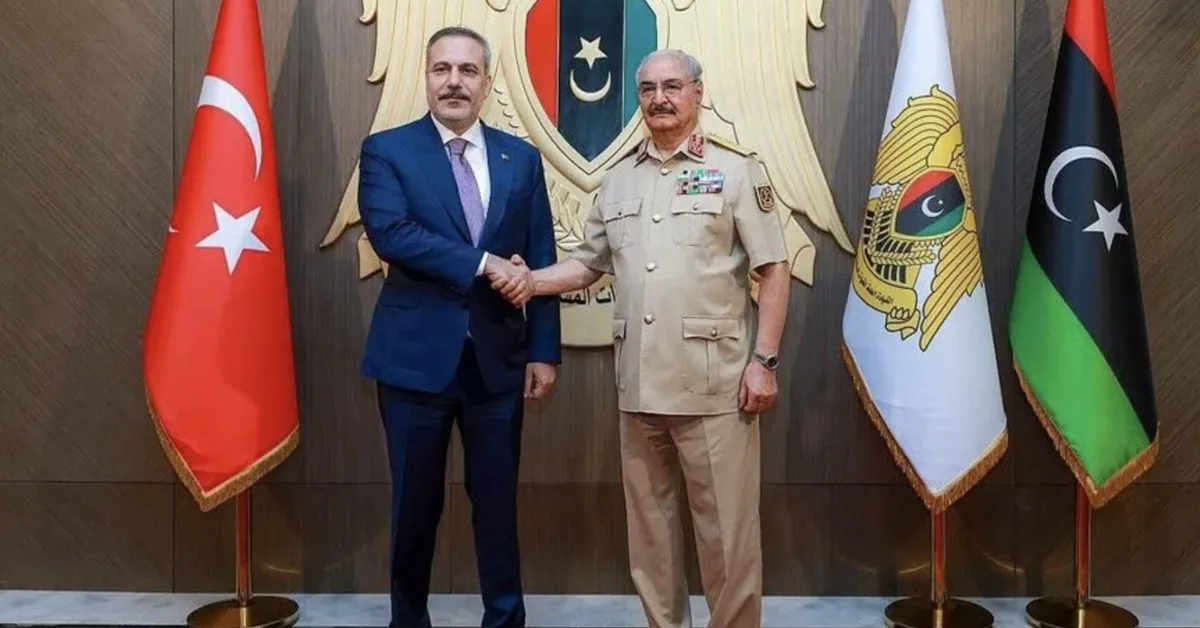
The Eastern Libyan Parliament, in a vote held on Tuesday, unanimously approved the controversial maritime agreement between Turkey and the Tripoli-based government. This action is interpreted as a geopolitical victory for Ankara and also as an effort by Major General Khalifa Haftar, Deputy Commander of the Eastern Libyan Armed Forces, to secure Turkish support for his presidential ambitions.
Details of the Maritime Agreement
Abdullah Beligh, spokesperson for the Libyan Parliament, stated: "The House of Representatives unanimously voted to accept the memorandum of understanding signed between the Government of National Accord and the Republic of Turkey regarding the determination of maritime jurisdiction areas in the Mediterranean Sea." This agreement, signed in 2019 between Turkey and the Government of National Accord (the Tripoli-based government), initially faced strong opposition from its eastern rivals.
Read more: The Story of Mahmoud Khalil and His Request to the US Supreme Court
Libya is generally divided into two parts: the Tripoli-based government and a rival government in the east controlled by Major General Khalifa Haftar. In 2020, the Eastern Libyan Parliament passed a resolution that not only rejected this agreement but also severed all relations with Ankara. However, recent political changes and internal pressures seem to have led to shifts in positions.
Political Implications
This maritime agreement could significantly impact Turkey-Libya relations. Given the strategic position of the Mediterranean Sea and the natural resources in the region, the maritime agreement could allow Turkey to have a greater influence in energy sectors and maritime policies. Additionally, this agreement could assist Major General Haftar in establishing stability and increasing his political influence in Libya.
Analysts believe that this action could be indicative of larger developments in the region. Turkey, as a key player in the Libyan crisis, has always sought to strengthen its position in the country. The approval of this agreement could signify a shift in the balance of power in Libya and also an increased influence of Turkey on regional policies.
As Libya continues to grapple with internal crises and political instability, this agreement may align with the political and economic goals of the involved parties. It appears that this agreement will serve as a strategic tool for both sides.