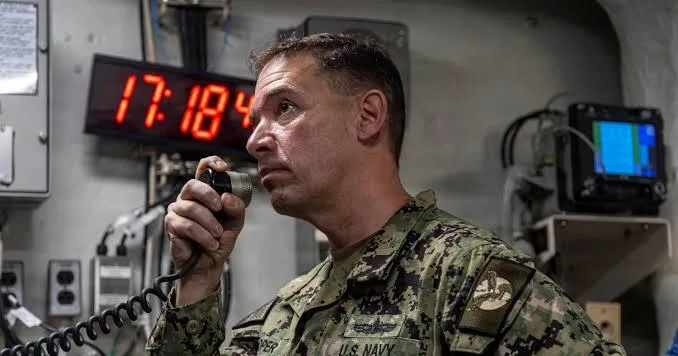
Brad Cooper, the commander of CENTCOM, stated in his recent remarks that, with the support of American forces, over one billion barrels of crude oil have passed through the Strait of Hormuz from the Gulf countries in recent months. This is while the Islamic Republic has not exported any oil through this route due to the American naval blockade.
Support for Commercial Shipping
On Saturday, September 28, in a video released by CENTCOM, Cooper pointed out that American forces have supported the passage of over two thousand commercial ships through the Strait of Hormuz during this period. He also stated that the main shipping routes in this waterway have been cleared of mines, which has helped increase the security of ship traffic.
The CENTCOM commander also mentioned that the volume of crude oil and liquefied natural gas transported through the Strait of Hormuz in the past two weeks has been higher than at any other point in the last six months. This increase in oil and gas volume indicates an improvement in shipping conditions in this sensitive region.
Cooperation with Gulf Countries
Cooper referred to CENTCOM's cooperation with six member countries of the Gulf Cooperation Council, shipping companies, and insurance firms, stating that these collaborations have helped increase ship traffic in this route. At the same time, American forces and regional partners are strengthening air defense and forming a new coalition unit to counter threats from aggressive drones.
Before the start of the U.S. and Israel's war against Iran on February 28 of last year, about 20% of the world's consumed crude oil and liquefied gas passed through the Strait of Hormuz. Estimates indicate that before the war began, approximately 18 million barrels of oil passed through this waterway daily. These statistics highlight the importance of the Strait of Hormuz as one of the most significant commercial shipping routes in the world.
In recent months, CENTCOM has reported on American forces' operations to keep the commercial shipping route open in the Strait of Hormuz, coinciding with the implementation of a naval blockade on Iranian ports. This command had previously announced that the blockade includes ships heading to or departing from Iranian ports.
In contrast, the Islamic Republic has reported in recent months that it is exercising control over shipping routes in the Strait of Hormuz, and the Revolutionary Guards have recently announced that they targeted several commercial ships passing through the southern route of this waterway. These developments indicate that tensions in this region continue and require international attention and oversight.