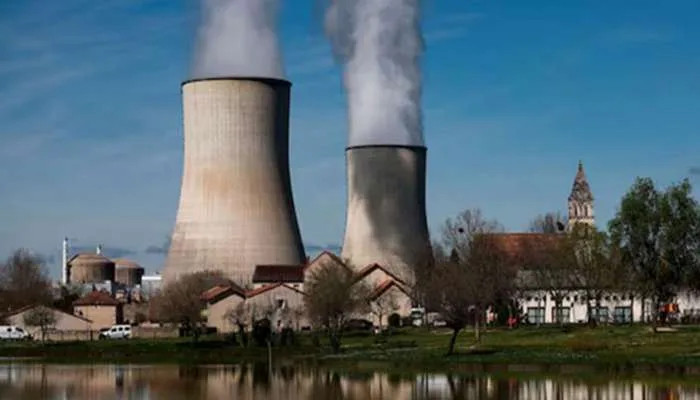
The challenges of uranium supply in the path of expanding nuclear energy capacity globally have been raised seriously. According to the International Atomic Energy Agency (IAEA) report, uranium production from existing mines is expected to decline significantly, while demand for nuclear fuel is on the rise.
Increasing Gap Between Demand and Supply
The recent IAEA report indicates that the gap between global aspirations for nuclear energy and the infrastructure related to the extraction and processing of fuel is increasingly widening. This raises concerns about the security of fuel supply and the investments needed to develop new uranium resources. Specifically, it is predicted that uranium production from existing mines will decrease by at least 50% by 2040, while global demand for uranium may increase by between 50% and 144% by 2050.
Read more: Using Artificial Intelligence to Help Find Missing Children in Mexico
Challenges of Developing New Mines
Developing new uranium mines requires significant investments and long timelines. According to the report, the process of discovering a new deposit until the start of extraction operations typically takes between 10 to 15 years. Meanwhile, there is a need to expand or extend the life of existing mines and also to reopen closed mines to ensure future fuel supply.
Moreover, the challenges are not limited to uranium extraction. The International Atomic Energy Agency also reports increasing pressures on the infrastructure necessary for processing nuclear fuel. The global nuclear fuel supply chain is currently facing imbalances, and the capacity to convert fuel is significantly lower than demand, which will become increasingly concerning by 2040.
Despite the fact that global uranium enrichment capacity currently exceeds demand, the uneven distribution of this capacity across different countries raises further concerns in the supply chain. These challenges become more significant as countries increasingly turn to nuclear energy as a solution to growing electricity needs, improving energy security, and reducing dependence on fossil fuels.
Additionally, the expansion of artificial intelligence and data centers also contributes to the growing interest in nuclear energy as a reliable source for electricity supply. The International Atomic Energy Agency emphasizes that the nuclear industry must address financial challenges, project costs, and legal barriers to expedite the construction of new reactors.
For India, which aims to increase its nuclear energy production capacity to 100 gigawatts by 2047, the challenges of the global supply chain are of high importance and highlight the need for reliable fuel supply and the development of necessary infrastructure for long-term expansion.
Ultimately, this report indicates that the speed of future nuclear energy expansion depends not only on reactor construction but also on timely investments in uranium extraction, fuel processing, and supporting infrastructure.