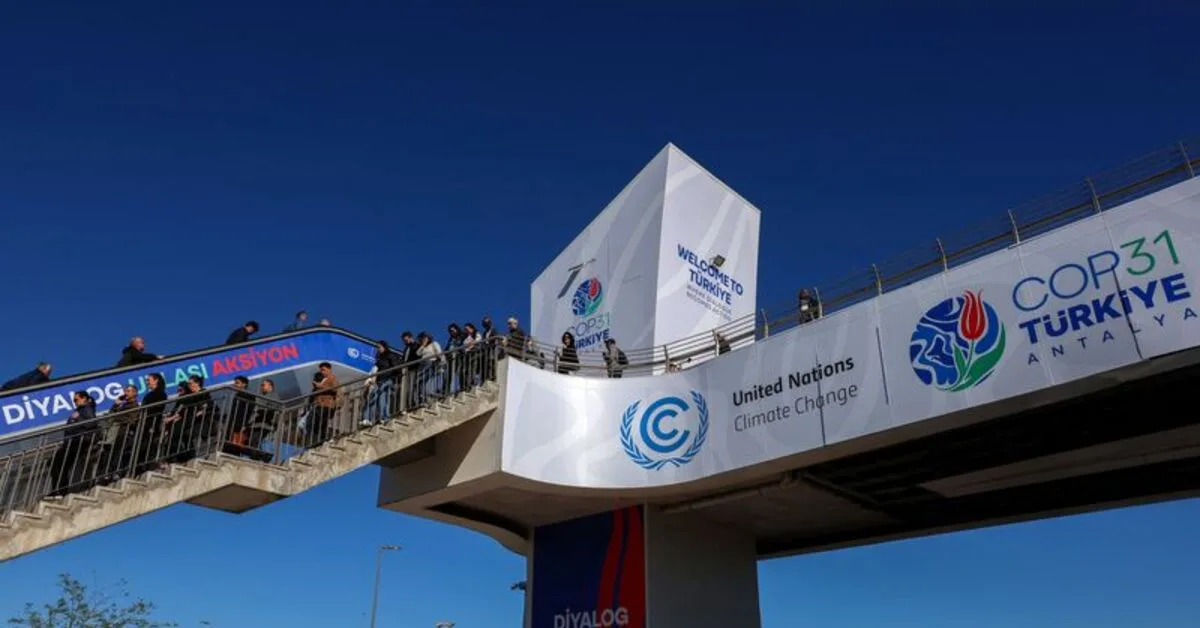
The COP31 negotiations will begin on Monday on the Mediterranean shores of Turkey, where representatives from nearly 200 countries will come together for two weeks to discuss and exchange views on climate goals. During this period, concerns arising from energy security due to wars, the increasing energy demand due to advancements in artificial intelligence, and the lack of cooperation from the United States on climate change have added new challenges to global efforts to combat global warming.
New Challenges in Climate Negotiations
The U.S. war with Iran and its impacts on oil supply have led countries to seek oil imports and activate coal power plants. Additionally, the rapid rise of artificial intelligence has increased energy demand, while the world's largest historical greenhouse gas polluter has refrained from cooperating in this area. These issues have created a challenging backdrop for Turkey as the host of COP31. John Holdren, a professor of environmental policy at Harvard University, has expressed that "it is hard to be optimistic."
Read more: U.S. Legal Delegation to UN Climate Summit in Turkey
Turkey's Goals at COP31
Turkey, in its presidency of COP31, has focused this session of the UN summit on a goal to provide electricity to more than one-third of the global economy by 2035. This goal exceeds the current level of about one-fifth. Turkey has urged countries to join a commitment to support this goal. Theoretically, such a goal could help reduce greenhouse gas emissions. However, climate activists have criticized this commitment, as there is no requirement for this electricity to be generated from low-carbon sources.
Countries including Pacific Islands, which are more vulnerable to rising sea levels, are generally calling for a clearer global roadmap to move away from fossil fuels. This issue has always been challenging at climate summits. Many oil and gas-producing countries, including Saudi Arabia, believe that fossil fuels can still be a significant part of the global energy mix in a climate-friendly world, provided they are accompanied by technologies that reduce emissions.
Pressure for faster action on climate change has increased. A report from the United Nations Environment Programme in October indicates that the world is currently on the brink of exceeding 1.5 degrees Celsius of warming compared to pre-industrial times. This threshold was established at the Paris climate summit in 2015.
The year 2026 was marked by heatwaves in Western Europe and glacial melt in Nepal, leading to a catastrophic flood that killed over 1,450 people, with thousands more still missing. Manjit Dhaliwal, an advisor to the group of least developed countries, emphasized that "this year has been one of the deadliest years for climate-related disasters."
The Iran war has highlighted global dependence on fossil fuels, just as Russia's invasion of Ukraine and the sanctions imposed on Moscow's energy exports have also impacted it. Some believe that the disruptions caused by wars have also clarified the benefits of turning to renewable resources.
Meanwhile, the use of renewable energy has also increased, particularly with the growing export of clean and cheap technologies from China, which has given climate activists hope for pragmatism.
At COP31, Turkey has called on governments, businesses, and other entities to join a statement on the principles of sustainable development and deployment of artificial intelligence. John Denton, Secretary-General of the International Chamber of Commerce, stated that "implementation cannot just remain a slogan and should not be left to voluntary initiatives." He added that "COP31 must send clear policy signals that give businesses confidence to invest in electrification and energy transition and turn adaptation needs into investable projects."
Read more: Pamaran Island in the Philippines Combats Rising Sea Levels with Natural Solutions · Brazil Concludes COP30 with Roadmaps to Reduce Fossil Fuels and Deforestation