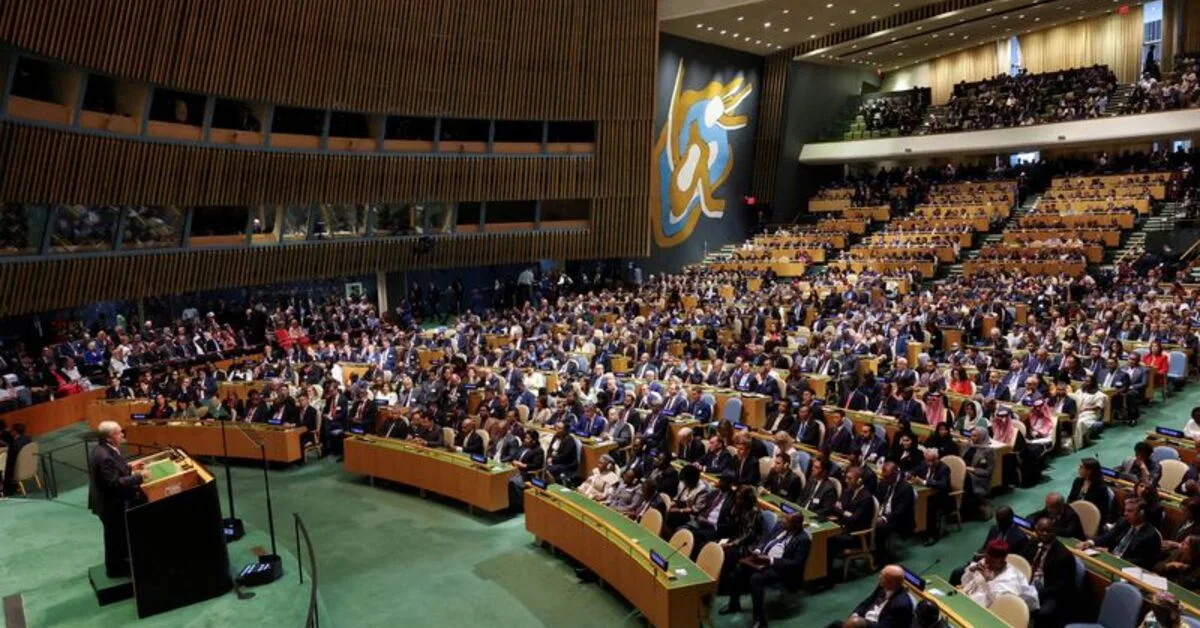
The United Nations hosted world leaders in a week filled with speeches and diplomatic meetings, who quickly exited the building after these events. Although no progress was made on deep global disputes during these sessions, discussions about the wars in Iran and Ukraine advanced, and global powers took the opportunity to discuss the dangers of artificial intelligence with industrial leaders.
Iran and U.S. Talks
The United Nations served as a venue for facilitating the first negotiations between American and Iranian officials since the collapse of the ceasefire in July. Iran's Foreign Minister, Abbas Araghchi, and American representatives, Steve Witkoff and Jared Kushner, communicated through intermediaries. A senior Iranian official emphasized that these efforts must continue; even as the leaders of Iran and the U.S. exchanged harsh words in the General Assembly hall.
Read more: Norway Provides an Additional $13 Million in Aid to Palestinians
Global Concerns About Artificial Intelligence
Alongside issues of war and peace, global concerns surrounding artificial intelligence came to the forefront. The United Nations held a meeting in the Security Council, attended by Sam Altman, CEO of OpenAI, and Dario Amodei, CEO of Anthropic. These industrial leaders urged governments to continue collaborating on AI management. Additionally, Australian Prime Minister Anthony Albanese reported the infiltration of an AI agent into the Australian government website, raising further concerns.
In this context, U.S. President Donald Trump dismissed the dangers of artificial intelligence as an unfounded conspiracy in his speech at the United Nations, emphasizing its positive capabilities.
The unexpected presence of Delcy Rodríguez, the interim President of Venezuela, also drew attention at the United Nations. She met Trump for the first time, focusing on her group's efforts to restructure their multibillion-dollar debts. However, the absence of General Abdel Fattah al-Burhan, the head of the Sudanese army, whose visa was denied by the U.S., highlighted deeper tensions present at these meetings.
The United Nations, as an international body, continues to strive to manage global crises despite financial and political challenges. With António Guterres's term as Secretary-General ending this year, many political observers are looking for his successor.
Read more: Discussion Among Military Leaders of Pakistan, Saudi Arabia, and Turkey on Strengthening Military Relations · Foreign Ministers of Russia and Iran: The Only Diplomatic Solution to Tensions in the Middle East