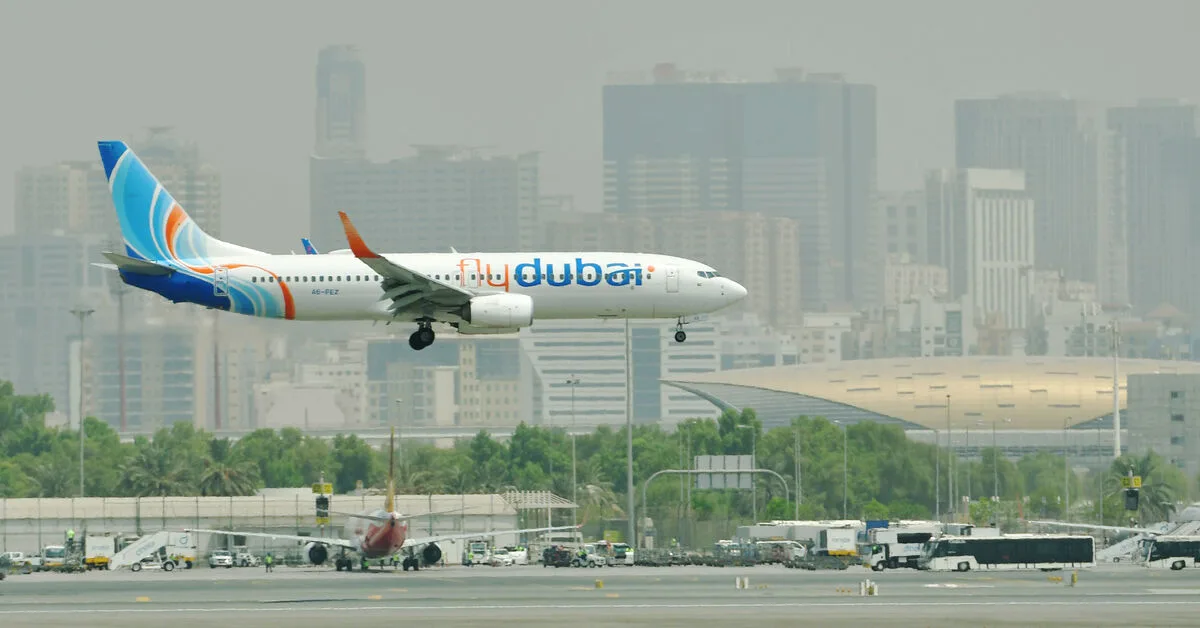
The Flydubai flight FZ1073, which was en route from Dubai to Tel Aviv, made an emergency landing on Wednesday morning due to an emergency code sent in Saudi Arabia. According to reports, this flight, which carried 174 passengers, included 100 Israeli nationals, and at the onset of the emergency situation, Israeli security agencies suspected that the aircraft might have been hijacked.
Details of the Emergency Situation
Flydubai confirmed in a statement that a conflict between the pilots in the cockpit was the cause of the emergency code being sent. According to data provided by the flight tracking system Flightradar24, the Boeing 737 Max 8 sent the emergency code 7700 while in Israeli airspace. This situation led to the aircraft descending from 34,000 feet to about 16,000 feet, which is significantly lower than the normal flight altitude on this route.
Read more: UN General Assembly Meeting; Defending the Rights of the Palestinian People by Asian Countries
Response of Security Agencies and Measures Taken
The sending of the emergency signal prompted an immediate response from Israeli security agencies. Two Israeli Air Force fighter jets were dispatched due to the unusual behavior of the aircraft. Benjamin Netanyahu, the Prime Minister of Israel, and Israel Katz, the Minister of Defense, convened at the Ministry of Defense in Tel Aviv to assess the incident and decided not to allow the aircraft to land at Ben Gurion Airport. The flight was scheduled to land at 9:10 AM local time at Ben Gurion Airport.
This incident clearly demonstrates the high sensitivity of air security in the region and the rapid response of relevant authorities to emergency situations. Additionally, the occurrence of tension among pilots during flight poses a serious challenge for airlines and regulatory bodies.
Read more: The Election of Fatima Al-Zahra Al-Mansouri as the First Female Prime Minister of Morocco · Military Cooperation between Saudi Arabia, Turkey, and Pakistan in Facing Iranian Threats