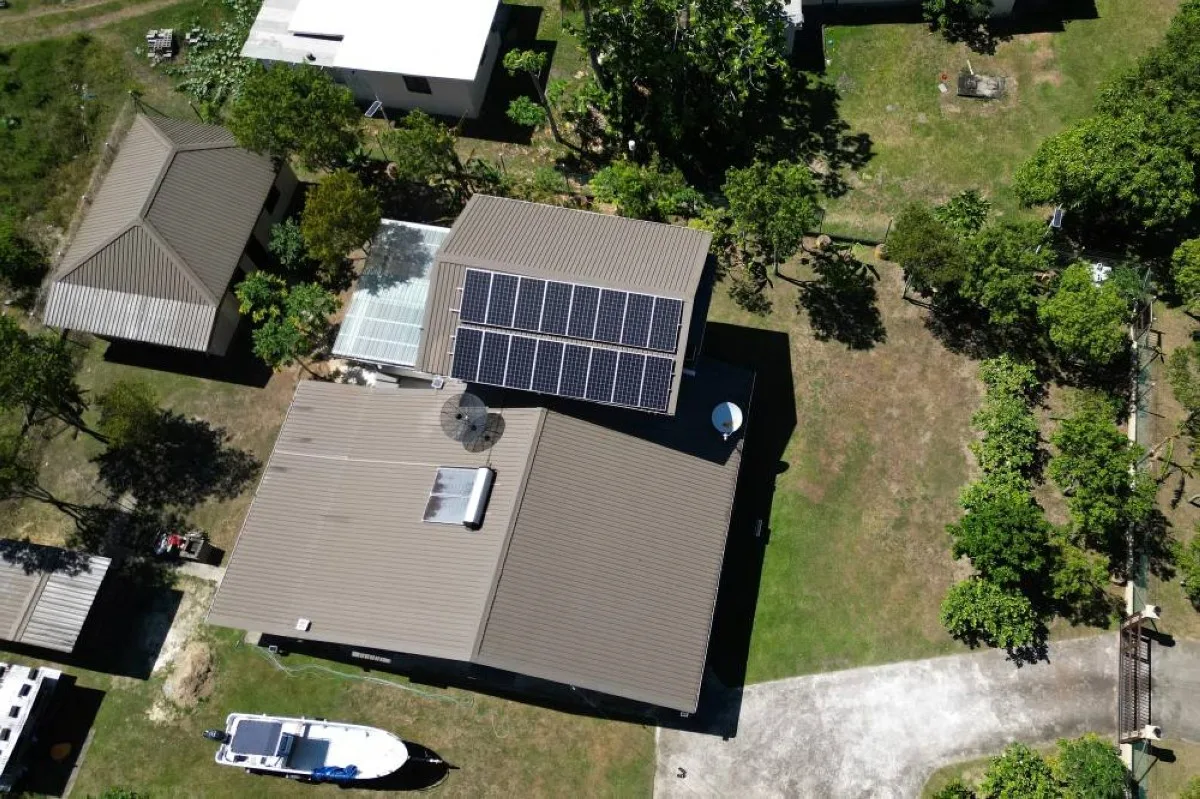
The village of Rakorokolevu in Fiji, with a population of about 400, has recently connected its last building to the power grid. However, the residents of this village are facing difficult conditions as Middle Eastern wars and other factors have led to increased energy costs, challenging Fiji's dependence on imported fuels.
Energy Cost Challenges
Voraniki Naliwo, the village spokesperson, noted the high electricity costs, saying: "Electricity prices in Fiji are very high." She added: "Some households pay over 100 Fijian dollars (44 US dollars) for electricity, and some public buildings like churches and community halls reach about 200 to 300 Fijian dollars a month." Naliwo also mentioned that she herself pays about 60 Fijian dollars a month for electricity, which also seems very high.
Read more: Prison sentence and fine for those accused of harming turtles in Oman
Moving Towards Renewable Energy
Since the US and Israel attacked Iran in February, fuel shipments from the Gulf have decreased. Naliwo stated: "We were told that there is no more fuel, and that is why we thought of using solar energy." The village hopes to reduce shared electricity costs by installing solar panels on public buildings. She pointed to the sky and said: "Solar energy is available here right now."
Fiji hosted the UN's "Pre-COP" meeting on climate change, where Pacific island countries called for accelerated access to financial resources for renewable energy projects. This meeting took place before the main COP summit in Turkey, where planners have urged countries to commit to electrification and replacing fossil fuel technologies with electric options.
Fiji's Minister for Public Works and Meteorological Services, Ro Filipe Tuisawau, attributed the rising energy prices to over-dependence on fossil fuels and El Niño conditions. He warned that Fiji would face a critical situation if rainfall does not increase by mid-November.
Fiji spends an average of 12 percent of its GDP on fuel imports, which Tuisawau stated is "a heavy burden on our resources." The country plans to source 90 percent of its energy from renewable sources by 2035 and will spend 2 billion Fijian dollars over the next decade to achieve this.
Read more: Oman held a workshop on combating the weed 'Parthenium' · 312% increase in the added value of the private sector in Oman