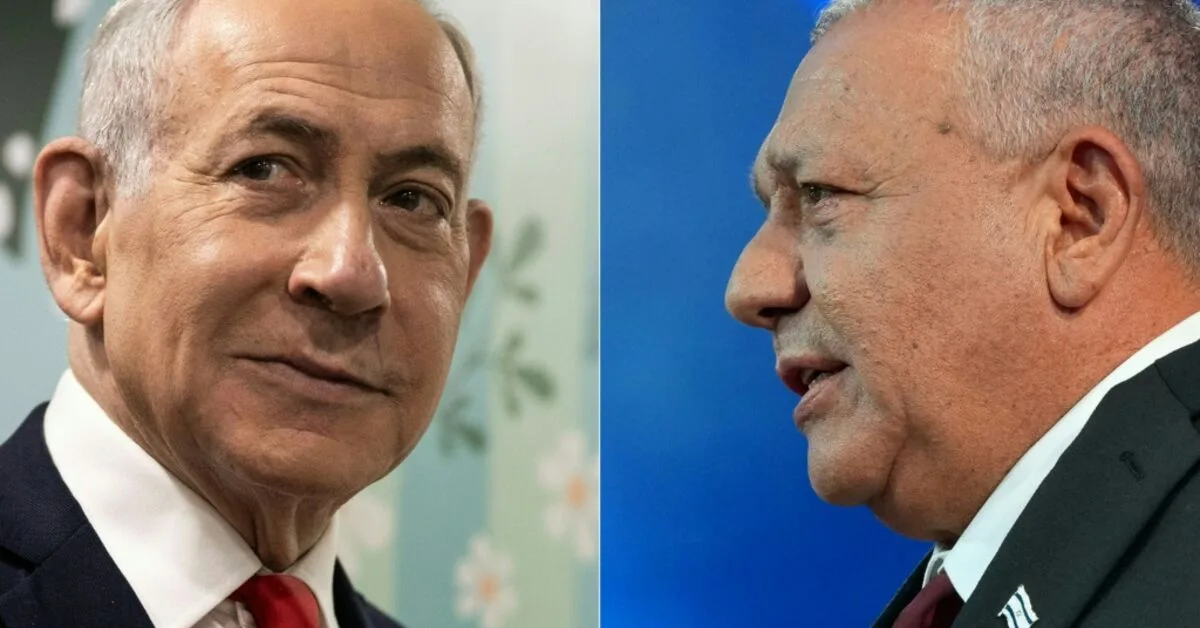
Gadi Eisenkot, former Chief of Staff of the Israel Defense Forces, has announced that he will strive to form a broad government as soon as possible, but his path to power remains uncertain following inconclusive elections that failed to unseat Benjamin Netanyahu.
Opportunity to Form a New Government
The President of Israel, Isaac Herzog, granted Eisenkot the first opportunity on Saturday to attempt to form a new government. The elections on October 27 deprived both sides of the necessary majority to govern. Herzog assigned this mission to Eisenkot during a meeting at the President's residence, marking the beginning of a "very complex" process, according to Eisenkot.
Read more: The United States appoints Stephen Miller as the new Chief of Staff of the White House
Eisenkot stated in this meeting: "We are in a state of emergency and are approaching a point where there is no return for the Israeli government. We must form a national emergency government. This requires creative and unconventional political actions." He also noted that Israeli democracy is in a vulnerable moment and must address the numerous challenges the country faces.
Challenges Ahead for Eisenkot
Eisenkot has deemed it essential to advance peace negotiations in Gaza and agreements with Lebanon and other neighbors, citing security threats from Iran. He added: "There is great importance for new leadership, leadership that the people can look into its eyes and trust."
Eisenkot's proposals for forming a government include creating a minority government with support from Arab parties on key issues, forming a coalition with ultra-Orthodox parties that he and his allies have previously distanced themselves from, or establishing a unity government with Netanyahu. Each of these options faces significant challenges.
Eisenkot expressed confidence that it is possible to form a new government with a large majority in the Knesset (Israeli parliament). He has been granted 28 days to form a new government, with a possible 14-day extension. If he fails, Netanyahu will likely have his chance to form another government. If Netanyahu also fails in this endeavor, new elections may be called.
Isaac Herzog, who has consulted with all parties, stated that Eisenkot has received "clear and unequivocal support" from the majority of lawmakers to form a new government that would gain the trust of the Knesset.
The Likud party, led by Netanyahu, has won the most seats in the 120-seat Knesset with 27 seats, but the broader religious-nationalist coalition has only secured 53 seats, falling short of the 61-seat majority in the 120-seat parliament. The Yashar party, led by Eisenkot, has emerged as the second-largest party with 21 seats.
Netanyahu has called for the formation of a unity government from all Zionist parties to preserve the Jewish state, but has shown no signs of willingness to serve under Eisenkot's leadership. In this context, Avigdor Lieberman, leader of the "Israel Our Home" party, has stated his position against allying with Netanyahu and forming a government that has the support of Arab parties.
Lieberman has also indicated that he may change his position if ultra-Orthodox parties agree to a law requiring ultra-Orthodox men to serve in the military. He emphasized: "Given the current reality, to prevent another election and end Netanyahu's term, there is no choice but to make difficult decisions and resolve issues."
Read more: The Sultan of Oman congratulated the King of Cambodia · The defeat of the Shas party in the Israeli elections and its political power reduction