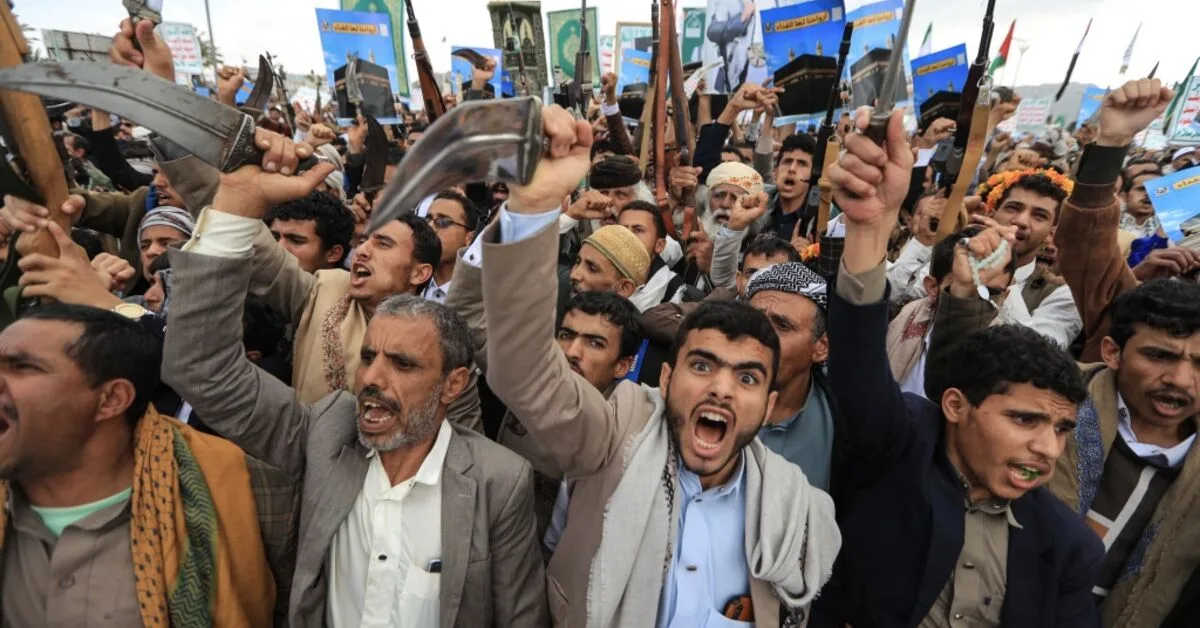
The Houthi missile attack on King Khalid International Airport in Riyadh on Saturday not only transferred the existing suffering in Yemen to Saudi Arabia but also forced Donald Trump, the President of the United States, to reconsider his diplomatic and political strategy designed to advance the midterm elections next month.
New Challenges in U.S. Policies
Trump's plan, which was unveiled just on Friday, was introduced as a response to a "global problem," namely the rising diesel prices, which he attributed to the attacks by Volodymyr Zelensky, the President of Ukraine, on Russian oil refineries. He aimed to keep the political temperature low in his selective war in Iran and its repercussions in Yemen until after the midterm elections.
Read more: China and the United States: Xi and Trump's Meeting and the Iran Issue
Following this strategy, Trump claimed that the Iranian blockade in the Strait of Hormuz had effectively been broken and provided statistics on daily oil exports to calm the markets. He also claimed that negotiating with the Iranians was impossible due to the lack of a single leadership in Tehran. Saudi Arabia, along with Turkey and Pakistan, was supposed to primarily take responsibility for countering the Houthis on the Red Sea coast.
Human and Political Consequences
The recent attacks on Riyadh Airport have showcased bitter realities. One of the 12 casualties is an American citizen, and there may be more injured from this country. Saudi defenses appear to be seriously ineffective as the Houthis launch missiles from 500 miles away and repeatedly hit their targets.
The United States has had a unilateral ceasefire agreement with the Houthis since 2025, and this agreement has been quietly renewed with the resumption of hostilities in the summer. Trump has rejected Saudi requests for assistance twice, and now the question arises whether he can ignore them once again. Pressure to act as an ally may significantly increase.
The strategy of "blaming Zelensky and trading with Russia" is unlikely to yield favorable results. The additional diesel that Vladimir Putin will send to the market is not enough to lower prices. Meanwhile, Europe is well aware that the inflation problem is caused by the war in Iran, not by Zelensky's tactics.
Read more: Consultation of the Foreign Ministers of Egypt and Saudi Arabia on Iran and Maritime Security · Marco Rubio Reacts to the Death of an American in the Attack on Riyadh Airport