India has recently taken significant steps towards entering a new era in its defense industry by holding the VIMARSH 2026 conference in New Delhi. At this event, new measures were introduced to bring small and medium enterprises (MSMEs) and technology startups closer to the core of defense manufacturing and research. These developments come as India's defense production reached a record $19 billion (1.78 lakh crore rupees) in the fiscal year 2025-2026, with defense exports increasing to $4.1 billion (38,424 crore rupees).
Expanding the Role of Small Companies and Startups
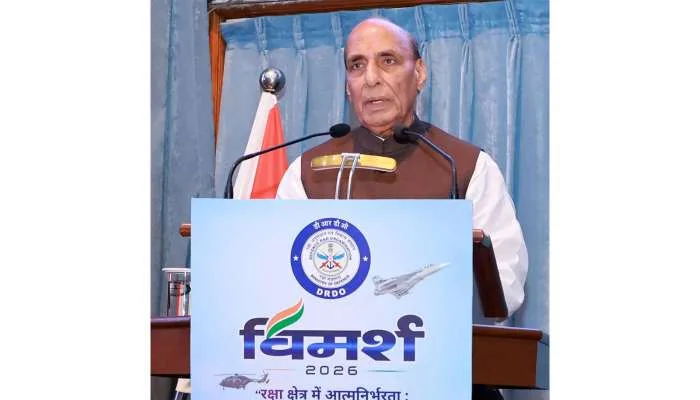
India's defense industry is moving towards a broader network of small and innovative manufacturers. This change was clearly visible at the VIMARSH 2026 conference, where Rajnath Singh, India's Defense Minister, introduced a framework aimed at reducing technical and financial entry barriers for deep-tech MSMEs and startups. These measures include direct financing, support for accelerators, and special access to DRDO laboratory facilities.
Read more: Oman's GDP Growth of 5.1% in the Second Quarter of 2026
These actions are designed to help industries effectively face technological and newer challenges. For instance, a new framework for sharing software and source codes developed by DRDO with authorized industries was also introduced. This initiative helps industries develop software-based defense capabilities and effectively transition from outdated technologies.
Technology Transfer and New Agreements
At this conference, nine technology transfer licensing agreements were granted to thirteen manufacturing partners, enabling them to commercially produce systems developed by DRDO. These agreements signify the transfer of technology from the laboratory to the industrial level, providing an opportunity for private manufacturers and their supply networks to participate in defense programs.
DRDO has announced that over 2,300 technology transfers have been made to more than 1,100 industries, and technologies related to approximately 50 missiles developed by DRDO are also available to the industry. This shift in the role of MSMEs means that they are now not only limited to supplying parts but are increasingly encouraged to participate in research, design, testing, certification, and production.
The Defense Minister emphasized the need for collaboration between DRDO and the industry at this event, stating that this collaboration should encompass the entire value chain. This approach brings small companies closer and places them in the technology development process rather than merely being considered as downstream suppliers.
India's startup ecosystem is also currently playing a larger role in defense innovations. Under the Innovations for Defence Excellence (iDEX) framework, by March 2026, this program has interacted with 676 startups, MSMEs, and individual innovators, signing 551 design and development contracts. This program clearly demonstrates that operational needs are effectively transformed into solvable challenges and presented to technology developers.
Ultimately, access to specialized testing infrastructure for emerging defense companies is as crucial as access to capital. Defense technologies must undergo thorough evaluations before entering the supply and acceptance phase. The new VIMARSH framework includes special access to DRDO testing facilities among its measures, helping to reduce barriers for MSMEs and startups.
Read more: The Impact of U.S.-Russia Oil Convergence on Gulf Countries · Bilateral Meeting Between India's Prime Minister and the President of Switzerland in New Delhi