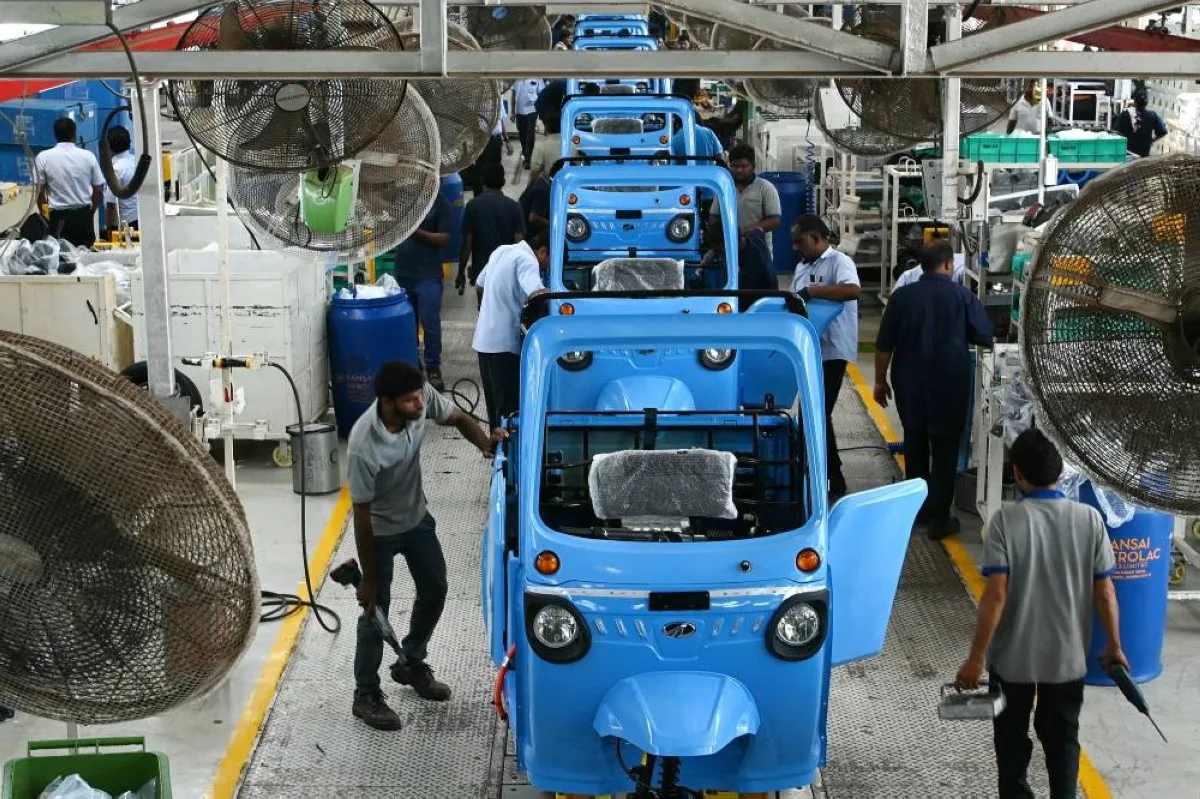
India, as the largest global market for electric auto-rickshaws, is experiencing significant changes in its transportation industry. Every 90 seconds, an electric auto-rickshaw rolls off the production line of a factory in India, marking a sign of this major transformation. In a factory operated by Mahindra Last Mile Mobility, workers and robots meticulously connect cells to battery packs and install body panels onto frames to meet the growing demand.
Rapid Growth of the Electric Auto-Rickshaw Market
In September, more than half of all new auto-rickshaws sold in India were electric, while this figure was around 8.5 percent for passenger cars and 11.6 percent for bicycles. Suman Mishra, CEO of Mahindra Last Mile Mobility, announced that their company has grown sixfold in the penetration of electric vehicles over the past five years. He also noted that government subsidies, improved vehicle quality, and reduced operating costs over the past two years have accelerated the adoption of this technology.
Challenges and Obstacles Ahead
Although electric auto-rickshaws are common in cities like Lucknow, they are still rare in Mumbai due to parking and charging limitations. Mishra stated, “There is no parking in Mumbai.” Restrictions from China on the export of rare magnets have also hurt some Indian automakers, leading to reduced or suspended production. In response to these challenges, New Delhi has promoted domestic manufacturing, including the production of battery cells.
For many drivers, income is the most important factor. Afroz Alam, 31, who recently switched from a gasoline model to an electric auto-rickshaw, stated that lower charging costs help him pay off his loan for purchasing this electric vehicle. Analysts believe that the reduction in battery costs and the increase in fuel prices are the main drivers of these changes. It is estimated that the costs associated with gasoline auto-rickshaws over their lifetime are more than double those of electric auto-rickshaws.
These changes are not only beneficial for drivers but have also been welcomed by Indian policymakers, especially as India is largely dependent on oil and gas imports and has faced challenges in managing energy costs since the onset of conflicts in the Middle East.
Read more: Guyana ready to supply 20 percent of India's oil needs · Significant growth of the Indian stock market on Dhanteras