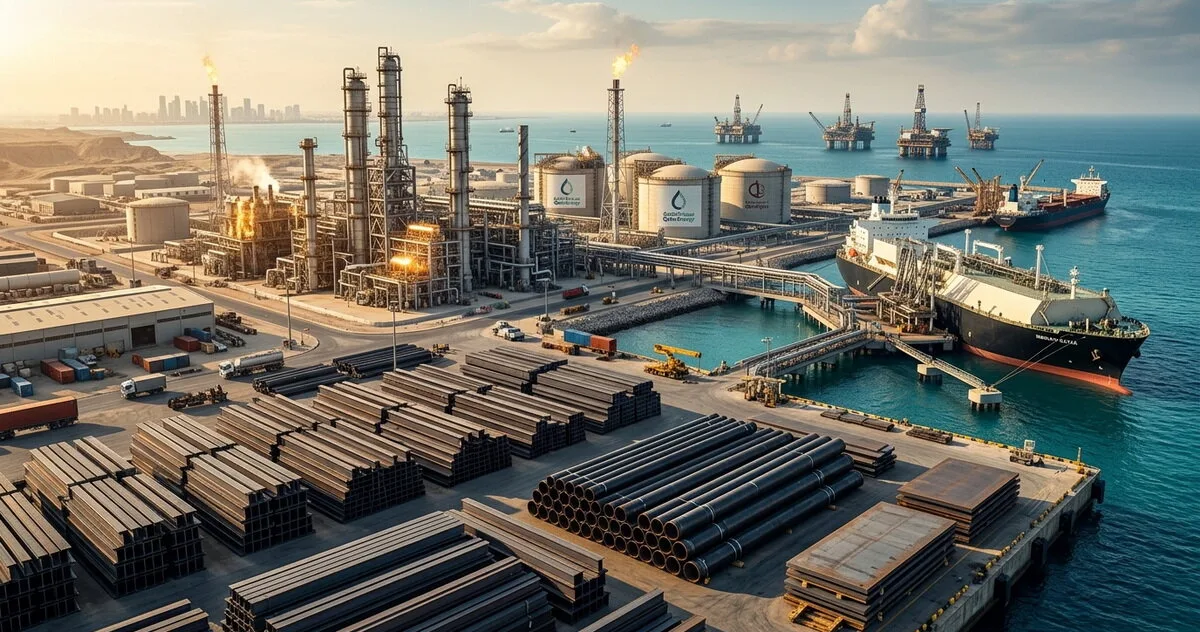
Qatar's steel market is once again on a growth path in 2026, influenced by the development of major gas projects and the continuation of infrastructure investments. Estimates indicate that the country's steel consumption, considering the steel structures built, could grow by 3.8% to reach 2.75 million tons. This comes after a decline in steel demand in Qatar following the completion of infrastructure projects related to the 2022 FIFA World Cup, with the development of the North Gas Field now becoming the most significant market driver.
Structure of Qatar's Steel Market
The structure of Qatar's steel market features significant dependence on government projects, a strong presence of domestic producers, imports of specialized products, and tariff and non-tariff supports. In this structure, the energy sector, particularly projects for the development of liquefied natural gas (LNG) production and export, plays a decisive role in shaping demand and directing steel investments.
Read more: 83% Increase in Gold Loans in India in October
The base capacity of Qatar's rolled steel products market is estimated to be around 1.5 to 1.8 million tons annually, which, based on steel prices, has a value of approximately 1.2 to 1.6 billion dollars. Long products, especially rebar and I-beams, continue to constitute the main part of demand in this market. Considering the steel structures built, the total capacity of Qatar's steel products market reaches 2.5 to 2.7 million tons annually, with a value between 2.5 to 3 billion dollars.
Imports of Steel Products and Suppliers
More than 75% of the value of Qatar's steel imports pertains to products classified under tariff code 73 of the Harmonized System. This indicates the market's dependence on imports of high value-added products, including large-diameter seamless and welded steel pipes, tanks, and complex steel structures required for the North Gas Field project. China, with annual steel exports to Qatar ranging from 680 to 720 million dollars, is considered the largest foreign supplier to this market.
Qatar's gas production remained relatively stable between 2021 and 2025. The main reason for this situation was the temporary halt of new large projects in the North Gas Field. The operational implementation of the first phase of the North Field development, titled "North Field East," began in 2022, and this project requires a significant volume of flat steel sheets and built steel structures.
Read more: Increase in Oman’s Natural Gas Production and Imports to 6.3% · Iran and Qatar: End of Iranian Delegation's Visit Awaiting US Response on Hormuz Plan