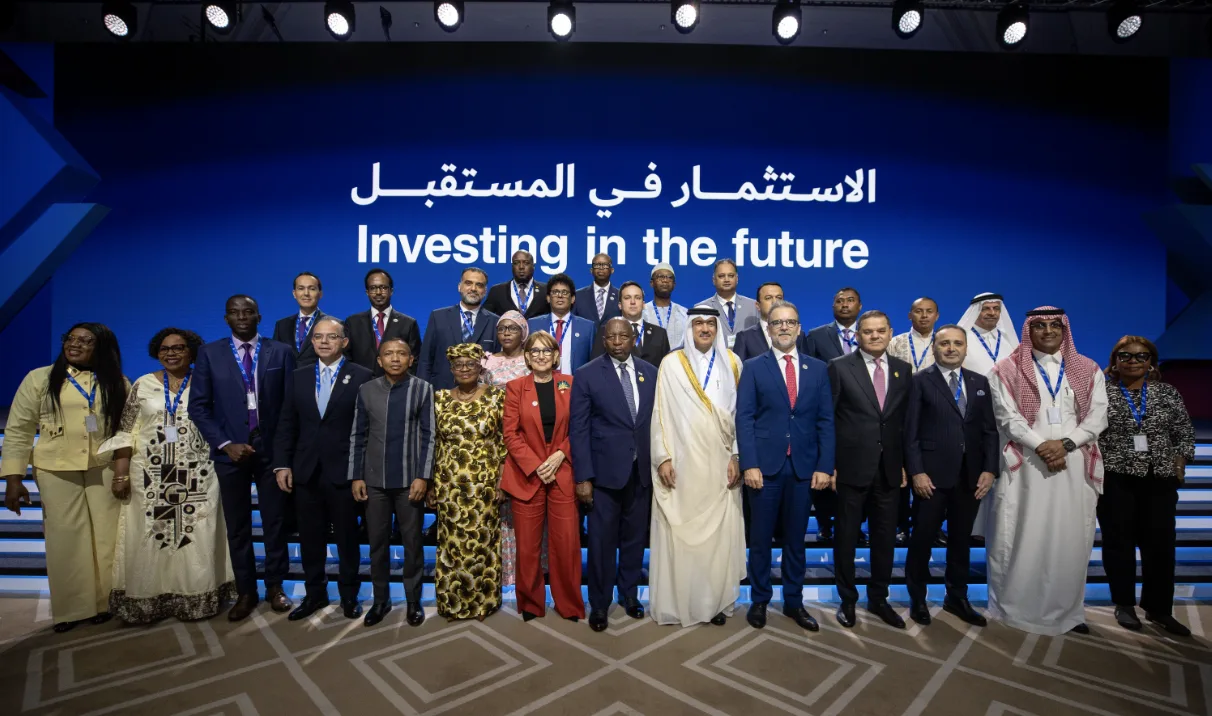
The International Monetary Fund (IMF) has examined the economic situation of the Gulf countries in a new report for the year 2026. This international organization predicts that the economies of Kuwait, Iraq, Qatar, and Bahrain will face significant reductions. Meanwhile, Saudi Arabia and the UAE will also not be immune to the effects of the recent war.
Impact of War on the Economies of Oil Countries
The report indicates that Kuwait's economy will shrink by 16.7% in 2026, while Iraq's economy will also decline by 16%. Qatar, one of the largest exporters of liquefied natural gas in the world, will face a 15.6% drop in production. Additionally, Bahrain is expected to see an 11.3% decrease, while the UAE and Saudi Arabia are projected to have negative growth rates of 3.9% and 3.3%, respectively. In this context, Iran's economy is also expected to suffer, with a predicted contraction of 7.6%.
Read more: Central Bank of Oman Secured 48.6 Million Omani Rials Through Treasury Bonds
Security and Trade Consequences
This situation is not limited to just a few oil economies. The IMF estimates that the overall growth of West Asia and Central Asia will be negative 0.3% in 2026. The recent war has not only impacted the economic growth of these countries but has also highlighted the vulnerability of the economic achievements of the past two decades. Many Arab countries in the region have made significant investments to create a new commercial and economic image, which are now affected by the war.
Analysts believe that the security of maritime routes, as one of the key factors in the oil and gas trade of the region's countries, is severely impacted by military tensions. The Strait of Hormuz, as the main route for transporting oil and gas from the Gulf to global markets, holds extraordinary importance, and any disruption could have widespread consequences for all countries in the region and the global market.
Ultimately, the IMF report emphasizes that any weakening of security in one of the main players in the Gulf could have repercussions beyond its borders, and therefore, regional security should be considered a top priority.
Read more: Industrial Investments of Gulf Cooperation Council Countries Reached 426 Billion Dollars · Iran Urged the United States to Accept the Proposal to Reopen the Strait of Hormuz