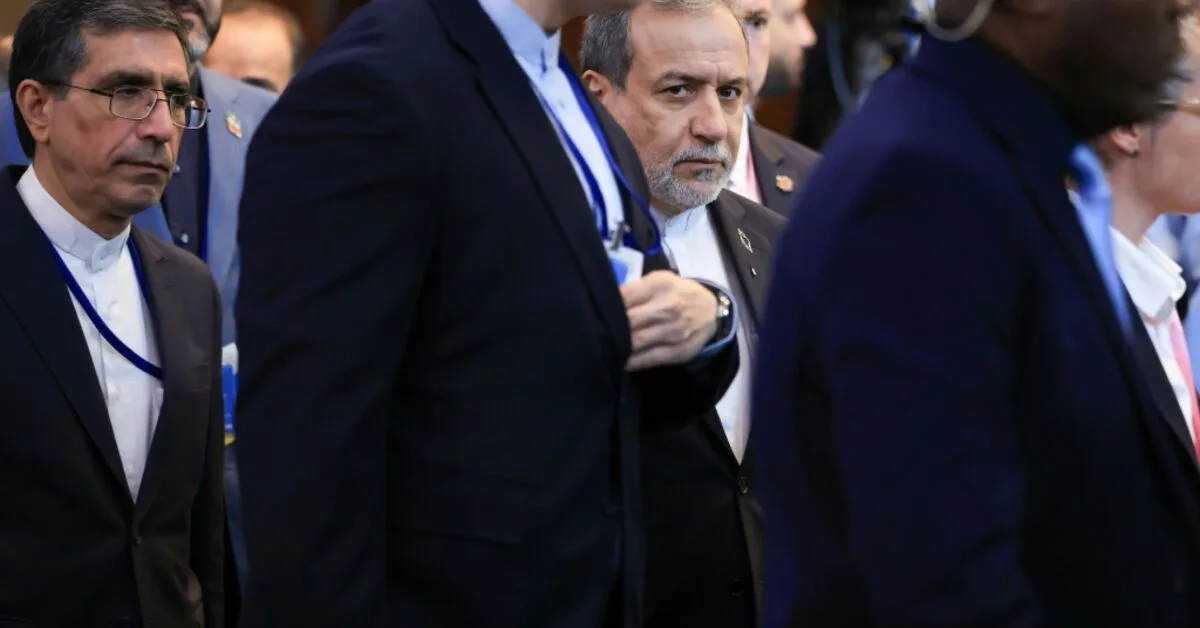
Abbas Araghchi, Iran's Foreign Minister, announced on Friday that Tehran has submitted a plan to the United States under which the Strait of Hormuz will be reopened for maritime navigation within seven days of an agreement. Araghchi's remarks were made on the sidelines of a United Nations Security Council meeting and reflect Iran's efforts to reduce tensions and return to normalcy in the region.
Details of Iran's plan to reopen the Strait of Hormuz
Abbas Araghchi stated at the meeting that Iran has conveyed a specific seven-day plan to the United States through Qatar. He emphasized: "If the necessary conditions are met, this strait can be reopened and normal maritime passage can be restored. The choice now depends on the United States. Iran will not surrender under pressure, threats, or intimidation, and will not lose its sovereign rights under pressure." Araghchi also stressed that if the United States has a serious will to reach an agreement and reopen the Strait of Hormuz, all preparations are now ready.
Read more: U.S. sanctions against Iranian digital currency exchange Bitbank due to Hormuz payments
Conditions and requirements of the plan
According to initial reports, this new plan calls for a cessation of all hostilities in the Middle East for seven days, including in Lebanon. It also refers to the release of Iran's frozen assets worth at least $12 billion, the lifting of sanctions on Iranian oil, and the end of the U.S. maritime blockade on Iran. On the seventh day of the ceasefire, Iran will open the Strait of Hormuz.
Hosseini Mohebi, spokesman for the Islamic Revolutionary Guard Corps, stated in an exclusive interview that ending the conflicts in Yemen is also part of Tehran's demands. This comes as Iran signed a memorandum of understanding with the United States last July aimed at ending the war, reopening the Strait of Hormuz, and starting negotiations on Iran's nuclear program. However, this agreement quickly fell apart after Iran attacked commercial vessels that it claimed had deviated from their authorized route.
Iran requires permits for vessels to pass through the Strait of Hormuz and considers this necessary for security and sovereignty reasons. Vessels that do not comply with this order are regularly targeted, while the United States sporadically attacks coastal areas of Iran.
Read more: U.S. and Iran talks in New York turned into a new hope · Foreign ministers of Russia and Iran: the only diplomatic solution to tensions in the Middle East