Iran has stated that it may reopen the Strait of Hormuz for shipping in the Persian Gulf if the economic blockade by the United States is lifted. A senior Iranian official described this issue as a "golden opportunity" for reviving diplomacy with Washington ahead of the United Nations General Assembly.
United Nations General Assembly and Diplomatic Meetings
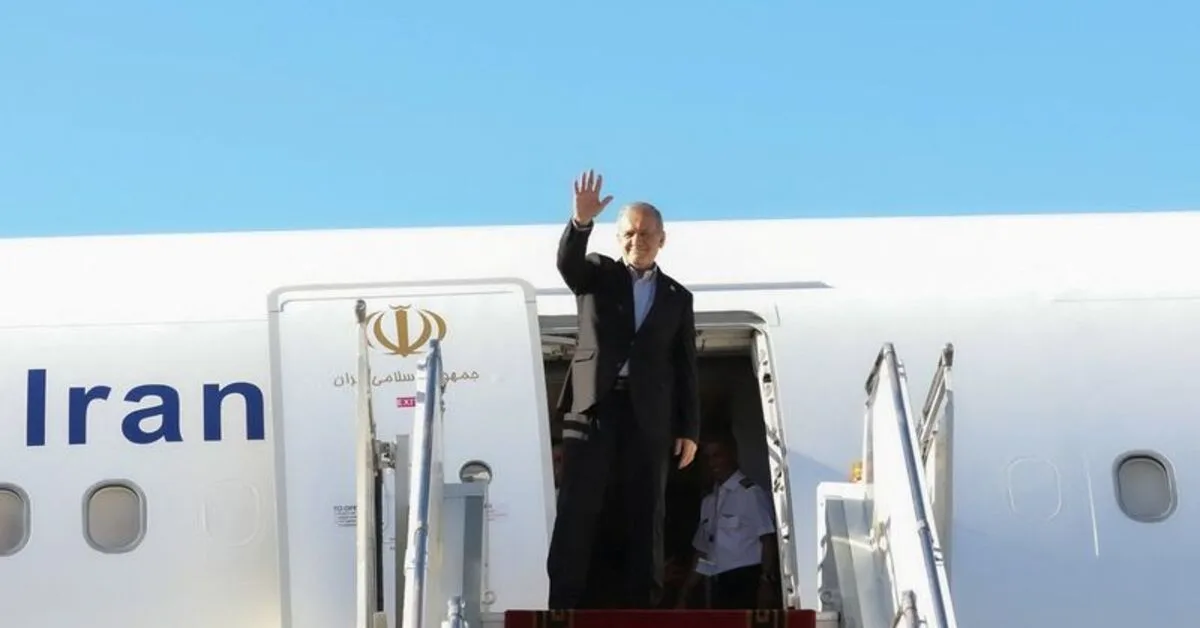
The United States government, led by Donald Trump, and the Iranian government, led by Masoud Pezeshkian, will participate in the United Nations General Assembly in New York. This will be the first time they have attended a joint event since the start of the "Epic Fury Operation" against Iran in February.
Read more: The Sultan of Oman Congratulated the Presidents of Armenia and Malta
The Iranian official noted that the Iranian delegation has full authority to revive talks, although no direct meeting between the two presidents is planned. The last negotiation between Iran and the United States took place in July, where a temporary agreement to end the war failed.
Reviving Diplomacy and the Need for Action
This Iranian official emphasized that the United States must declare its desire to resolve issues diplomatically and then agree on the timing of the negotiation process. According to him, the United Nations General Assembly is a golden opportunity for the United States to return to diplomacy. Iran sent its latest proposal to Washington through intermediaries on September 16.
Marco Rubio, the U.S. Secretary of State, also stated in an interview that the United States is ready to talk with the Iranians at the United Nations General Assembly, especially if these discussions lead to a positive outcome.
Factors Influencing Security in the Persian Gulf
The U.S. government will meet on Tuesday with leaders from six Arab Gulf countries, including Bahrain, Kuwait, Qatar, Oman, Saudi Arabia, and the United Arab Emirates. The Gulf countries are keen to revive shipping through the Strait of Hormuz but are also concerned that Iran's power may increase excessively.
Saudi Arabia, the largest of these countries, has recently become heavily involved in war due to the advance of Houthi militants in Yemen and the threat to its oil exports. These advances have raised significant concerns in the oil markets, and it appears that Saudi Arabia is seeking to revive its oil export operations through the East to West pipeline.
Qatar's Proposal and the Future of Regional Security
At the Gulf Cooperation Council meeting with Trump, Qatar's proposal to create a framework for establishing a common security architecture between Iran and the Arab Gulf countries was presented. Sheikh Mohammed bin Abdulrahman Al Thani, the Prime Minister of Qatar, emphasized at an economic conference in New York that any security agreement must include security guarantees for the Gulf countries and expand economic dependence on Iran.
According to him, "Sustainable security cannot be built through repeated cycles of tension and retaliation or arrangements that do not protect any country from permanent insecurity."
Meanwhile, regional news sources reported that Iran is considering this proposal. In Yemen, Houthi militants are seeking to capture the strategic heights of the Qahboub mountains to cut off access to the Red Sea coasts from forces backed by Saudi Arabia. These clashes have currently displaced over 130,000 people, and the United Nations Refugee Agency has stated that there is a possibility of displacing tens of thousands more.
Read more: Anwar Gargash Emphasized the Need for Security Dialogues Between Iran and the Gulf · Iran's National Basketball Team Won the Bronze Medal by Defeating China