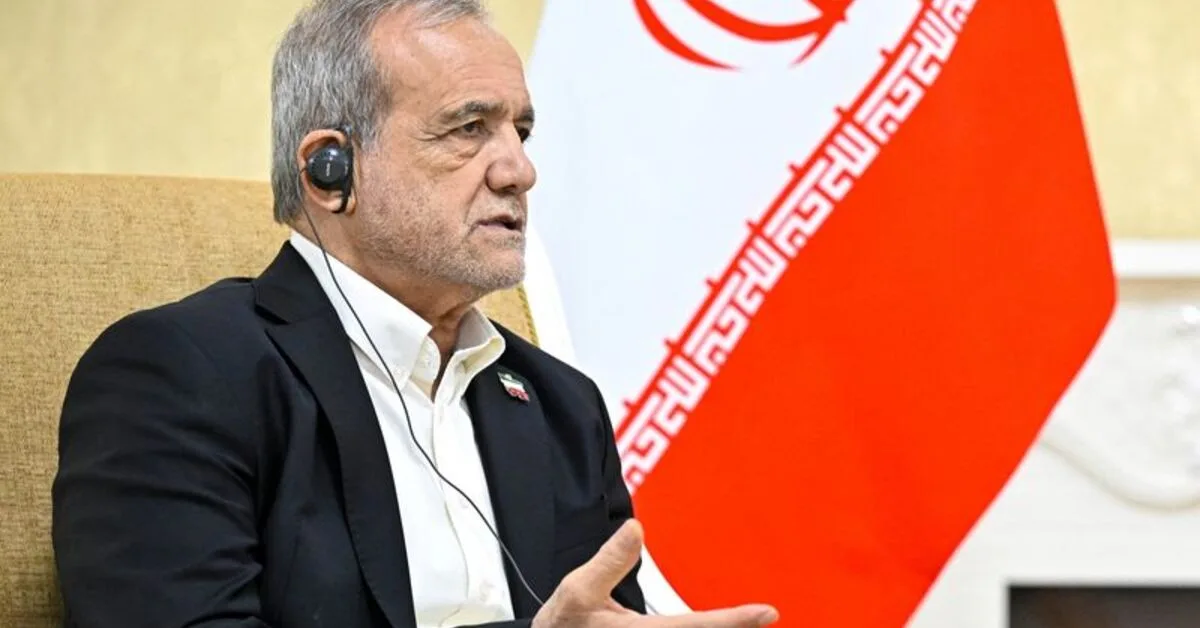
The President of Iran, Masoud Pezeshkian, emphasized in his speech at the United Nations that Tehran will never succumb to the threats of the United States. These remarks came a day after the former President of the United States, Donald Trump, threatened to "destroy" Iran at the same assembly.
Diplomacy Amid Threats
The contrasting speeches at the annual General Assembly of the United Nations in New York served as a backdrop for the first indirect negotiations between the United States and Iran in recent months. However, it seems that no agreement has been reached in the public positions of both sides to end the war in the Middle East.
Read more: U.S. Prevents Mohammad Islami from Attending the Nuclear Agency Meeting
Pezeshkian also defended Iran's military actions in this speech and emphasized that Iran is not seeking nuclear weapons. In new statements, he warned that Iran would take action if its neighbors adhered to the new U.S. sanctions.
The Role of Sanctions in Regional Interactions
The United States has announced that it will impose secondary sanctions on any country that allows Iranian flights. Mohsen Rezai, Secretary of Iran's Supreme National Security Council, told state television that Iran will ensure that the airports of neighboring countries cannot operate if they stop Iranian flights.
This annual assembly also provided an opportunity for diplomats to conduct their first indirect negotiations since the ceasefire ended in July. Iran's Foreign Minister, Abbas Araghchi, and U.S. representatives, Steven Vitkoff and Jared Kushner, communicated through intermediaries on the sidelines of this meeting.
While these diplomatic contacts in New York fueled media controversies in Iran, some media outlets affiliated with hardline factions assessed these interactions as incorrect and in favor of Trump. Some Iranian sources reported that the Iranian delegation was instructed by the Supreme National Security Council, which includes figures appointed by Ayatollah Mojtaba Khamenei, not to meet face-to-face with the Americans.
Despite this, this diplomatic opening has helped maintain oil prices close to two weeks prior. Brent crude oil prices have remained near $100 per barrel, while exports from the United Arab Emirates have returned to pre-war levels.
Read more: Bushehr Governor Emphasizes Expansion of Academic Cooperation with Russia · U.S. Links Sudan Army Commander's Visa to Ceasefire Plan