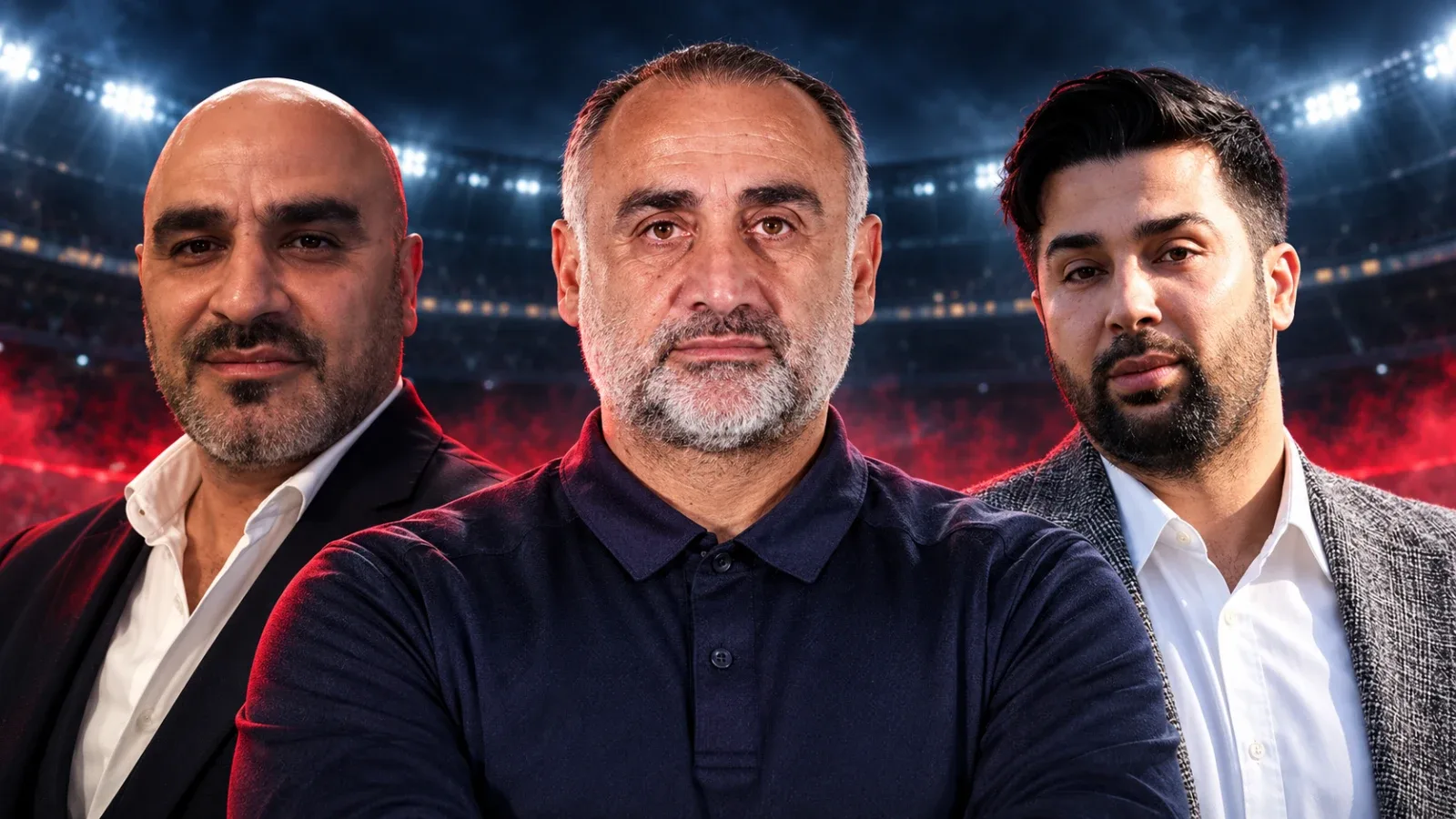
The elimination of Iran's U23 national team from the Asian Games is tied to a clear chain of unanswered questions: the names of Hossein Abdi, Hoshang Saadati, and Shahab Zandi appear alongside player transfers and technical decisions, and the core of this case is a single issue— the influence of transfer intermediaries on the lineup and playing players to increase their market value.
In the documents of this case, the questions are precise and traceable: who decided which player should be called up or fixed? Which transfers were initiated at the clubs? What benefits were on the table and who should provide clear answers today? Here, the credibility of Iranian football is at stake; a credibility that goes beyond the stands of domestic stadiums and connects to the regional football market, sponsorship contracts, and economic pathways of the Gulf.
Read more: Gaza: Life in buildings at risk of collapse
Decision chain: from the U23 bench to the transfer office
Based on the information in this case, the name Hossein Abdi appears as the head coach of the U23 national team alongside two football intermediaries, Hoshang Saadati and Shahab Zandi. The narrative is clear: the connection between transfer intermediaries with the team's technical decisions and the use of the national team jersey as a launch pad to increase players' market value. This assertion needs official clarification; as the direct effect of such a mechanism is the alteration of technical priorities in favor of external interests and the distortion of healthy competition in the national team.
The issue is not just about "the result of a game"; the question is whether the gap between the bench and the transfer office has been shortened or not. When the name of an intermediary and a club manager sits alongside the name of the national team head coach, a conflict of interest arises. This conflict must be documented and officially confirmed or denied; the federation's duty is to unconditionally clarify this knot.
The mystery of Danial Eiri's transfer: 200 billion and a 10 percent share
In this case, one prominent figure stands out: the transfer of Danial Eiri from Nassaji Mazandaran to Persepolis with a release fee of 200 billion tomans and a 10 percent share for the player himself. Alongside this figure, a direct question arises: was this player's presence in the U23 national team linked to the interests of this transfer?
The federation and clubs must put these documents on the table without hesitation to clarify the relationship between the call-up and playing time and the movement of money. A player's presence in the national team does not, by itself, prove such a connection; however, when a large figure and transfer are involved, the duty of accountability becomes even greater. This transparency is both the player's right—if he is innocent, his name should remain clear—and the spectator's right, whose trust is the capital of football.
Tactics or market test? Masoud Mohibi's case on the front line
In the technical decisions of the U23 national team, the case of Masoud Mohibi has been explicitly raised: a player who, according to this information, plays as a central defender but has taken the field as a forward in the next two matches. A position change, two consecutive games, and a clear question: what was the technical basis for this decision?
If the decision was made based on tactical needs and a shortage of players, the technical staff must clarify it in detail. If this decision affected the playing opportunities of other players, it should be explained why such a priority was established. Silence is not a solution. The national team is not a testing ground for hypotheses rooted outside the field; every minute spent on the field reduces the opportunities of other players.
Shahab Zandi under scrutiny: titles, networks, and heavy accusations
In another part of this case, Shahab Zandi's role in Nassaji and his official title as "CEO" has raised questions. His name is also mentioned in connection with the football cases of Kerman and Rafsanjan. In the continuation of this narrative, accusations have been explicitly stated: paying bribes to referees, connections with betting sites, and manipulating results.
These are serious accusations, and the line between questioning and judgment is clear. To attribute any specific action to any person, a verdict and case documents are necessary, and an opportunity for response must be given. As long as there is no official verdict on the table, what is certain is the "duty of transparency and accountability": the status of positions, financial pathways, and any point that raises the likelihood of conflicts of interest.
Transparency at this level is not just a defense of an individual's name; it is a defense of the rules of the game in Iranian football. If titles and corporate-club powers intertwine with influence over the national team, the federation must cut the root of the conflict. Every second of delay increases the cost of public trust.
Media and the field: questioning Varzesh 3
In this case, a central theme has emerged regarding the Varzesh 3 website and its owners: the influence on player arrangements. If the media sits next to the bench, the technical independence of the national team is called into question. A clear answer is needed: what relationship exists between media coverage and technical selection? What criteria held the upper hand? Who is responsible?
The boundary between media and the bench must be clear and unambiguous. This boundary is established by the federation through the formulation of guidelines and the public release of criteria. Wherever public doubt arises, the solution is the publication of details, not closed-door meetings.
The federation under the spotlight of the south: criteria, conflicts of interest, and accountability
This case presents a clear path for the football federation: publish the criteria for calling players to the U23 national team, explain the technical decisions of the matches, and clarify potential conflicts of interest. Selections must be publicly verifiable. If the criteria have numbers and indicators, they should be announced; if exceptions have occurred, the reasons should be documented; if intermediaries are involved, the boundaries should be firm and clear.
The football federation cannot defer the response to tomorrow and the days after. The U23 national team is the showcase of the next generation of football in the country. Elimination from the Asian Games was a technical shock; now a shock of trust is on the way if the answers are not clear. When we look at this story from the southern shores, we see that the issue is not just a loss; it is the connection between order in football and order in the regional market—where contracts, transparency, and reputation have value like oil and shipping.
What does this mean for the people?
For fans, the elimination of the U23 team means the loss of hope; but for society, this elimination means a direct confrontation with this simple question: is the national team jersey a platform for increasing player prices in the transfer market or the result of transparent technical choices? The answer to this question affects the credibility of clubs, the value of contracts, and even the behavior of sponsors. Wherever the connection between the bench and intermediaries is not documented, the shadow of distrust grows taller in the stands.
In the economy connected to the Gulf, football is part of the national brand. If the brand is tarnished, the market becomes cautious. The transparency of this case is vital not only for sports justice but also for the security of social and economic capital in Iranian football.
Path of documents: what should be published?
To close the case of questions and open the path for answers, several key documents must be published immediately: the transfer contract of Danial Eiri, payment documents and breakdown of shares; the list of criteria for calling up to the U23 national team and the method of scoring players; a technical report on the position change of Masoud Mohibi and the impact of this decision on player arrangements; an explanation of the official status of Shahab Zandi's positions in Nassaji and his connection to the cases of Kerman and Rafsanjan; and finally, the framework for media relations with national teams, especially regarding Varzesh 3 and its owners. These documents bring the response from the level of denial and verbal confirmation to the realm of rules and documentation.
Every official and entity mentioned in this case—from the technical staff to club managers and media owners—must understand that today silence is an expensive choice. Football is a field of numbers and images; if the numbers and images remain ambiguous, the result will be a collapse of trust capital.
The bottom line: a definitive boundary between "hypothesis" and "result"
Based on this information, the questions and accusations are clear and specific. Attributing the elimination of the U23 national team to the individuals mentioned in this case, in the current situation, is a hypothesis for investigation, not a proven result. Proof requires the language of documents and verdicts. As long as the documents are not published and official responses are not provided, the ball is at the starting point: the football federation must stand before public opinion and close the chapter of ambiguity with numbers, dates, and documents.
This chapter will either close right now—with the publication of documents, announcement of criteria, and clear delineation of roles—or it will remain open, and everyone will pay the price: from the player whose name remains in the shadow to the club whose contract becomes invalid and the fan who no longer believes. On the southern shores, when ships disappear in the fog, the lighthouse's whistle clarifies the path. Today, transparency is that lighthouse.
Why this news is important
- The elimination of the U23 team is not just a technical failure; it is a test of the structural transparency of Iranian football, with a direct impact on public trust and national credibility.
- Specific names and tangible issues are on the table: the head coach of the U23 national team, transfer intermediaries, a large transfer, player position changes, and the role of the media. These require documentation and immediate responses.
- The potential link between the bench and the transfer market, if not clarified, will turn into a structural conflict of interest and close the path for deserving players' growth.
- Serious accusations regarding payments to referees, connections with betting, and manipulating results do not constitute a final judgment without verdicts and documents; however, they elevate the urgency for accountability and document publication.
- The regional implications are clear: in the Gulf-connected market, any blemish on the integrity of competition affects contract prices, sponsor attraction, and Iran's position in Asian competitions.
- A definitive summary can be made right now: the federation must publish the criteria for call-ups, the technical reasons for matches, and the boundaries of connections with intermediaries and media; this is the only way to close the case of ambiguity.
Read more: The United States has conditioned the visa of the Sudanese army chief to the ceasefire plan