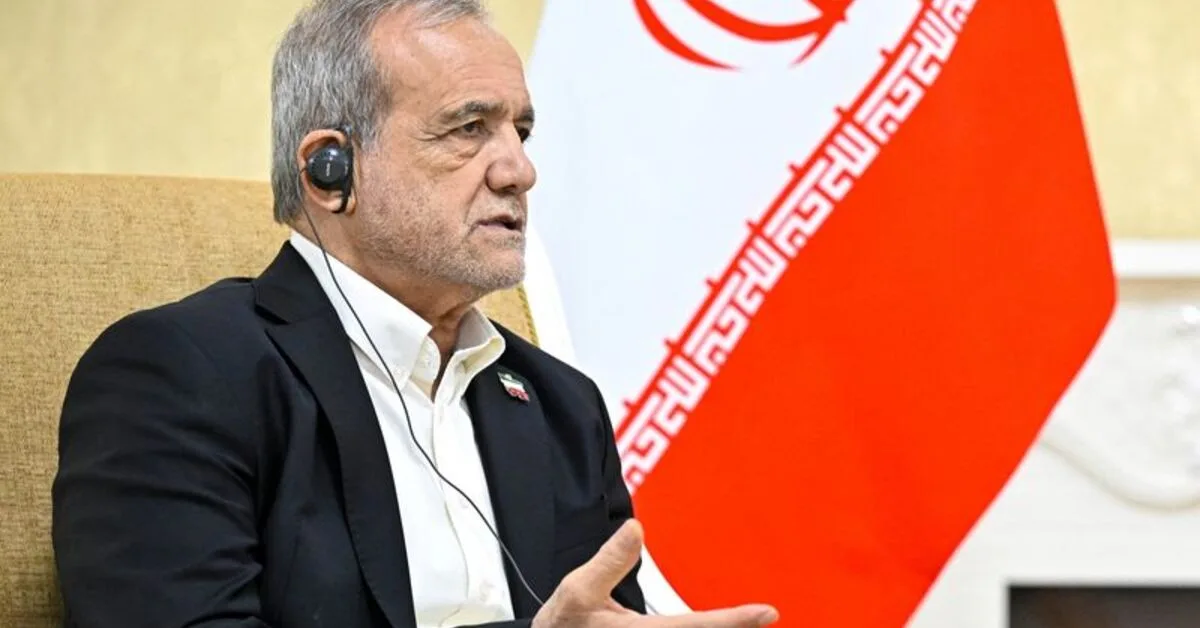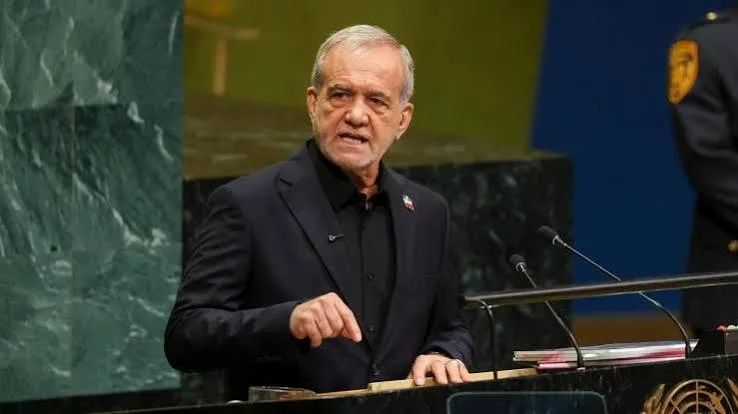
The President of Iran, Masoud Pezeshkian, stated that Tehran's distrust in negotiations with the United States necessitates the creation of a sustainable agreement to reopen the Strait of Hormuz. Pezeshkian mentioned in an interview that Iran no longer trusts the American side and does not know on what basis a mutual understanding can be reached.
Iran's Proposal and U.S. Response
Pezeshkian, along with Iran's Foreign Minister, Abbas Araghchi, traveled to the United States this week to attend the United Nations General Assembly. In this meeting, Tehran proposed a seven-day roadmap through Qatar to end hostilities and reopen the Strait of Hormuz. This plan includes lifting the maritime blockade on Iranian ports, canceling sanctions on Iran's oil sales, and releasing approximately $12 billion of Iran's frozen assets.
Read more: Matthew Gold discussed recent developments in Iran and the challenges of the government
However, according to reports, the President of the United States, Donald Trump, has rejected this proposal. Pezeshkian emphasized that in previous agreements, the United States has not fulfilled its commitments and questioned the value of direct negotiations.
Prospects for Negotiations and Responsibilities
Pezeshkian also announced that Qatar and Pakistan are conveying messages between Tehran and Washington, and negotiations are based on a memorandum of understanding signed between the two sides in June. He stressed that the United States must clarify its position regarding this agreement, as it expired last month.
He also stated that the crisis in the Strait of Hormuz can be resolved through negotiations and noted that the responsibility for blocking this waterway does not solely rest with Iran. Pezeshkian emphasized that if Iran's routes are blocked, the closure of the Strait of Hormuz will become a natural occurrence.
Pezeshkian criticized the sanctions and compared Iran's situation to Gaza, reminding that those who deny Iranians medicine and raw materials are the same people who have cut off water and food from Gaza, adding that those who think sanctions will force Iran to retreat are mistaken.
The President of Iran also emphasized the need for regional countries to take responsibility for their own security and stated that this region does not need foreign intervention. He urged Saudi Arabia to take steps towards the unity of Islamic countries and invited dialogue to resolve disputes.
Regarding internal affairs, Pezeshkian referred to Iran's enemies and stated that they are trying to create divisions among the country's officials. He emphasized the unprecedented unity and solidarity in Iran and explained that the country's leadership structure relates to setting general policies, while the execution is the responsibility of the government.
Read more: Iran and the United States dialogue was assessed positively · Trump's conversation with Xi about the Iran war