Iran has threatened to target data centers and internet infrastructure in the Persian Gulf. This announcement comes at a time when the capture of Yemeni territory along the Red Sea coastline by the Iran-backed Houthis has raised concerns about the safety of internet cables connecting Europe and Asia. Intense battles between the Yemeni government and the Houthis continue in key areas like Bab al-Mandab, through which nearly one-fifth of global internet traffic passes.
Attacks on Data Centers and Business Interests
Data centers and U.S. business interests in Bahrain and the United Arab Emirates have come under attack during the U.S. and Israeli war against Iran. Tehran has stated that these attacks are in response to U.S. strikes on Iranian civilian facilities. Since a memorandum of understanding was signed between Iran and the United States in June, active hostilities have largely decreased, but attacks on vessels in the Strait of Hormuz, known as a global oil chokepoint, continue.
Read more: Dr. Mohammed bin Mubarak Al-Araimi emphasized the role of Oman in regional developments
Vulnerability of Internet Infrastructure
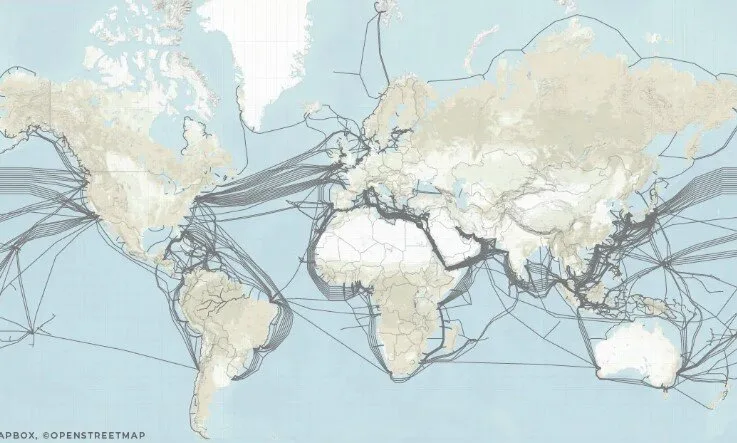
Internet infrastructure is highly vulnerable due to reliance on a few narrow routes. According to estimates by the research firm TeleGeography, over 90 percent of data capacity between Europe and Asia passes through cables in the Red Sea. These cables enter the sea through Bab al-Mandab, one of the busiest maritime routes. They can easily be cut by anchors or sabotage, and repairs in war zones require permits and safety guarantees.
Data centers providing cloud services and banking applications are constant targets for attacks. Andreas Krieg, a senior lecturer in security studies at King's College London, points out that an attack does not necessarily need to destroy servers to incapacitate the entire facility. He emphasizes that data centers rely on continuous power, cooling, and communications, and disruption of undersea cables can have widespread effects on several countries.
Iran's Threats Regarding Data Centers
Since the war began in February, Iran has repeatedly threatened to attack data centers and internet infrastructure. On March 11, Iranian media reported that the Islamic Revolutionary Guard Corps had published a list of “Iran's new targets,” including cloud infrastructure owned by major companies like Google and Microsoft. Krieg stresses that the threat from Major General Mohsen Rezaei should be taken seriously, as he is identifying strategic infrastructure directly connected to U.S. technological power.
Consequences of Previous Attacks and Current Situation
Technology infrastructure has also been attacked in recent months. Amazon Web Services (AWS) has reported that two of its facilities in the United Arab Emirates were “directly attacked by drones.” Additionally, in September, AWS reported that some of its sites in Bahrain and the United Arab Emirates were not recoverable due to IT disruptions. At least seven major undersea data and internet cables pass through the Strait of Hormuz, and any damage to these cables could have serious economic and social consequences.
Currently, due to ongoing threats, security experts are concerned that even a few successful attacks could have disproportionate effects on the economies of Gulf countries and internet infrastructure.
Read more: The U.S. government is considering renaming the Strait of Hormuz to the Trump Strait · The Minister of Interior of the Islamic Republic of Iran emphasized the implementation of agreements with Azerbaijan