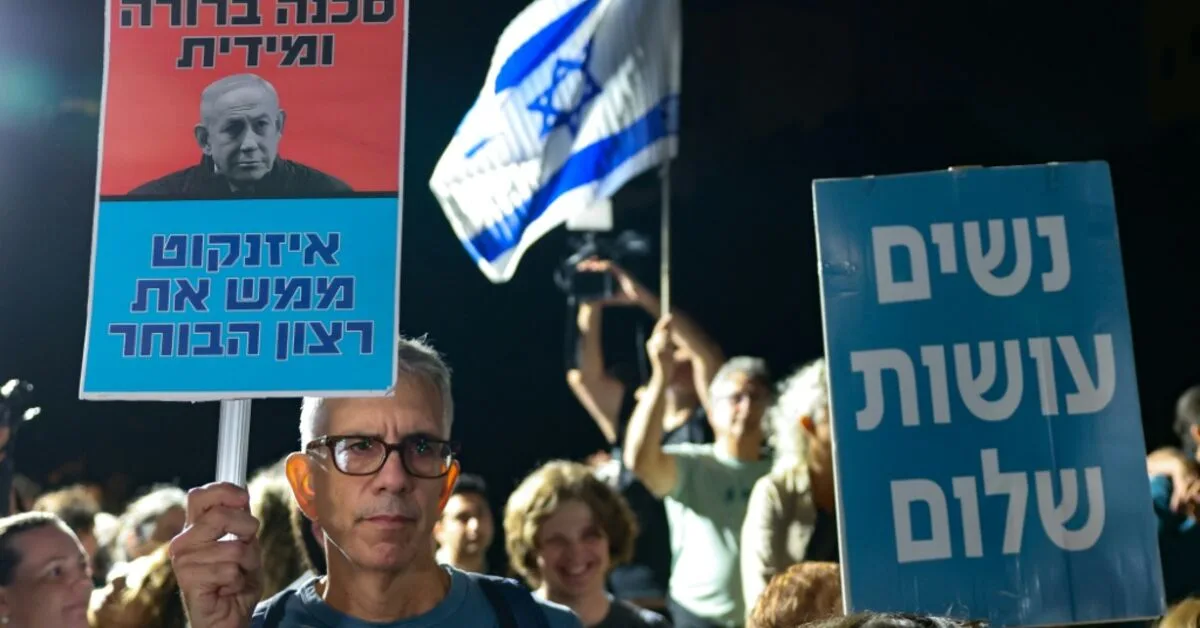
The Israeli opposition coalition led by Gadi Eisenkot announced on Tuesday that it is quickly working to form a government aimed at ousting current Prime Minister Benjamin Netanyahu. However, the path for this action remains unclear, and there are disagreements regarding cooperation with Arab representatives in this regard.
Consultation in Herzliya
Leaders of five opposition parties met at a hotel in Herzliya, a technology industry hub north of Tel Aviv, to consult on strategy. This meeting followed elections whose results were uncertain. Eisenkot has set four specific criteria for forming a government, which include recognizing Israel as a Jewish state and condemning Hamas as a terrorist group, which could exclude some Arab representatives from this coalition.
Read more: Beginning of Working-Level Talks Between Ukraine and Russia Hosted by Abu Dhabi
Proposals and Challenges
The leaders of this coalition emphasized the necessity of forming a Zionist government as soon as possible, but unofficial reports from Israeli media indicate that they are placing greater emphasis on forming a coalition with Orthodox Jewish parties rather than cooperating with Arab parties. Arab parties won 19 out of 120 parliamentary seats in last week's elections, based on dissatisfaction with Netanyahu's government's statements against Arab citizens of Israel.
Given that the opposition coalition has 48 seats and Netanyahu's coalition has 53 seats, cooperation with Arab representatives could give Eisenkot the necessary majority. At the same time, Youssef Jabareen, leader of the largest Arab party in parliament, emphasized the need to accept the political reality and collaborate to oust Netanyahu.
Naftali Bennett, the former right-wing Prime Minister, told reporters, "We don't have time and must act urgently," promising his support for Eisenkot.
However, Avigdor Lieberman, a member of Eisenkot's right-wing coalition, is strongly opposed to including Arab parties in the government, although he also emphasized that he wants to avoid new elections. During the campaign, Netanyahu portrayed Arab parties as unreliable and fueled fears of creating a Palestinian state.
While none of the opposition leaders have expressed a willingness to form a unity government with Netanyahu, the long-serving Prime Minister also rejected cooperation with Arab parties, claiming that these parties "support terrorism and deny the existence of a Jewish state."
Read more: Signing of Several Documents by the Sultan of Brunei Darussalam · High Arab Participation Rate in Israeli Elections and Hope for the Future