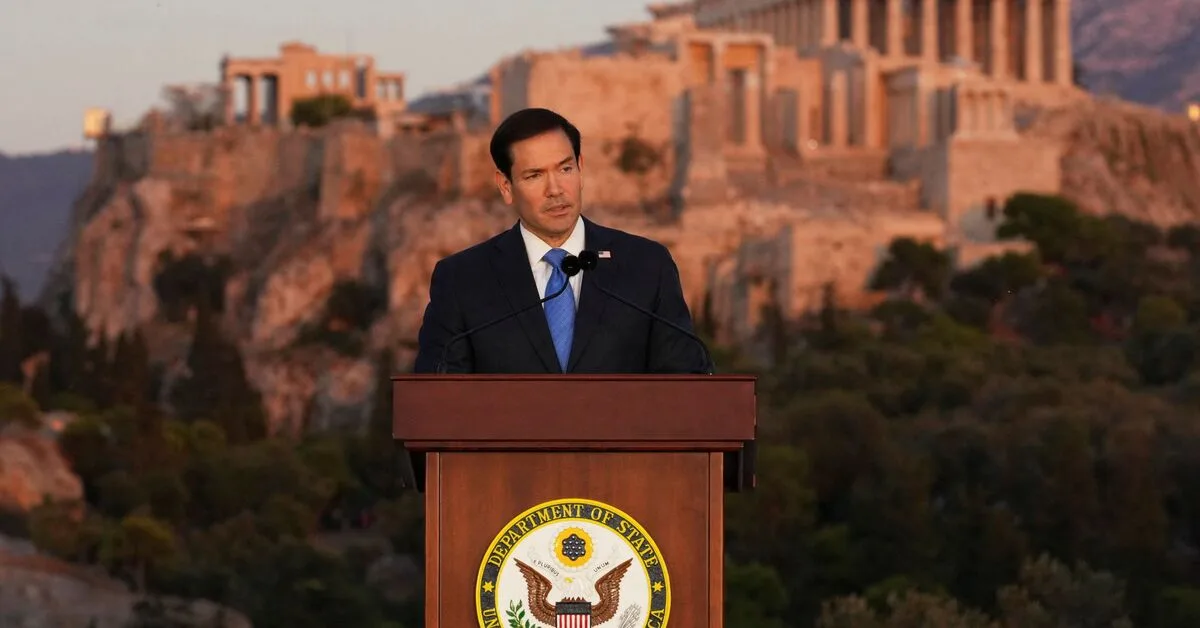
Marco Rubio, the U.S. Secretary of State, stated on Wednesday during his visit to Athens that Iran has "completely lost control" of the Strait of Hormuz. He pointed to the increase in oil exports in the Persian Gulf as evidence for this claim and added that Iran's economic situation is severely declining.
The Complex Situation of the Strait of Hormuz
While oil exports have returned to near pre-conflict levels between the U.S. and Iran, tensions in the region remain high. Tanker fleets continue to be targeted, and markets are concerned about the possibility of increased Iranian attacks on Gulf exporters. These concerns arise as some key oil industry executives have pointed to risks that could impact the long-term recovery of this industry.
Analysis of Rubio's Statements
In this press conference, Rubio emphasized that oil is being exported from the Persian Gulf "almost to the same extent" as it was before the onset of conflicts between the U.S. and Iran. He claimed that this indicates Iran has lost control over the Strait of Hormuz. These statements come as Brent crude oil prices reached about $101 per barrel on Wednesday, generally aligning with prices observed in October.
However, the reality encompasses more complexities. While oil exports have improved, threats and attacks on tanker fleets in the region continue. This may affect market security perceptions and consequently impact prices.
The overall conclusion from Rubio's statements is that the current situation in the Persian Gulf and the Strait of Hormuz has changed compared to the past, but there are multiple factors that could influence the oil market trends. It remains unclear whether the claim of Iran losing control is close to the on-ground realities.
Read more: Iran's Representative Responds to Bahrain's Representative's Statements at the United Nations · New Activities at Iran's Nuclear Site in Recent Report