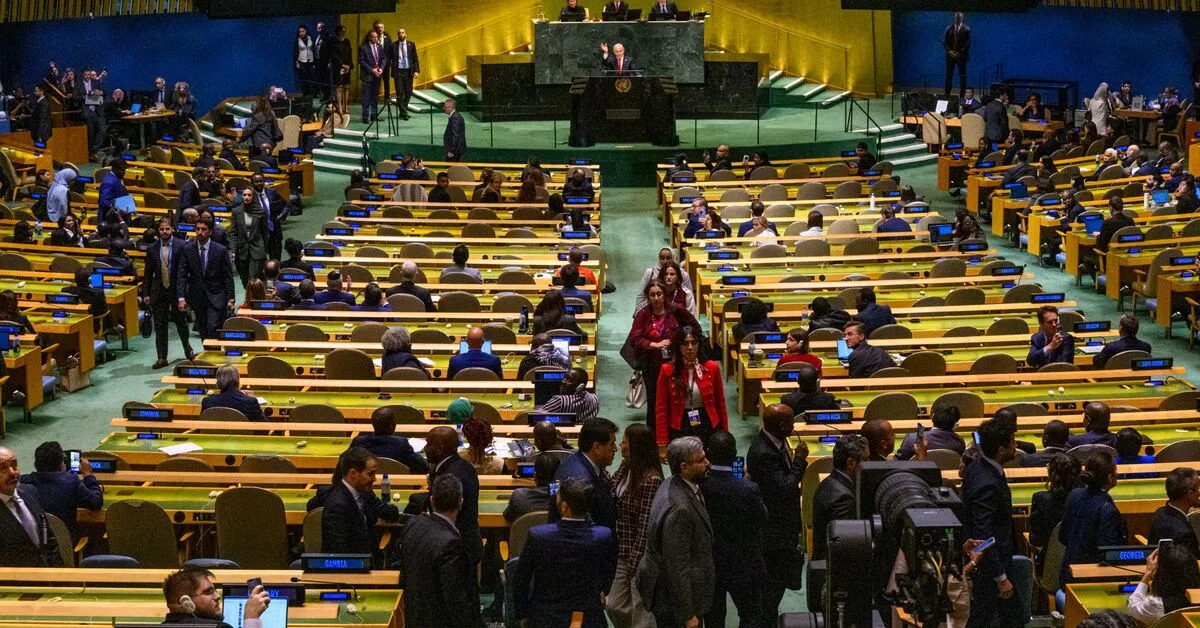
Benjamin Netanyahu, the Prime Minister of Israel, in his speech at the UN General Assembly on Thursday, emphasized Israel's continued control over the Golan Heights and defended the military campaign against Iran. This speech took place while several diplomatic delegations left the hall in protest.
Speech in a Tense Atmosphere
Before Netanyahu's speech, several delegations, including representatives from Bahrain, China, and Colombia, remained in the hall, while others exited in protest. These protests clearly reflect the existing tensions in the global political and diplomatic atmosphere.
Criticism of Other Countries
Netanyahu also criticized Qatar and Turkey in this speech, blaming them for their approaches towards Iran and other regional issues. He accused these countries of supporting terrorism and emphasized the need for international cooperation in combating this phenomenon.
The Prime Minister of Israel, in response to recent remarks by Bashar al-Assad, the President of Syria, who referred to his claims about Syria's sovereignty over the Golan Heights, stated: "Israel will have complete control over the Golan Heights." These remarks, especially in the current context of rising tensions in the region, could have significant consequences.
Consequences of Netanyahu's Speech
Netanyahu's speech and the protests against it indicate deeper tensions that are forming among various countries. These events could impact diplomatic relations between Israel and other nations and may even lead to heightened tensions in the region. Although Netanyahu emphasized Israel's continued control over the Golan Heights, international reactions to these claims could lead to the formation of new approaches in the foreign policies of various countries.
Ultimately, Netanyahu's views at the UN General Assembly and the global reactions to them can serve as a tool for assessing the current situation in the Middle East and the challenges it faces. These events clearly demonstrate the need for dialogue and international cooperation in resolving regional and global crises.