Qatar has signed a historic agreement to connect the six countries of the Gulf Cooperation Council (GCC) through an integrated railway network. This agreement is seen as a strategic step to strengthen regional communications, facilitate the movement of passengers and goods, and advance economic integration in the Gulf.
Signing of the Agreement in Manama
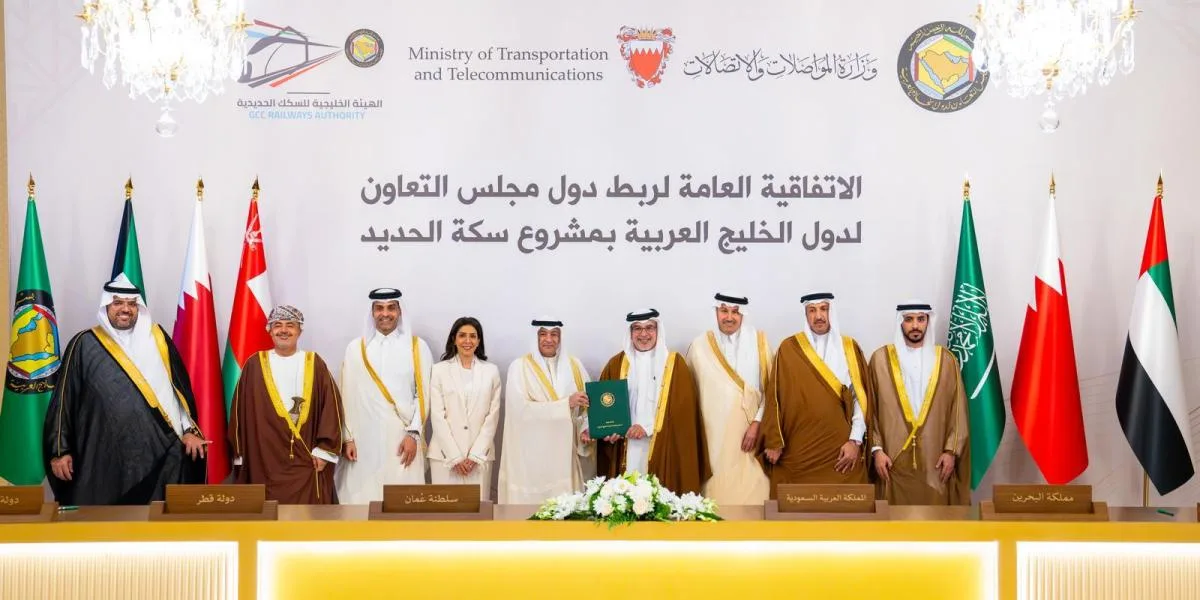
The general agreement for connecting the GCC countries through the railway project was signed on Sunday, November 8, 2026, in Manama, Bahrain, on the sidelines of the 30th meeting of the GCC transport ministers. This railway project began in 2009 when the GCC Supreme Council approved the establishment of a railway network to connect all six member countries. In December 2021, the Cooperation Council decided to establish the "GCC Railways Organization" to coordinate the implementation of this project and ensure compatibility with the national railway networks of member countries.
Presence of Officials and Importance of the Agreement
The ceremony was held under the patronage and presence of Prince Salman bin Hamad Al Khalifa, Crown Prince and Prime Minister of Bahrain, along with the transport ministers of the GCC and the Secretary-General of the Cooperation Council, Jasem Mohammed Al-Budaiwi. Jasem Mohammed Al-Budaiwi explained at the ceremony: "The general agreement for the GCC railway project is an important step in strengthening Gulf integration in the transport sector and regulating the railway transport system in the member states of the Cooperation Council." He also thanked the Crown Prince and Prime Minister of Bahrain for his support and presence at the event.
Sheikh Mohammed bin Abdullah bin Mohammed Al Thani, Qatar's Minister of Transport, described the signing of the agreement at the ceremony as a strategic step towards strengthening Gulf integration and developing a regional transport ecosystem. He added that this agreement provides an important framework for coordinating GCC efforts to implement the railway project and improve communications between national transport networks.
According to him, this project will facilitate the movement of people and goods, enhance the efficiency of logistics services, and create broader opportunities for trade and tourism among member countries. This agreement will also help increase regional competitiveness and strengthen its position as a regional hub for transport and logistics.