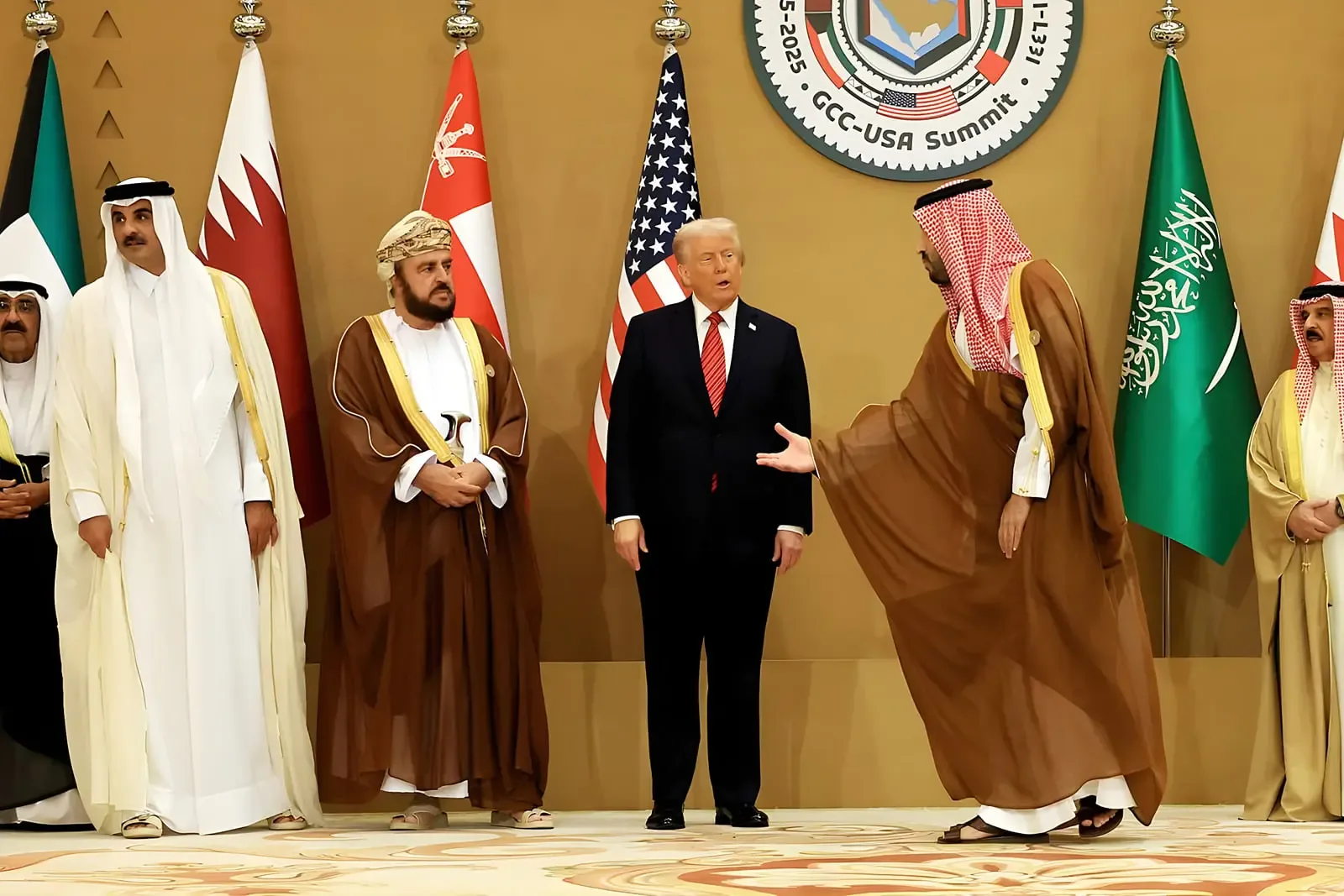
The Trump administration, by abandoning the half-century security umbrella in the Middle East, is steering Arab countries towards creating independent regional coalitions. This policy shift, recognized as the most significant change in the U.S. approach to the Middle East in over half a century, could have serious consequences for the stability and security of the region.
New Security Framework
Thomas Barak, the U.S. Ambassador to Turkey and special envoy of Washington for Syria and Iraq, outlined the new framework of U.S. security policy in his speech at the Global Security Forum in Doha, Qatar, stating: "The America that has guaranteed global security for the past 80 years no longer exists." These remarks reflect changes that could lead to the end of Gulf Arab countries' reliance on the U.S. security umbrella.
Read more: The U.S. Deactivated a Ship in the Gulf of Oman Due to Violating Iran's Blockade
The erosion of U.S. security guarantees in the Gulf has been underway at least since 2019, and its consequences are now clearly felt. Barak emphasized that the U.S. will support regional efforts such as the Mecca Agreement, which is a security pact among Saudi Arabia, Turkey, and Pakistan. He added: "Everyone must rely on their own regional coalitions."
Security Implications for Saudi Arabia
Saudi Arabia, as America's most important Arab ally, is currently feeling the effects of the new policy. This summer, with the intensification of Houthi attacks on Saudi infrastructure, Mohammed bin Salman, the Crown Prince of Saudi Arabia, urged Trump to take military action against the militants. The Houthis, by threatening shipping in the Red Sea and controlling a large part of Yemen, have become one of the major security challenges for Saudi Arabia.
Under these circumstances, Barak explained that Trump has offered intelligence and targeting support but has refrained from direct U.S. military intervention. He emphasized that military action against forces like the Houthis has not yielded results in the past and is unlikely to be successful in the future.
Barak further added: "The President has clearly stated that he supports Saudi Arabia and will provide the necessary logistical support, but U.S. involvement in a ground and combat battle elsewhere seems fruitless." This new stance significantly alters Washington's support for direct military engagement.
Ultimately, Barak insists that despite the changing role of the U.S. in the region, Washington will not leave the Middle East. However, many countries currently hosting U.S. bases may have questions about the justification for continuing their hosting, especially when those bases could become targets for attacks without security guarantees.
The U.S. is also facing a similar challenge, as Iranian attacks on U.S. bases this year have killed at least 21 Americans and caused billions of dollars in damage. In this situation, Washington must choose between incurring heavy costs to fortify bases or withdrawing from the most vulnerable centers.
As a result, the change in the configuration of U.S. bases could become one of the unintended consequences of the recent confrontation, and the implications of Trump's decision to attack Iran may bring Tehran closer to its long-standing goal of expelling the U.S. from the region.
Read more: Qatar is Working to Reopen the Strait of Hormuz and Monitor Iran's Nuclear Facilities