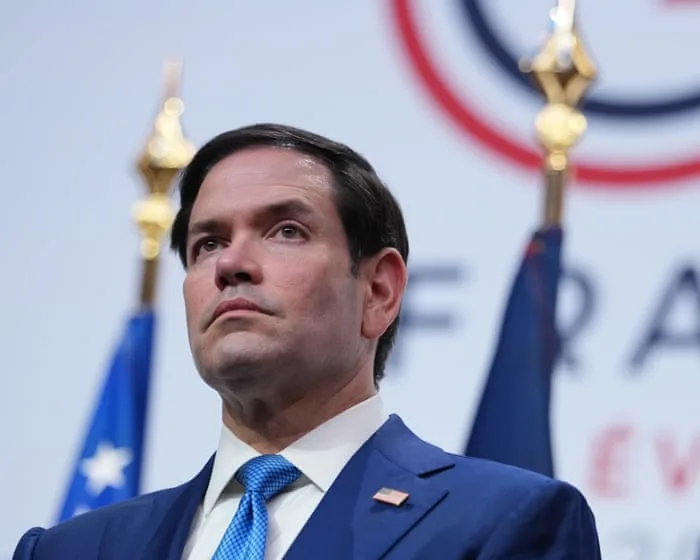
In a significant meeting with Gulf allies, Marco Rabiot, the U.S. Secretary of State, announced that no country, including Iran, has the right to impose tolls for ships passing through the Strait of Hormuz. These statements were made to reassure the United Arab Emirates, Kuwait, and Bahrain, and demonstrate Washington's determination to maintain security in the region.
Efforts for Peace in the Persian Gulf
Rabiot, continuing his trip to the Gulf countries, reviewed the security situation and the 60-day ceasefire agreement signed with Iran last week. He assured these countries that this agreement would not grant Iran any additional power and that the United States would continue its role in protecting its allies' interests.
The Strait of Hormuz is one of the most strategic points in the world, through which more than 20 percent of the world's oil passes. Recent developments in this region and the tensions between the United States and Iran have raised significant concerns for the Gulf countries. With these statements, Rabiot aims to reassure his allied nations and demonstrate that Washington is committed to its obligations.
Message to Iran and the Region
Rabiot's statements clearly send a strong message to Tehran that any attempt to exert pressure through tolls in the Strait of Hormuz will be met with a serious response from the United States. In a context where tensions in the region have escalated, these statements can be seen as a preventive measure to deter potential Iranian actions.
Ultimately, it remains to be seen whether these statements can create an atmosphere of trust and security in the region or if we will continue to witness rising tensions. Rabiot's trip to the Persian Gulf comes at a time when the need for diplomacy and dialogue is felt more than ever.