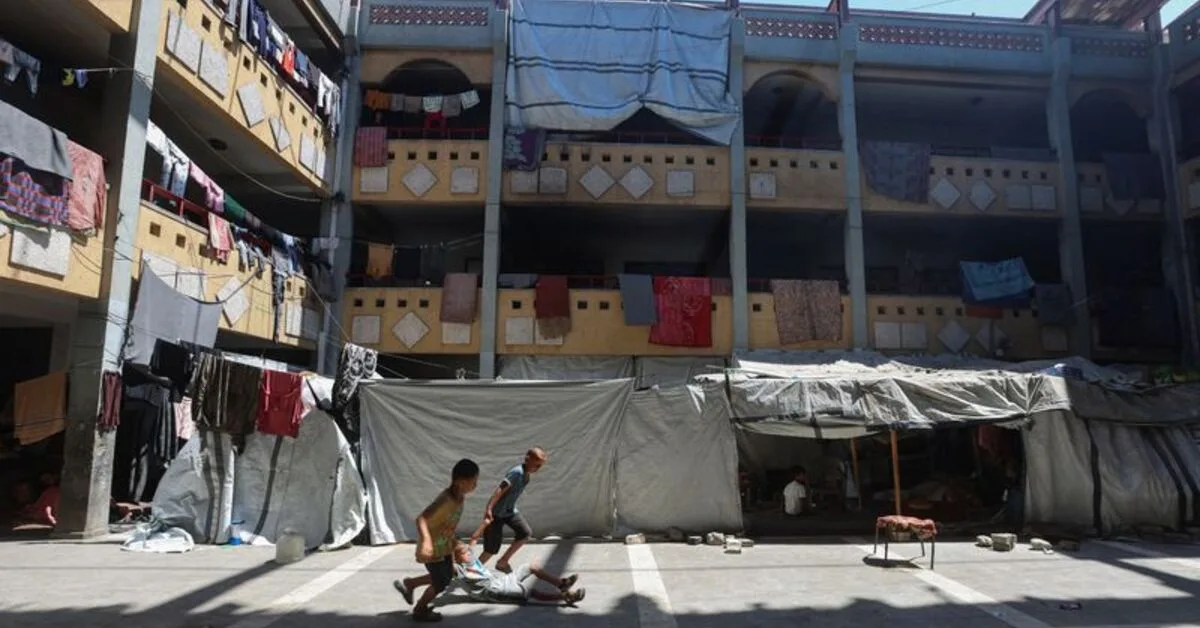
Gaza students returned to in-person education on Saturday for the first time in nearly three years. This return, although under difficult conditions and utilizing damaged buildings and tents, marks an important milestone in the educational process in the region.
Educational Situation in Gaza
According to reports, 98% of Gaza's schools have been damaged or destroyed due to recent wars. Educational administrators in Gaza have stated that approximately 660,000 students have been deprived of in-person learning and regular participation in education. This development occurs at a time when nearly 22,000 students and over 770 educational staff, including 532 teachers, have lost their lives due to these wars.
Read more: Andy Burnham's visit to the United States to meet with Trump
Students' Experiences
Moaed Abu Mustafa, a student in Khan Younis, said: "The last time I went to school was three years ago. Now we are starting the school year, and it is a year of joy and success." Despite the difficult conditions, he expressed his determination to learn and said he would continue his studies even in a tent.
Samir Abu Salmi, a 15-year-old student living with his family in a tent, also returned to class. He stated: "We were studying through our phones and had not met our teachers... now we are pursuing our dreams... from one tent to another." He also mentioned the lack of essential supplies, saying: "Before the war, everything was available to us - notebooks, pens, and clothes, but now everything has become expensive."
Challenges in the Educational System
Despite widespread destruction, the Gaza Ministry of Education, with support from international and local organizations, continued to reopen the 2026-27 school year and established dozens of temporary schools, including tents and makeshift structures, to accommodate students. Some of these schools have been built on sandy land, and classes are equipped with only a few mats and blackboards.
Security conditions have also added to the existing challenges. Yamen Abu Samra, a 14-year-old student, said: "We are worried about shootings and attacks. Now I am sitting in a tent that has nothing, just sun and heat."
Estimates suggest that at least 540,000 students will participate in this school year in in-person classes, temporary learning centers, and educational points supported by UNICEF. Additionally, online education will continue for those unable to attend classes or who have left Gaza due to the war.
Impact of War on Educational Supplies
Stationery traders in Gaza have also pointed to economic difficulties. Khaled Aliyan, one of these traders, said: "Israeli import restrictions have reduced the supply of stationery and increased prices. A notebook that used to cost 3 shekels (1 dollar) now costs 15 shekels."
The Israeli military administration (COGAT), which controls access to Gaza, has not responded to requests regarding restrictions and attacks on schools. Israel has repeatedly been accused of Hamas using schools for military purposes, which Hamas has denied.
Read more: Development of BRICS cooperation and strengthening the voice of the Global South · Ed Sheeran and the challenges arising from the Gaza crisis