Saudi Arabia is in the midst of a war facing significant security and economic challenges. Oil exports and U.S. security support, two crucial pillars of the country's power, have been targeted due to recent developments. Saudi tankers in the Persian Gulf are facing serious restrictions, and the Red Sea route has become unsafe due to security threats. Additionally, the main oil pipeline from the east to the west of the country has been taken out of service following recent attacks.
Impact of the Crisis on Oil Exports
Saudi Arabia is facing problems beyond disruptions in oil exports. The U.S., as the traditional guarantor of Saudi security, has been unable to control the current crisis and has shown little willingness for the intervention that Riyadh expects. This situation challenges a pattern that has underpinned a significant part of the Middle Eastern regional order since World War II, especially after the Cold War. In this pattern, U.S. military power provided relative security in the region, freedom of navigation, and defense of Washington's allied governments.
Read more: Qatar Emphasizes the Need for Regional Security Arrangements
Saudi Arabia's vulnerability is more evident in the country's oil infrastructure. The main fields and refineries of Saudi Arabia are located near the Persian Gulf, and with export restrictions from the Strait of Hormuz, the east-to-west pipeline has become a vital route. Under normal conditions, this pipeline transported about one million barrels of oil daily, but with the closure of Hormuz, this volume has increased to about four to five million barrels per day.
Security Threats and Military Challenges
The western route has also not been immune to security threats. The Houthis in Yemen have reported a blockade on Saudi shipping in the Red Sea, and attacks around Bab el-Mandeb have increased. With the capture of the port of Mocha and an island in Bab el-Mandeb, the Houthis' ability to threaten Saudi shipping has grown. At the same time, Iran-backed groups in Iraq have also inflicted damage on Saudi Arabia with drone attacks.
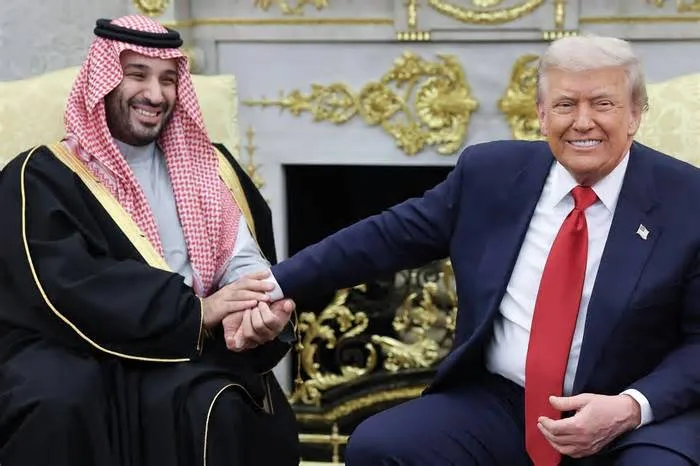
Meanwhile, Mohammed bin Salman, the Crown Prince of Saudi Arabia, contacted the former U.S. President twice, requesting U.S. military intervention, but these requests went unanswered. The relationship between Saudi Arabia and the U.S. has always been transactional in nature, but during the Trump era, these relations became more personal. With the U.S. withdrawal from the Iran nuclear deal and Trump's stance on the murder of Jamal Khashoggi, these relations were affected.
Saudi Arabia is now increasing the transfer of oil from tanker to tanker off the coast of Oman to compensate for the disruptions, but this measure cannot fully make up for the lost volume. Additionally, there is a structural problem; pipelines and shipping routes can easily be targeted, and permanent protection of them is difficult.
Ultimately, the U.S.-Saudi nuclear agreement is considered one of Riyadh's significant achievements. This agreement could allow uranium enrichment in Saudi Arabia, but it faces many uncertainties. Saudi Arabia is seeking to protect its interests in the current situation and has an urgent need for security and economic support.
Read more: New Developments in Iran-Bahrain Relations · Bahrain's Foreign Minister: The Security Situation in the Gulf Region is Unprecedented