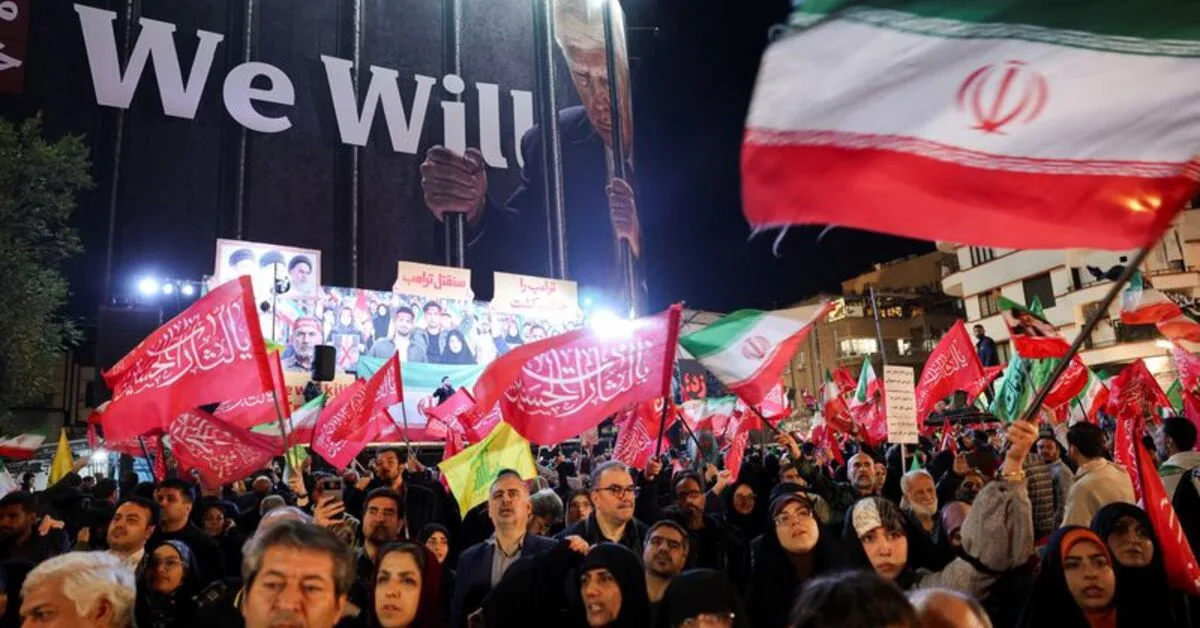
U.S. allies in the Gulf are facing a grim outlook. On one hand, they are confronted with the possibility of another war over which they have no influence on the course and dimensions, and on the other hand, the American bases that were established for their protection may instead turn the Gulf countries into targets for Iran's severe retaliation.
Vulnerability of U.S. Security Structure
Iranian missiles in the recent war revealed weaknesses and vulnerabilities at the heart of Washington's decades-long security architecture. The extensive U.S. presence in the region has instead provided Iran with fixed targets rather than deterring Tehran, and this has given a new flavor to the discussions among ministers, policymakers, and security officials at the annual security conference "Manama Dialogue" in Bahrain.
Read more: Kuwait's Ministry of Interior held a public lottery to select 200 officer students
At this conference, governments discussed the implications of another round of war for American forces and their host countries. Sameh Shoukry, Egypt's Foreign Minister, stated at the meeting that if war resumes, the new round of conflicts will be more dangerous and destructive than the previous one and "will lead nowhere".
Military Threats and Iran's Strategies
Two European officials told Reuters that a potential U.S. attack may target Iran's nuclear facilities, including research and development centers. One of the possible locations mentioned is Mount Kalanj. However, European officials emphasized that a potential military action might weaken Tehran's capabilities but would not eliminate Iran's nuclear program.
Iranian officials also announced that Tehran has prepared a precise list of targets for retaliation against a potential U.S. and Israeli attack, which includes underwater communication cables. This strategy could extend the cost of war beyond the battlefield, and according to three representatives present at the Manama conference, Iran does not need to be militarily equal to the U.S. and Israel; rather, its strategy is based on attrition.
Emil Hokayem, regional security director at the International Institute for Strategic Studies, pointed out that what the Iranians really care about is the withdrawal of American forces from the region. He said Tehran's message to the Gulf countries is primarily this: "You have invested in the U.S. for four decades, and after 40 years, those bases did not protect you but rather exposed you to danger".
This argument is particularly relevant for Bahrain; a country that hosts the U.S. Fifth Fleet, and the effects of attacks are still visible near the U.S. base in Juffair.
These damages have posed a serious question to Washington: Should it rebuild and strengthen the military presence designed to showcase U.S. power, or withdraw its forces from the region? One official from the Gulf countries told Reuters: "We are essentially facing the worst-case scenario".
Concerns that a potential U.S. attack could lead to Iranian retaliation against civilian infrastructure across the Gulf are evident. Another official from the Gulf countries, referring to the limited power of these countries to influence a potential war, said: "Ultimately, only one person decides" whether a conflict will restart and how intense it will be.
These concerns have pushed the countries in the region towards diplomacy. Senior officials from Saudi Arabia, Turkey, and Pakistan met with Iranian officials in Tehran last month. Saudi Arabia announced that these efforts were aimed at "preventing a return to military escalation".
In this context, Anwar Gargash, a senior official from the United Arab Emirates, said: "We hope that diplomatic progress will be achieved. We really do not want to see another round of confrontation in the region".
It seems that the issue is no longer whether Washington will remain committed to the Gulf, but rather what the U.S. security guarantee means when the infrastructure intended to provide those guarantees has itself become a target.
Read more: Kuwait: Forecast of warm and humid weather with light rain · Iran offers two days for a Hormuz agreement