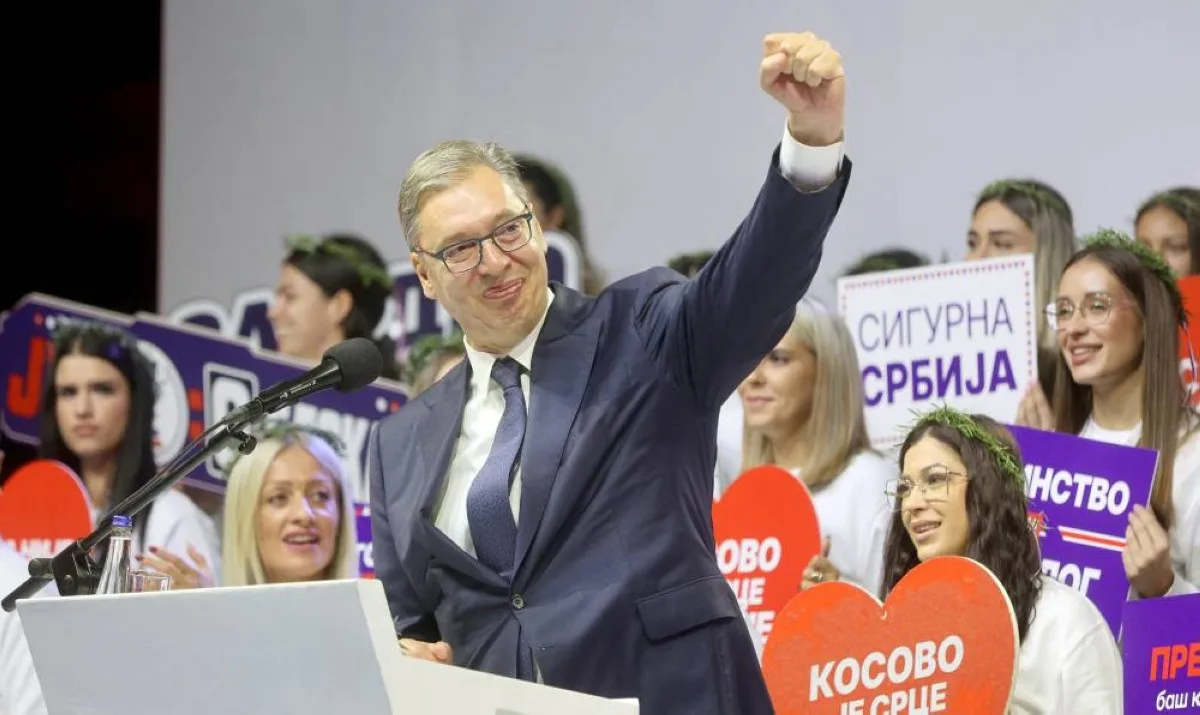
On Sunday, Serbia will vote in one of its most intense parliamentary elections in over 14 years. This election comes as the student movement, led by students, seeks to oust the ruling party of Aleksandar Vučić from power.
This early voting follows nearly two years of student protests after a tragic incident in 2024 at the Novi Sad train station, where 16 people lost their lives and corruption was identified as the main cause of this disaster. This incident led to one of the largest protests in Serbia since the fall of Slobodan Milošević in 2000.
Election Competitions and High Voter Turnout
In this election, eighteen electoral lists are competing for 250 parliamentary seats, but polls indicate that the competition is primarily between the right-wing populist Serbian Progressive Party (SNS) and the student list. This list includes candidates supported by the student movement and largely lacks a defined leadership. Several major opposition parties have refrained from participating in this election and have urged their supporters to back the students.
Warnings from Civil Institutions and Election Monitoring
Voter turnout in this election is expected to be significantly higher than the average of 55 percent seen during the SNS's rule. In the previous election that ousted Milošević, this figure was close to 70 percent. The last student election rally in Belgrade last Thursday drew around 150,000 attendees.
Most candidates on the student list are academics, artists, and professionals from other fields with little political experience, and the movement's broad agenda focuses on fighting corruption. Aleksandar Vučić, 56, interrupted his second presidential term to run for prime minister and announced the early voting citing "major fluctuations in the domestic political scene." He has repeatedly accused the student movement of plotting a coup funded by foreign countries.
Days before the voting, 24 civil society organizations in Serbia warned that conditions for holding "free and fair elections" do not exist. Domestic and international observers will monitor the voting process, and students have mobilized a large number of volunteers to oversee the elections.
Read more: Brazil Elections: Close Competition Between Luiz Inácio Lula da Silva and Flávio Bolsonaro