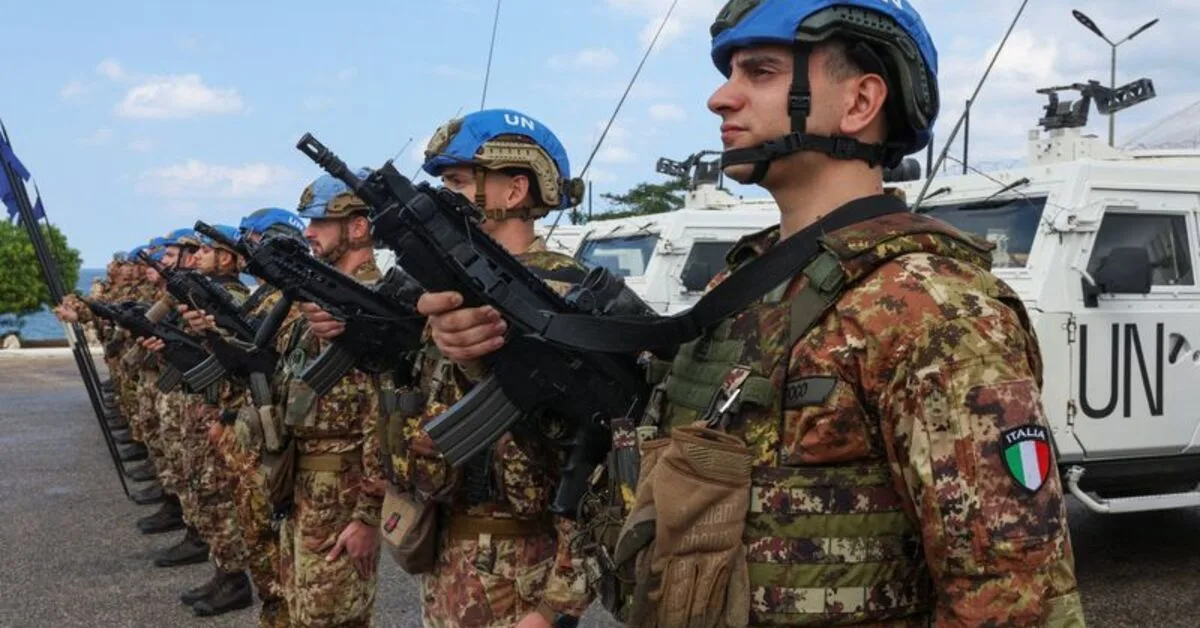
The commander of the UN Peacekeeping Force in Lebanon, General Diodato Abagnara, stressed the necessity of ensuring the proper transfer of duties from this force to other UN entities and the Lebanese army before the beginning of their withdrawal at the end of this year. These remarks were made as the UN Peacekeeping Force, known as UNIFIL, has been monitoring conflicts and ensuring security in southern Lebanon for nearly 50 years.
Background and Current Situation
Since the onset of the new war between Israel and the armed group Hezbollah in Lebanon, supported by Iran, since March, UNIFIL has also been providing security for humanitarian aid convoys to residents in the Christian areas of southern Lebanon. These areas are now under siege by Israeli forces. Many residents in other areas of southern Lebanon have been forced to leave their homes due to Israeli airstrikes and evacuation orders.
Read more: Saudi airstrikes on Yemen continue
The UN Security Council has ordered UNIFIL to begin its withdrawal by the end of 2026, raising concerns about the continuity of humanitarian aid and how the duties of this force will be transferred to the Lebanese army.
Challenges Ahead and Reactions
Diodato Abagnara stated: "The United Nations has other entities in this region, and therefore what is very important for us is to carry out a smooth and seamless transition to various entities or for the future of a new mission." He also noted that UNIFIL is working with the UN national team to ensure the provision of humanitarian aid in areas occupied by Israel and is sharing information with the Lebanese army about sensitive areas.
Abagnara acknowledged that handing over some UNIFIL bases to the Lebanese army may be "very difficult" as more than half of them are located in areas currently under Israeli control. Diplomats are concerned that the withdrawal of UNIFIL may mean the end of UN oversight in southern Lebanon.
This commander also pointed out the destruction caused by Israeli forces during a visit to a position overlooking the city of Mansouri, describing it as "another violation" of UN Security Council resolutions regarding Lebanon. Israeli forces have stated that they are destroying Hezbollah's infrastructure throughout southern Lebanon.
While a plan supported by the United States for the disarmament of Hezbollah and control of the Lebanese army over southern Lebanon has reached an impasse, diplomatic efforts are underway to address the vacuum that will be created by the withdrawal of UNIFIL. Lebanon is calling for an extension of UNIFIL's mission, and other countries have discussed a new multinational mission, although it is still unclear what powers this mission will have.
Abagnara concluded by saying that an extension of UNIFIL's mission would be "a great honor," but without a new Security Council decision, his force must cease its activities at the end of this year. He added, "This time is not long. The presence of the UN in the south is very, very necessary, and in my opinion, now more than ever."
Read more: US casualties in the war with Iran exceed Pentagon figures · Macron hosts security talks between Lebanon and Jordan in Paris