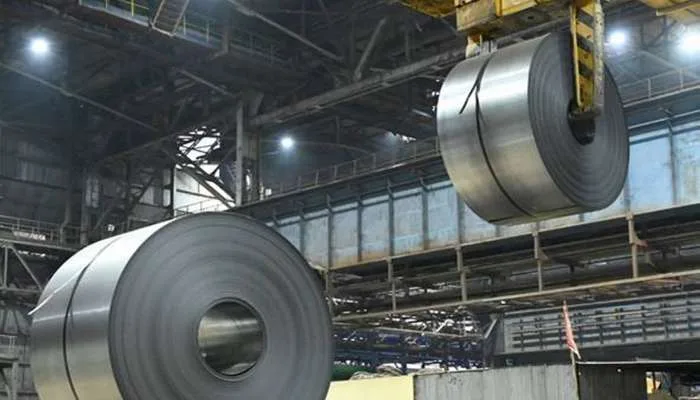
India is recognized as the fastest steel market in the world, and according to forecasts, the steel demand in this country will reach 172.4 million tons by 2026, indicating a 7.9% increase compared to the previous year. This increase is expected to continue in 2027 with an 8.0% growth to 186.2 million tons.
Factors Influencing Demand Growth
A recent report states that the positive trend in steel demand in India is due to infrastructure construction, stability in the private real estate sector, investment in machinery, and automobile production. These factors serve as the main drivers, strengthening the foundation of steel demand in India.
Read more: Negative Growth Forecast for Gulf Economies in 2026
Globally, steel demand is expected to remain stable in 2026 compared to 2025, reaching 1,722 million tons. This demand is projected to increase by 1.7% to 1,752 million tons in 2027. Ongoing declines in the Chinese real estate market and geopolitical disruptions in the Middle East continue to negatively impact short-term consumption.
Global Steel Demand Forecasts
Alfonso Hidalgo de Clesarada, Chairman of the Economic Committee of the World Steel Association, emphasized that the forecasts for global steel demand improvement currently appear to be less than expected. He stated, "The trend we outlined in April remains intact, but the recovery we anticipated seems to be slower and more gradual than expected. Global steel demand is now expected to remain stable in 2026 and grow by 1.7% in 2027."
Hidalgo also noted that demand outside of China is expected to increase by 1.5% this year and accelerate to 4.0% in 2027. The anticipated improvement in April does not mean it has weakened; rather, this trend is influenced by structural declines in China and energy market disruptions due to ongoing instabilities in the Middle East.
In China, demand is expected to decrease by 2.0% in 2026 and further shrink by 1.0% in 2027. The ongoing recession in the real estate sector and negative spending on infrastructure continue to harm production cuts.
In developing countries excluding China, demand is projected to increase by 1.9% in 2026 and reach 5.1% in 2027. This decrease is primarily due to the Gulf Cooperation Council region, where demand is expected to decline by about 11% due to project delays and conflicts before improving by 11.3% in 2027.
In developed countries, demand is expected to increase by 1.0% in 2026 and by 2.2% in 2027. Steel demand in the United States is expected to grow by 2.0% in 2026 and by 1.5% in 2027, driven by data center and energy infrastructure projects.
In the European Union, demand is expected to decrease by 0.3% this year and then increase by 3.1% in 2027. Demand in Japan and South Korea is also expected to show slight improvement, with Japan's demand increasing by 0.9% in 2026 and South Korea's by 1.8%.
Overall, Hidalgo emphasized that "one of the most important messages from our October 2026 forecasts is the emphasis on expectations for a significant change in industrial activities and steel demand in the developed world in 2027."
Read more: Law to Create Free Markets in Oman Chaired by Hassan bin Mohsen Al-Sharqi · Sultan of Oman Visits the Astana International Financial Centre