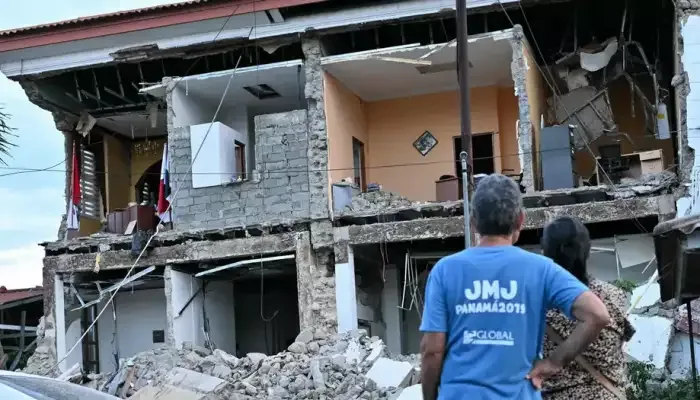
A 7.7 magnitude earthquake impacted Panama on Friday morning. This earthquake, which occurred at a depth of 10 kilometers, had its epicenter approximately 10 kilometers southwest of the remote area of Pitaloza Ariba, near the southern tip of Panama.
Impact of the earthquake on the capital
The earthquake was strongly felt in the capital, Panama City, causing buildings to shake and people to flee into the streets. One resident of the area, Rosendo Dominguez, said: "We felt this earthquake strongly. Objects in the kitchen fell to the ground, but we are okay, although very scared." He added that everyone has gathered outside their homes due to fear of the earthquake.
Read more: Developments in Saudi Arabia following Houthi attacks
Aftershocks and emergency status
Following the initial earthquake, a second earthquake measuring 6.6 was also recorded in the country. According to initial reports, the President of Panama, José Raúl Molino, described this earthquake as a "major disaster" and announced that roads near the epicenter have been severely damaged. Given the shallow depth and intensity of the earthquakes, greater risks have been posed to residents in the area, especially in regions where their infrastructure has been damaged.
The government of Panama is assessing the damages and providing initial assistance to affected residents. This earthquake clearly highlights the need for preparedness and disaster response in the country. Local officials are examining the status of buildings and infrastructure to ensure the safety of residents.
Due to its geographical location, Panama is naturally prone to severe earthquakes. These earthquakes can significantly impact the daily lives of residents and, due to high reconstruction costs, also affect the country's economy.
Read more: International Criminal Court and global legal challenges · Jensen Huang and Sam Altman emphasized the safety and transparency of artificial intelligence