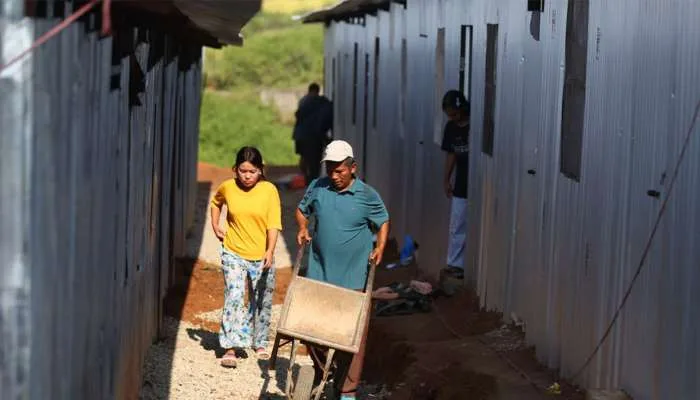
Nangsi Tamang is preparing a floor of red soil in a tin-roofed room in Nowako, Nepal. After their residence in Khalat Raswa was swept away by ice, water, and debris on August 26, she and her husband Singbir Tamang are now looking for new shelter.
The couple fled to higher ground with only the clothes on their backs when they received a flood warning from their relatives, saving their lives.
Painful Experience of Displacement
Nangsi said while drawing water from the tap, "My home is gone; I am deeply worried. Now I have nothing. Even my footwear is gone, and we have no clothes. We came here to save our lives and had nothing to eat for two days."
She and her husband are currently staying in a tin-roofed room built by a charity after being displaced to the temporary shelter of Bada Choutara. This is the second time Nangsi has had to relocate in over a decade.
Significant Damage and Future Challenges
In the recent disaster, this couple lost several relatives in the flood, and many other residents have lost 32 of their loved ones and are struggling severely with the psychological consequences of this disaster. The Tamangs are one of the main indigenous communities of Nepal, deeply connected to their land through their culture, language, and traditions.
Currently, 511 people have taken refuge in the Bada Choutara camp, including 139 women, 160 men, and 212 children under 18. All of them are worried about being displaced again to another location.
Gumal Bahardor Sharki, a shoe seller who lost his shop in the flood, is struggling to manage a temporary store in the devastated area of Davigat. He said, "I had a shop, but the flood destroyed it. Now I continue to survive under these conditions."
The flood on August 26 has been called the "Himalayan Tsunami" and has so far killed over 1,400 people, with more than 6,000 still missing. Search and rescue efforts are ongoing in the flooded areas, and over 70,000 people have been directly affected by this disaster.