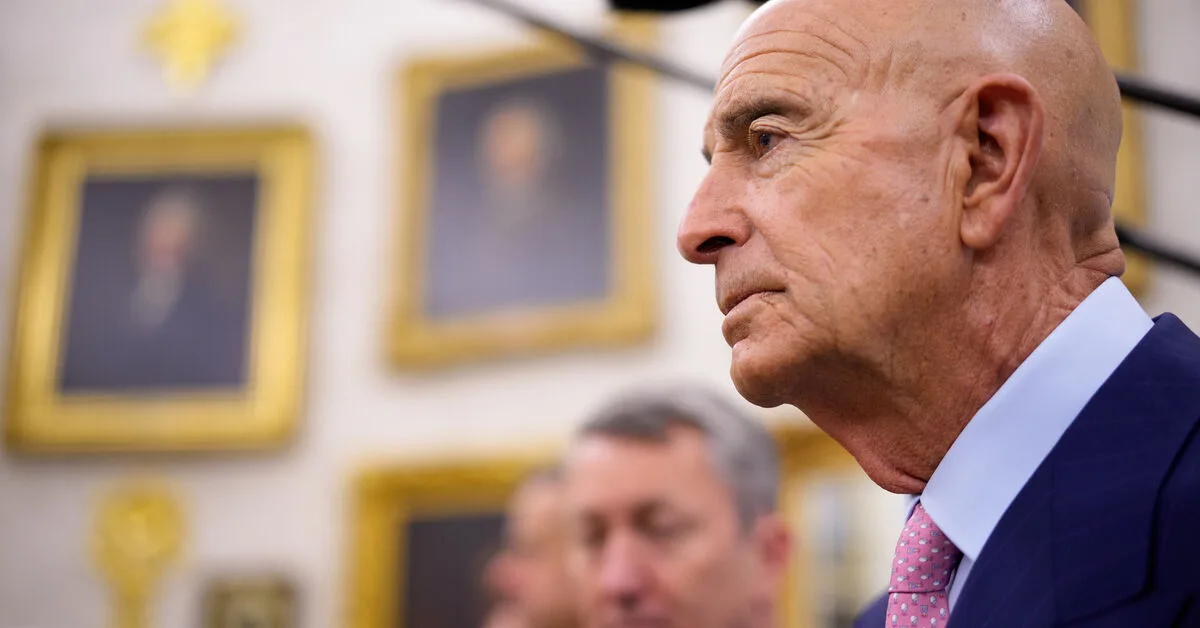
Tom Barak, the United States Ambassador to Turkey and the special representative for this country for Syria and Iraq, referred to the changing role of Washington in the Middle East in his recent remarks at the Global Security Conference in Doha, Qatar. He announced that the United States is distancing itself from its role as a regional security guarantor, and Middle Eastern governments must take greater responsibility for their own security.
Change in Security Cooperation Patterns
Barak mentioned the changing U.S. attitude towards security cooperation with Middle Eastern countries at this meeting and emphasized that this change does not mean abandoning the region. In response to a question about the major agreement related to securing Gulf oil and U.S. security guarantees, he stated that this agreement is evolving and has not come to an end.
He said, "I think this agreement has not come to an end. Rather, it is in transition." Barak criticized the limitations of military efforts to change regimes, referencing past U.S. experiences in Libya, Afghanistan, and Iraq, adding, "Every time we tried to intervene and change a person or regime, it seems to have been a mistake."
Reliance on Regional Cooperation and Diplomacy
Barak emphasized the importance of establishing regional security cooperation and added that countries in the region must gradually take greater responsibility for their own security. He noted that the U.S. national defense strategy in 2026 emphasizes that regional partners must take primary responsibility against Iran and its affiliated forces.
Barak also referred to U.S. efforts to expand the Abraham Accords, which normalized relations between Israel and several Arab countries, stating that the goal includes bringing more countries, especially Saudi Arabia, into this agreement.
Regarding Iran, Barak identified diplomacy as the key to solving problems and stated that the deep mistrust between the United States and the Islamic Revolutionary Guard Corps still hinders negotiations. He suggested that a method of progress should begin with a ceasefire, reopening the Strait of Hormuz, and reducing pressure on the people of Iran.
Barak also referred to Saudi Arabia's requests for logistical support in the fight against Iranian-backed Houthis and clarified that the United States will avoid direct involvement in ground battles in Saudi Arabia. He said, "This is not the duty of the United States. We must act in a way that eliminates the need for these militias, and governments must take responsibility themselves."
Read more: Texas: Early voting begins with hopes of Democratic victories · Pete Hegseth discusses the situation in Iran with Benjamin Netanyahu during an unexpected visit to Israel