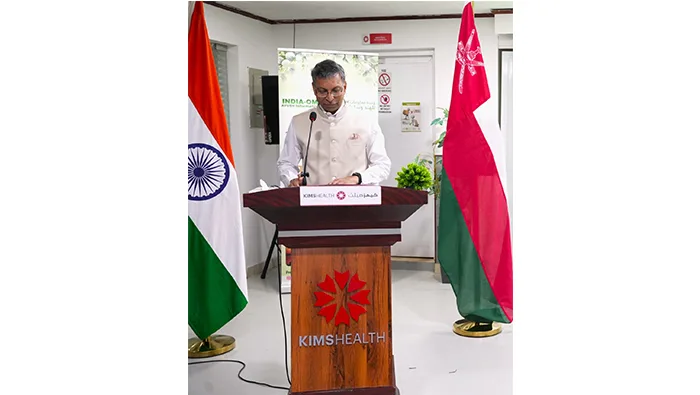
The National Center for Genomics and Human Data (Oman Genome) had its foundation stone laid on September 27, 2023, in the Wilayat of A'Seeb in Muscat Governorate at a cost of 4.20 million Omani Rials. This center is established to strengthen Oman’s position as a scientific hub in the field of genomic research and to support a knowledge-based economy.
Project Details and Objectives
This center will be built on an area of over 10,000 square meters, with a project execution time of 9 months along with 45 days for preparation and equipping. At the ceremony, attended by Dr. Hilal Ali Al-Saad, the Minister of Health of Oman, Dr. Khalid Al-Rasdi, a professor at the College of Medicine and Health Sciences at Sultan Qaboos University, emphasized the importance of this project as the Oman Genome Program supervisor.
Read more: MiniMed (MMED) has amazed patients with its new pumps
In his speech, Dr. Al-Rasdi noted that this project reflects the goals of Oman Vision 2040 and will aid in studying the genomic map composition of the Omani community and creating a reference database to enhance the scientific level of the country in genomic research.
Technical and Structural Features of the Center
Dr. Ali Al-Lawati, the Minister of Health's engineering advisor, provided details about the technical aspects of the project. He stated that the center will be equipped with the latest standards for biosafety laboratory design and modern construction technologies. This center will also be equipped with advanced genome sequencing devices and an automated national biobank for sample storage with a capacity of over one million samples at very low temperatures.
This project will be located in a complex covering 10,625 square meters adjacent to the central public health laboratory. The center will include a main laboratory building of 3,000 square meters and a service building of 600 square meters, connected by a concrete service tunnel.
The main goal of this center in the first phase (2025-2030) is to read the complete genomic sequences of twenty thousand Omani citizens, with plans to expand this number to one hundred thousand by 2040. This database will assist in personalized medical systems and will also aid in the early diagnosis of hereditary and chronic diseases such as diabetes and cancer.
The laying of the foundation stone for this center is seen as a serious start to creating advanced healthcare infrastructure in the country and is expected to bring about a qualitative transformation in the level of healthcare services provided to citizens.
Read more: Oman hosts a training workshop for regional and international emergency medical teams · Crisis management of fires in southern Al Batinah Governorate, Oman