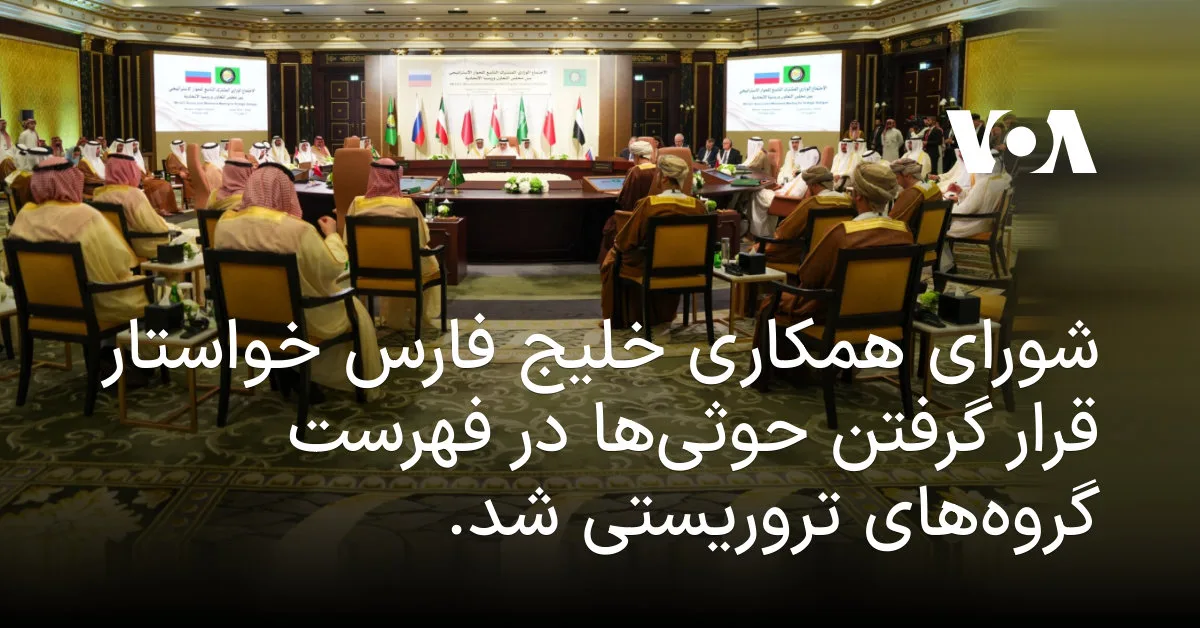
The Gulf Cooperation Council, in its 168th periodic meeting of foreign ministers on Sunday, October 18, in the city of Manama, the capital of Bahrain, called for considering the Houthi militants as a terrorist group and finding a peaceful solution to the Yemen crisis. This meeting focused on the joint action plan regarding regional and international developments with an emphasis on the situation in Yemen.
Emphasis on the Dangers of Houthis and Request for International Cooperation
In this meeting, the member countries of the Gulf Cooperation Council requested the international community to recognize the Houthi militants as a serious threat to security, peace, development, and prosperity. The council also emphasized the necessity of strictly implementing the arms embargo against the Houthis and enforcing the United Nations Security Council resolutions regarding Yemen.
Read more: Kuwait's Defense Minister and the French Ambassador Emphasized Military Cooperation
The Houthi militants are currently listed as a foreign terrorist organization by the United States. This issue was clearly raised following President Trump's decision in the winter of 2021 to return the Houthis to the terrorism list. Prior to that, former President Joe Biden had removed the Houthis from this list in February 2021.
Preserving Yemen's Territorial Integrity and National Agreements
The Gulf Cooperation Council also expressed its opposition to any division of Yemen and emphasized the preservation of the territorial integrity and unity of this war-torn country. The council called for efforts to create a peaceful solution to overcome the current crisis, considering the wishes of the Yemeni people and based on previous agreements of the "National Dialogue."
Among the important agreements of the National Dialogue, which was approved following the revolution of 2011 among all political factions, including the Houthis, are the transformation of Yemen's political system from a central government to a federal government, disarmament of militants, purging the Yemeni army and military institutions of partisan, tribal, and familial biases, granting a 30% share to women in the administration of the country, and establishing an independent judiciary free from political factions.
The Houthi coup, carried out under the command of Qassem Soleimani and in collaboration with former Yemeni dictator Ali Abdullah Saleh, led to the capture of Sana'a and intensified the civil war, sidelining all agreements of the National Dialogue. These developments have highlighted the need for a new strategy to restore stability and peace to Yemen.
Read more: Exchange of Attacks Between the Saudi Coalition and Houthis in Yemen · Condemnation of Attacks on Saudi Arabia at the Islamic Cooperation Organization Meeting with the Presence of Araqchi